
The buzz around Dhurandhar: The Revenge has been relentless since its release, driven by star power, strong box office numbers, and emotional storytelling. But amid the excitement, a quiet, deeply human story has surfaced—one that says more about India’s movie economy than any box office figure.
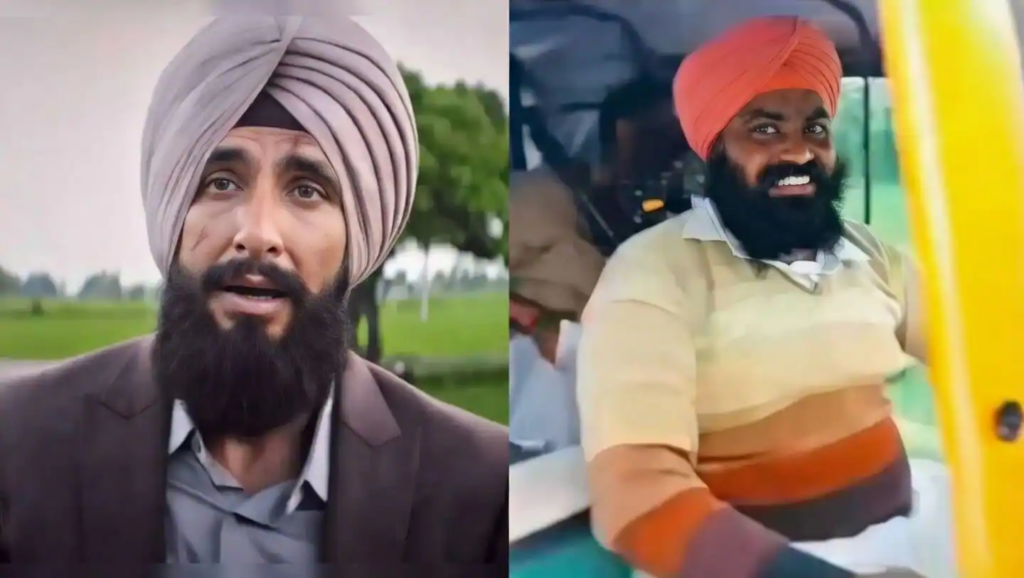
An auto-rickshaw driver who appears briefly in the film’s climax has gone viral—not for his role, but for what he can’t afford to do: watch the movie himself.
Who Is the Auto Driver in Dhurandhar 2
In the final moments of Dhurandhar: The Revenge, starring Ranveer Singh, a seemingly ordinary auto-rickshaw ride becomes the emotional bridge back to the protagonist’s past.
The driver behind that vehicle is Harjeet, a real-life auto driver who made a brief on-screen appearance. His role lasts only seconds, but for him, it represents a once-in-a-lifetime moment—being part of a major Bollywood production directed by Aditya Dhar.
And yet, he hasn’t seen it.
Why Hasn’t He Watched the Film Yet?
The Cost of One Movie Ticket
In an interview with a Punjabi news outlet, Harjeet explained his situation plainly:
- A single ticket costs around ₹500 in his area
- His family has five members
- Total cost to watch together: ₹2,500
That number isn’t arbitrary. It’s the amount he says his family manages to save in an entire month.
“₹2,500 is what we save in a month, so I didn’t take them. We’ll wait and watch it later.”
A Harsh Trade-Off
This isn’t just about skipping a movie night. It’s a choice between:
- Entertainment vs. financial stability
- A moment of pride vs. household security
For Harjeet, the decision was simple—but telling.
What This Reveals About Rising Movie Ticket Prices
A Widening Gap Between Cinema and the Audience
While Dhurandhar: The Revenge is thriving commercially, its success highlights a growing issue: cinema is becoming less accessible for lower-income audiences.
Current Ticket Pricing Trends
- Metro cities: Up to ₹2,000 per ticket in peak demand
- Tier 1 & Tier 2 cities: ₹200–₹500 per ticket
- Opening week premiums significantly increase costs
For a large section of India, especially daily wage earners and small workers, even ₹500 per ticket can be a luxury.
The Irony of Representation
There’s a quiet irony here:
- A working-class man appears in a major film
- The film portrays emotional, grounded realities
- Yet, he cannot afford to experience his own contribution
This gap between representation and accessibility is becoming harder to ignore.
What Happens in the Dhurandhar 2 Climax Scene?
The auto-rickshaw scene is more than just a transition—it’s the emotional core of the film.
Key Moments From the Scene
- Ranveer Singh’s character, Jaskirat Singh Rangi, returns to his village
- He quietly steps out of the auto-rickshaw
- His family, unaware he’s alive, continues their routine
- They walk past him—without recognizing him
The moment lands with a heavy realization:
His family has already mourned him and moved on.
The auto driver’s role may be brief, but it sets up one of the film’s most powerful sequences.
Why This Story Is Resonating Online
A Viral Moment With Real Emotion
Harjeet’s story has struck a chord because it cuts through the glamour of cinema and shows something real:
- Not everyone involved in filmmaking benefits equally
- Fame and financial reality don’t always overlap
- The audience is increasingly aware of these contrasts
Social Media Reactions
Online discussions have centered around:
- Calls for filmmakers or actors to invite him and his family
- Criticism of high ticket prices
- Broader conversations about affordability in entertainment
The Bigger Question: Who Is Cinema For?
Accessibility vs. Profit
Big-budget films rely on:
- High ticket prices
- Premium formats (IMAX, 4DX)
- Opening week revenue spikes
But this model risks excluding the very audience that forms the backbone of Indian cinema.
Possible Solutions
- Subsidized screenings for contributors or local participants
- Tiered pricing models based on region and demand
- Faster OTT releases to widen access
This is where the industry may need to evolve—balancing revenue with reach.
Why This Story Matters
Harjeet’s story isn’t just a viral anecdote. It’s a snapshot of a larger reality:
- Economic divides exist even within the same cultural moment
- Participation doesn’t guarantee access
- Success stories often leave out the quieter struggles behind them
In a film about returning home, the most powerful off-screen story is about someone who can’t afford a seat inside the theater.
TL;DR
- An auto driver featured in Dhurandhar: The Revenge hasn’t watched the film
- Ticket costs (~₹2,500 for his family) equal his monthly savings
- His story highlights rising ticket prices and accessibility issues
- The moment has gone viral, sparking debate online
- It raises a bigger question about who cinema is truly accessible to