
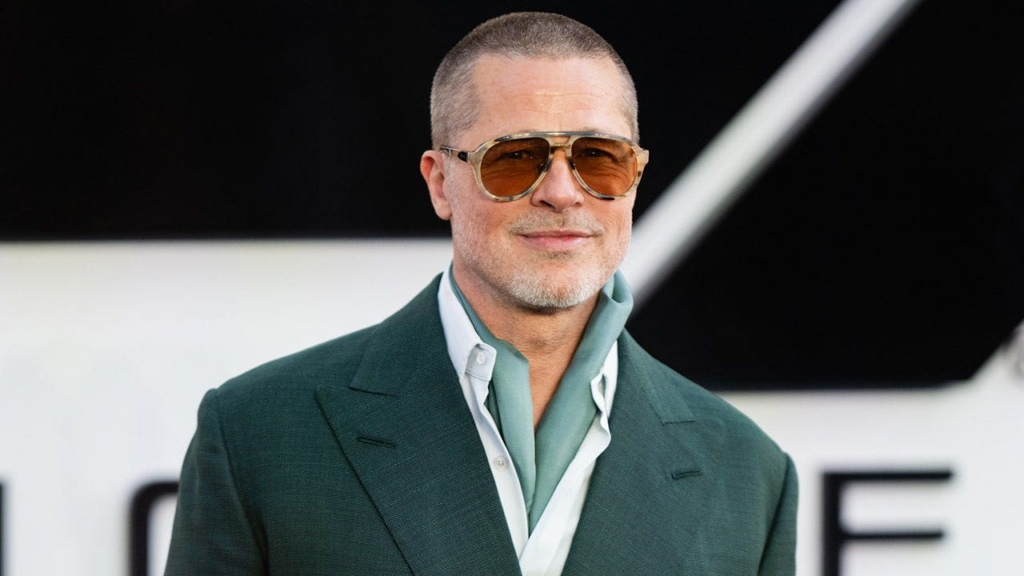
Brad Pitt has spoken candidly about a difficult period in his life, revealing that he is no longer completely sober and recalling a time when he experienced suicidal thoughts amid what he described only as “family stuff.”
The 62-year-old actor made the comments in a new interview with Esquire, offering an unusually personal look at his relationship with alcohol, emotional pain and recovery. Pitt said he remained sober for seven years before returning to drinking in a limited way, while emphasizing that he has learned alcohol is not good for him in large amounts.
His remarks about suicidal thoughts were equally direct, but he did not provide details about the family circumstances that contributed to that period. Rather than identifying a specific person or event as the cause, Pitt described the experience as a period of overwhelming emotional pain from which he struggled to see a way forward.
What did Brad Pitt say about drinking again?
Pitt said he maintained sobriety for seven years before eventually returning to alcohol.
The actor explained that his current relationship with drinking is more restrained than it was in the past. He said he can have “a few” glasses of wine but cannot drink heavily and needs to remain disciplined about it.
“I was sober for seven years. And then I got back off the wagon,” Pitt said, according to the interview. He added that the change happened in a more controlled manner and that he had become overconfident on a couple of occasions before recognizing that excessive drinking was not good for him.
Pitt’s comments are significant because he has previously discussed his decision to stop drinking publicly. In 2016, he said he had become sober and was attending Alcoholics Anonymous meetings.
His latest comments suggest that sobriety has not been a simple, permanent line for him. Instead, he described an ongoing process involving limits, self-awareness and recognizing when alcohol begins to become harmful.
That distinction matters. Recovery from problematic drinking does not necessarily follow a single path, and a person’s decision to drink again does not by itself reveal whether they have returned to previous patterns of alcohol misuse.
Why Pitt’s comments about alcohol matter
Pitt’s description also highlights the difference between abstinence and the broader challenge of managing a behavior that has previously caused problems.
He did not say that he had returned to heavy drinking. Instead, he said he could have a limited amount and needed to be “professional about it.”
That makes his comments less about a dramatic relapse narrative and more about how he currently understands his own limits.
For a public figure whose personal struggles have been heavily scrutinized, the distinction is important. Pitt is describing his experience in his own terms rather than presenting a medical diagnosis or inviting the public to determine his recovery status.
What did Brad Pitt say about suicidal thoughts?
Pitt also recalled a period when emotional pain became so severe that he experienced suicidal thoughts.
He said the thoughts occurred during what he described as “one little period” of his life. When asked about the source of that pain, he offered only one explanation: “family stuff.”
He did not identify a specific family member or event as the cause.
Pitt said that during this period he felt unable to see a way out of the pain. He also explained that he came to understand suicidal thinking as an attempt to find relief from overwhelming suffering rather than simply a desire to die.
The actor said he ultimately did not act on those thoughts and described what he called his “survival instincts” kicking in.
His account is particularly notable because it separates having suicidal thoughts from acting on them. Mental health professionals have long emphasized that suicidal thoughts can vary in intensity and that people experiencing them may not necessarily attempt suicide. However, such thoughts should always be taken seriously.
Pitt did not disclose specific family circumstances
Pitt’s decision to describe the circumstances only as “family stuff” leaves considerable room for speculation, but the actor himself did not provide enough information to establish what he meant.
That is important given the extensive public attention surrounding his family life and his long-running divorce from Angelina Jolie.
The pair married in 2014 after years together and separated in 2016. Their divorce was finalized in 2019 after a lengthy legal dispute.
Pitt and Jolie have six children: Maddox, Pax, Zahara, Shiloh, Knox and Vivienne.
Reports about the family’s relationships have circulated widely over the years. Several of the children’s public or reported decisions regarding the use of the Pitt surname have also generated headlines.
Those developments may provide context for why Pitt referred broadly to “family stuff,” but they should not be presented as the confirmed reason for his suicidal thoughts. Pitt did not make that connection in the interview.
How has Brad Pitt previously discussed sobriety?
Pitt’s relationship with alcohol became a significant part of his public story after his separation from Jolie.
In 2016, the actor said he had stopped drinking and had been attending Alcoholics Anonymous meetings. At the time, he spoke about confronting his relationship with alcohol and making changes in his life.
The period coincided with the collapse of his marriage to Jolie and allegations surrounding an incident aboard a private flight involving members of the family.
Those allegations were widely reported, but Pitt has denied some of the claims made about his conduct. Because the circumstances have been the subject of years of legal and media scrutiny, they should not be treated as an established explanation for his later mental health struggles.
What is clear from Pitt’s own account is that sobriety became an important part of his life after 2016.
His latest comments show that the subject remains complicated.
What has Pitt said about his mental health?
Pitt has increasingly spoken about vulnerability and self-acceptance in interviews, although he has generally avoided providing extensive details about his private family life.
In discussing his darkest period, he described receiving advice that encouraged him to experience difficult emotions rather than constantly trying to escape them.
That perspective appears to have influenced how he thinks about emotional pain today.
His comments also included an acknowledgment of his considerable privilege. Pitt noted that he had “won the lottery” in life, while recognizing that professional success and material advantages do not automatically eliminate psychological suffering.
That point is worth separating from celebrity culture itself. Fame, wealth and professional success can provide resources and support, but they do not make someone immune to depression, grief, anxiety or suicidal thinking.
Pitt’s comments therefore offer a glimpse into a tension that is often difficult to see from the outside: a person can appear extraordinarily successful while privately experiencing profound distress.
What should people understand about suicidal thoughts?
Suicidal thoughts are a serious mental health concern, regardless of whether a person intends to act on them.
Someone experiencing these thoughts may describe feeling trapped, overwhelmed, hopeless or unable to imagine a future beyond their current pain. The experience can also fluctuate, meaning a person may move between periods of intense distress and relative stability.
Pitt’s account illustrates why asking for help can matter during such periods.
Several warning signs can require immediate attention, including:
- Talking about wanting to die or feeling there is no reason to live
- Expressing hopelessness or feeling trapped
- Withdrawing from friends, family or normal activities
- Giving away possessions or saying goodbye unexpectedly
- Taking dangerous risks or displaying major behavioral changes
- Searching for ways to harm oneself
Not every person experiencing emotional distress will display these signs, and the absence of visible warning signs does not mean someone is safe.
The most important response is to take statements about suicide seriously and encourage professional or emergency support when necessary.
Why Pitt’s comments should not become another celebrity spectacle
Celebrity disclosures about mental health can help reduce stigma, but they can also invite a different kind of scrutiny.
Pitt deliberately stopped short of explaining what he meant by “family stuff.” Filling that gap with assumptions would turn a personal disclosure into speculation.
The same caution applies to his drinking.
His statement that he can drink a few glasses of wine does not provide enough information to diagnose a relapse, determine the severity of his alcohol use or assess his health. Only Pitt and his healthcare professionals would have access to that information.
The useful part of his disclosure is therefore not a verdict on his private life. It is the recognition that emotional struggles can persist even after periods of recovery and that asking for help, setting boundaries and understanding one’s own vulnerabilities can be ongoing processes.
What happens next for Brad Pitt?
Pitt remains one of Hollywood’s most prominent actors, with his career continuing alongside intense public interest in his personal life.
But his latest interview shifts attention away from the usual celebrity headlines and toward a more difficult subject: what it means to live with emotional pain after reaching a point of crisis.
He has not publicly provided a detailed account of what he meant by “family stuff,” and there is no basis to fill in those blanks.
What he has chosen to share is narrower but meaningful. He experienced a period of suicidal thoughts, survived it, spent years sober, and now says he has returned to limited drinking while trying to remain aware of his boundaries.
Those statements should be understood as one person’s account of a difficult chapter, not as a diagnosis, a complete history or an invitation to speculate about his family.
TL;DR
Brad Pitt says he is drinking again after seven years of sobriety and has learned that he needs strict limits with alcohol. In the same Esquire interview, he recalled experiencing suicidal thoughts during a painful period he described only as “family stuff.”
Pitt said he did not act on those thoughts and described his survival instincts helping him through the crisis. He did not identify the specific circumstances behind the emotional pain.
His comments come amid years of public attention surrounding his divorce from Angelina Jolie and reports about changing relationships between Pitt and some of their children. However, those developments should not be presented as the confirmed cause of his suicidal thoughts because Pitt did not make that connection himself.
For readers, the broader takeaway is that mental health struggles can affect people regardless of fame, wealth or professional success, and suicidal thoughts should always be treated seriously.