
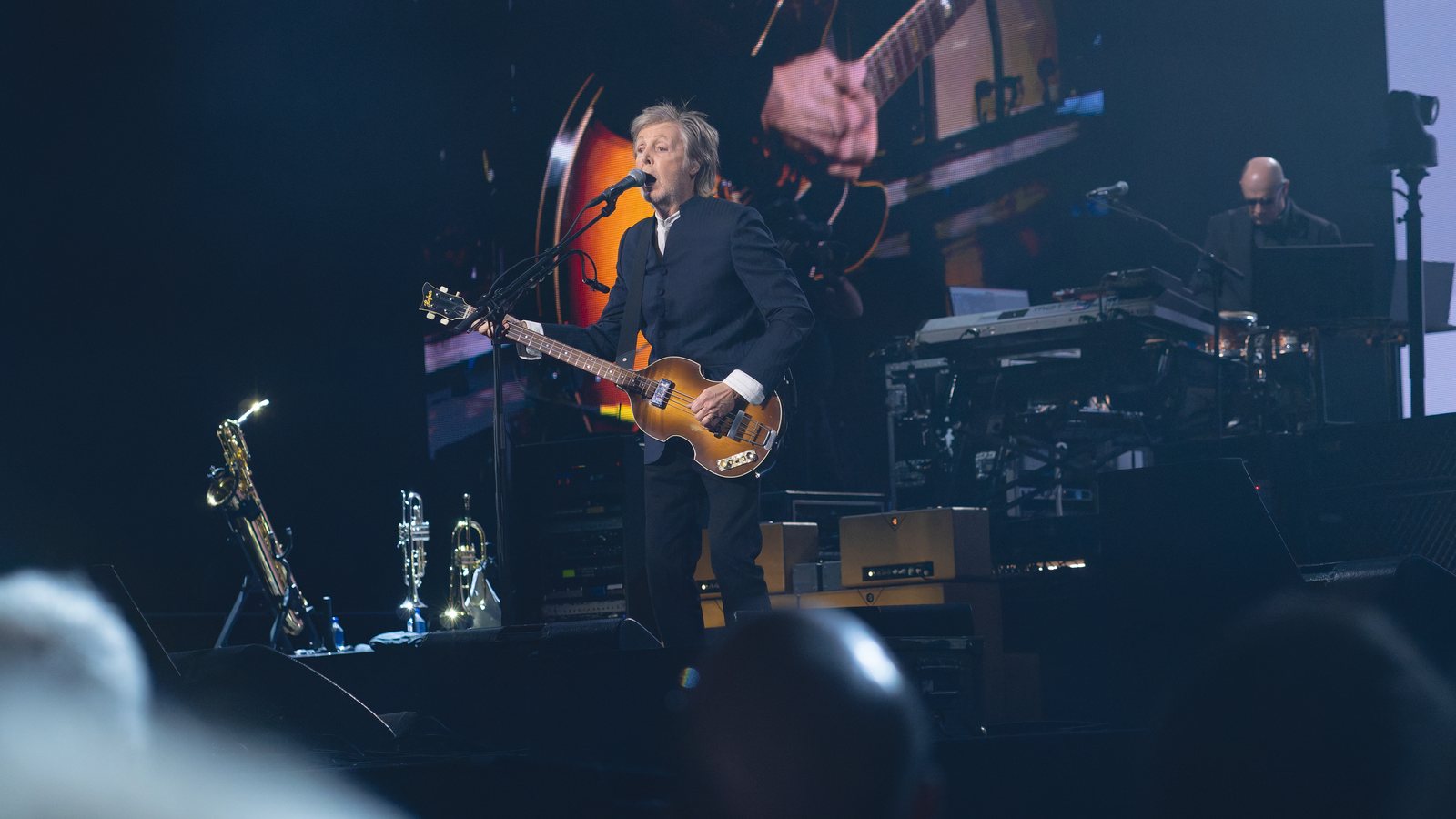

Paul McCartney’s net worth is at least $1.4 billion, according to a Forbes estimate published Nov. 9. That makes him the world’s third-richest musician, behind Jay-Z ($2.8 billion) and Taylor Swift ($2 billion).
The surprise in Forbes’ breakdown is that the Beatles are not the biggest piece. His largest asset is MPL Communications, his own company. It owns his solo work and thousands of songs by other writers. McCartney declined to comment on the estimates, Forbes said.
Forbes put Jensen Huang’s net worth at $155.4 billion the same day, but a musician is harder to price than a listed stake. So we checked Forbes’ figures against UK company filings. Both MPL and the Beatles’ company, Apple Corps, file accounts at Companies House, the UK’s company register.
MPL is the biggest piece, and the UK filing shows little of it
Forbes values MPL at $250 million or more and says it likely earns tens of millions of dollars a year. It has bought Buddy Holly’s catalogue, Broadway scores and dozens of Christmas standards, Variety reported from the Forbes story. Forbes notes that even high school productions of Grease send royalties to MPL.
MPL’s Companies House record adds two details. The company dates from Dec. 30, 1968, when it began as McCartney Productions Ltd, and took its current name in 1976. McCartney holds 75% or more of its shares, the register shows.
Its accounts for the year to March 31, 2025 show net assets of £28.2 million. That includes £10.3 million in cash and £9.1 million of investment property, and the company averaged 28 staff. As a small company, MPL chose not to file its income statement, so its revenue and profit stay private.
The balance sheet also lists no song catalogue as an asset. Forbes’ $250 million is therefore an estimate of what the rights would fetch. The UK filing can neither confirm nor contradict it.
Apple Corps: the Beatles recordings money, split four ways
Apple Corps runs the band’s recordings business, films and merchandise. Forbes says it brings in more than $50 million a year from streams, vinyl and merchandise. McCartney, Ringo Starr and the estates of John Lennon and George Harrison each get a 25% cut. Forbes values each stake at more than $150 million.
Apple’s own group accounts, filed Sept. 30, give the figures in pounds. Turnover reached £44.0 million in the 11 months to Dec. 31, 2025.
That compares with £31.8 million in the previous 12 months. The directors credited film licence income, and said “royalty income from the Beatles catalogue remained stable.”
Profit before tax came to £6.0 million, and Apple paid £3.6 million in dividends. Its register says no person holds more than 25% of the company, which fits four equal shares.
Apple does not own the master recordings themselves. EMI owned them, and Universal Music Group kept the Beatles catalogue when it bought EMI’s record business for $1.9 billion in 2012, NPR reported.
Who owned the Lennon-McCartney songs
Songwriting money is a separate stream. It goes to whoever owns the song itself, not the recording. That is why catalogues trade for so much, and why owners go to court to protect them. For most of his life, McCartney did not own his Beatles songs.
1963: Northern Songs starts up to publish Lennon-McCartney songs. Lennon and McCartney get 20% each and Brian Epstein’s NEMS 10%. Publisher Dick James and his partner Charles Silver hold 50% (company history).
1965: Northern Songs lists on the London Stock Exchange.
1969: James and Silver sell their shares to Associated Television (ATV) in March, without warning Lennon and McCartney. The pair sell out in October.
1985: Michael Jackson buys ATV’s catalogue for a reported $47.5 million. It holds about 4,000 songs, including more than 200 by the Beatles (NPR).
1995: Jackson merges the catalogue with Sony’s publishing arm, creating Sony/ATV.
2016: Sony pays Jackson’s estate $750 million for its 50% stake, NPR reported.
January 2017: McCartney sues Sony/ATV in federal court in Manhattan to confirm he can reclaim his US rights (Reuters via VOA).
June 2017: The two sides settle on confidential terms, and the judge dismisses the case.
From October 2018: McCartney’s US rights start to revert, beginning with “Love Me Do.”
His legal route was a 1976 change to US copyright law. It lets songwriters take back rights they signed away after a set number of years. McCartney sued six weeks after a British court blocked Duran Duran from a similar claim, Reuters reported.
What his Beatles songwriting share earns now
Forbes says McCartney now owns all of his US publishing. His share of the Beatles songwriting copyrights brings in at least $10 million a year, it estimates. It values that share at $200 million or more.
The settlement terms never became public. How the split works outside the US, and what Sony kept, isn’t on the record. The timeline does show one thing: it took McCartney more than 50 years to own songs he wrote in his twenties.
Touring and the rest of the fortune
Forbes says world tours have earned him hundreds of millions of dollars. His Got Back tour ran to 79 shows between 2022 and 2025. He also owns homes in the UK and the Hamptons, plus art by Picasso and Magritte, which Forbes did not value separately.
He is still releasing music. This year’s The Boys of Dungeon Lane debuted at No. 1 in the UK. It also made the Mercury Prize shortlist, a first for one of his albums.
Forbes is not the first to call him a billionaire. In May 2024, the Sunday Times Rich List put McCartney and his wife, Nancy Shevell, at £1 billion, the AP reported. That figure covered the couple, while Forbes’ estimate covers him alone.
The next public check on the numbers comes soon. MPL’s UK accounts for the year to March 31, 2026, are due at Companies House by Dec. 31.