
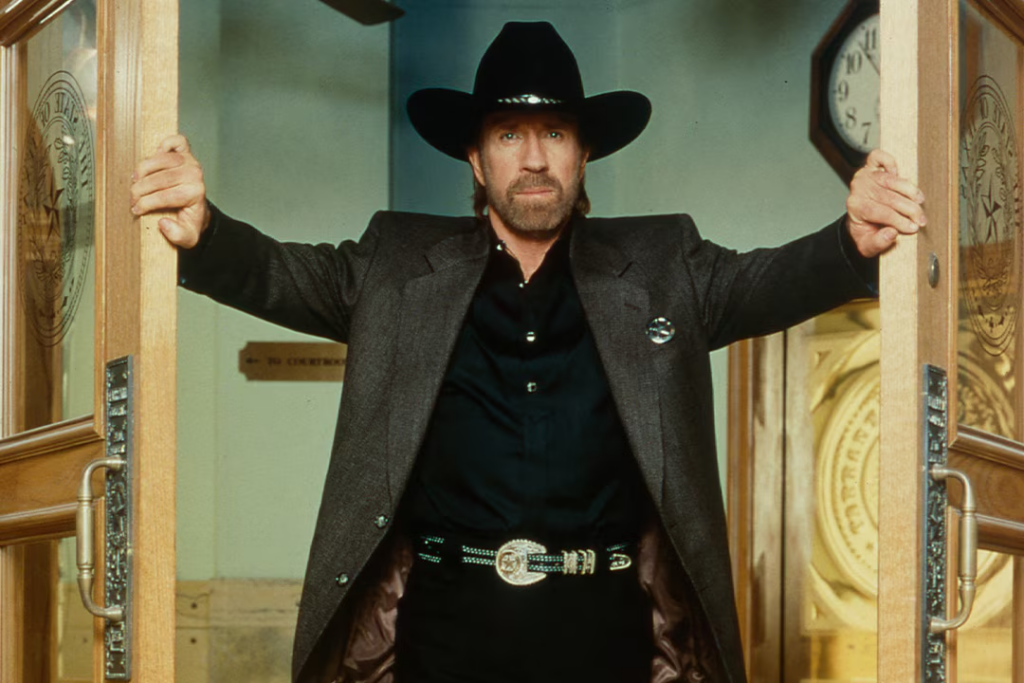
Chuck Norris, the martial arts champion turned Hollywood action star whose larger-than-life persona became internet folklore, has died at the age of 86.
His family confirmed he passed away on Thursday in what they described as a “sudden” but peaceful death, surrounded by loved ones.
Norris leaves behind a legacy that spans competitive karate, blockbuster films, hit television, and one of the internet’s most enduring meme cultures.
Who Was Chuck Norris?
Born Carlos Ray Norris in 1940 in Oklahoma, Norris rose from modest beginnings to become one of the most recognizable figures in martial arts and action entertainment.
From Air Force to Martial Arts Champion
Norris’ journey began in the United States Air Force, where he was stationed in South Korea. It was there that he began training in martial arts, including
- Tang Soo Do
- Judo
- Karate
After leaving the military in 1962, he quickly established himself as a dominant force in competitive karate.
A Record That Defined an Era
Norris became:
- Six-time undefeated World Professional Middleweight Karate champion
- Founder of his own martial arts system, Chun Kuk Do
- Leader of the United Fighting Arts Federation
He was later awarded a 10th-degree black belt, the highest possible honor, cementing his status as a martial arts grandmaster.
How Did Chuck Norris Become a Movie Star?
A Push From Hollywood Connections
Norris initially ran a chain of martial arts studios, teaching high-profile students like Steve McQueen, who encouraged him to try acting.
His early roles were small, but everything changed after crossing paths with Bruce Lee.
The Fight That Made History
In the 1972 film Return of the Dragon, Norris faced Bruce Lee in a now-iconic battle set in Rome’s Colosseum.
The scene remains one of the most famous fight sequences in martial arts cinema history and helped launch Norris into global recognition.
Building the Action Hero Persona
Norris went on to star in more than 20 films, including:
- Missing in Action
- The Delta Force
- Sidekicks
He consciously crafted a traditional hero image—clear moral lines, good versus evil, and justice prevailing.
Why “Walker, Texas Ranger” Made Him a Household Name
Television Stardom
In 1993, Norris took on his most defining role in Walker, Texas Ranger.
The show:
- Ran for nine seasons
- Featured Norris as a crime-fighting lawman
- Blended action with moral storytelling
It expanded his audience beyond action movie fans to mainstream American households.
Cultural Recognition
His impact went beyond entertainment:
- Named an honorary Texas Ranger
- Declared an honorary Texan
These honors reflected how deeply the character resonated with audiences.
How Did Chuck Norris Become an Internet Legend?
The Rise of “Chuck Norris Facts”
In the early 2000s, Norris’ tough-guy image took on a life of its own online.
“Chuck Norris Facts” became a viral phenomenon, featuring exaggerated, humorous claims like:
- “Chuck Norris counted to infinity—twice.”
- “Chuck Norris doesn’t do push-ups; he pushes the Earth down.”
These jokes transformed him into a myth-like figure.
Embracing the Meme Culture
Unlike many celebrities, Norris leaned into the trend.
He published The Official Chuck Norris Fact Book, blending humor with personal philosophy and donating proceeds to charitable causes.
This willingness to engage with internet culture helped extend his relevance to younger generations.
What Was His Influence Beyond Entertainment?
Martial Arts Education and Philanthropy
Norris co-founded programs promoting martial arts training for children, emphasizing discipline, respect, and personal growth.
He also:
- Wrote books on martial arts and philosophy
- Supported youth development initiatives
- Advocated for fitness and self-defense education
Political and Public Life
Norris was also known for his outspoken views:
- Strong Christian faith
- Advocacy for gun rights
- Support for Republican political candidates
He maintained a visible presence in political discourse, including endorsements and public appearances.
What Was Chuck Norris Like in His Final Years?
Even in his 80s, Norris remained active.
He made occasional film appearances, including:
- The Expendables 2
- Agent Recon
Shortly before his death, he shared a sparring video on social media with the caption:
“I don’t age. I level up.”
It was a fitting final note from someone whose persona blurred the line between human and legend.
Why Chuck Norris Still Matters
Norris’ legacy is unique because it spans three distinct worlds:
1. Martial Arts
He helped popularize competitive karate in the United States and built a lasting training system.
2. Entertainment
He defined a generation of action heroes rooted in moral clarity rather than anti-hero ambiguity.
3. Internet Culture
Few figures have transitioned into meme mythology as successfully—or as enduringly.
TL;DR
- Chuck Norris has died at 86 after a sudden passing.
- He was a six-time undefeated karate champion and martial arts pioneer.
- His acting career included iconic roles in “Walker, Texas Ranger” and major action films.
- He became an internet legend through “Chuck Norris Facts.”
- His influence spans martial arts, Hollywood, and digital culture.