
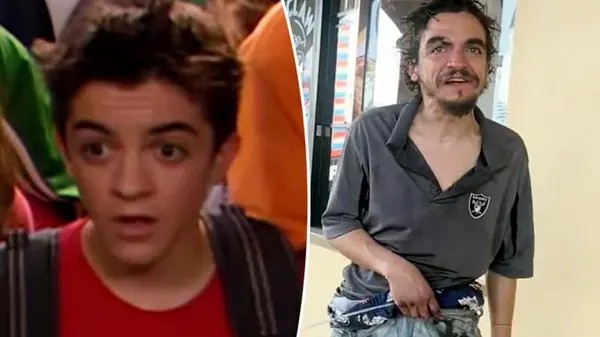
The internet was jolted this fall by a short, unsettling video filmed on a California street. In it, a man in a worn Raiders polo shifts his jeans awkwardly while answering a stranger’s question: Were you once on Nickelodeon?
“Yes,” he replies. “On Ned’s Declassified School Survival Guide.”
That man is now 36, and his appearance has reignited a difficult conversation about child stardom, mental health, and how quickly fame can fade without a safety net.
Who Is Tylor Chase?
Tylor Chase played Martin Qwerly on a Nickelodeon series that aired from 2004 to 2007 and became a defining after-school show for a generation.
While Chase was never the lead, his role was memorable enough that viewers recognized him nearly two decades later, proof of the long tail of child fame. But recognition doesn’t equal security. His current situation underscores how former child actors can struggle long after the cameras stop rolling.
How the Video Surfaced and What It Shows
The clip, first shared publicly in September and later amplified across social platforms, shows Chase speaking calmly with the person filming him in Riverside, California. There’s no dramatic confrontation, no meltdown — just a quiet confirmation of who he once was.
That ordinariness is part of what unsettled viewers. This wasn’t a tabloid spectacle; it looked like a life stalled.
Why the Video Went Viral
- Immediate recognition: Fans of early-2000s Nickelodeon spotted him instantly.
- Contrast effect: Childhood nostalgia collided with adult hardship.
- Silence from industry: No studio statements, no formal support programs in sight.
The GoFundMe That Didn’t Last
Shortly after the video circulated, a GoFundMe campaign appeared in Chase’s name, raising over $1,200. It was later taken down, not by the platform, but by his mother.
Her reasoning was blunt and revealing: Chase needs medical care, not cash. According to her statements, he struggles to manage money independently and has refused treatment in the past.
This detail reframes the story. It’s not just about financial instability; it’s about untreated or unmanaged health issues, a recurring theme in stories involving homelessness and former entertainers.
What His Former Co-Stars Said
Chase’s situation didn’t stay confined to social media. It came up on the hosted by his former castmates:
Their reactions were notably restrained, no performative shock, no PR-polished statements.
Key Takeaways From Their Comments
- Anger at the filming: Lee questioned whether recording someone in crisis was ethical.
- Powerlessness: All three acknowledged how limited their ability to help currently is.
- Affection, not pity: Shaw emphasized wanting to see Chase in person, not to “fix” him, but to show care.
These responses highlight a reality often overlooked: even close colleagues may lack legal or practical ways to intervene.
Why Child Stars Are Especially Vulnerable
Chase’s story isn’t unique, it fits a troubling pattern seen among former child performers.
Structural Issues at Play
- Early income, late planning: Earnings may peak before adulthood, without long-term financial guidance.
- Identity loss: Fame becomes a childhood identity that disappears abruptly.
- Limited labor protections: U.S. child actor safeguards focus on earnings, not post-career mental health.
While laws like California’s Coogan Act protect a portion of a child actor’s income, they don’t address what happens psychologically when relevance fades.
The Broader Context: Homelessness in California
California remains the epicenter of the U.S. homelessness crisis. According to recent federal estimates, the state accounts for nearly one-third of the nation’s unhoused population.
Chase’s situation intersects with this larger issue, reminding readers that homelessness cuts across class, fame, and background.
Why Recognition Doesn’t Prevent Homelessness
- Public sympathy is fleeting
- Social media attention rarely translates into sustained care
- Medical non-compliance complicates intervention efforts
This is where the story stops being about celebrity and starts being about systems.
What Happens Next and What Usually Doesn’t
As of publication, there’s no confirmed plan for Chase’s treatment or housing. His former co-stars have expressed hope, not certainty. His family has drawn boundaries. And the internet, as usual, has moved on.
That may be the most uncomfortable takeaway: viral concern rarely leads to durable outcomes.
TL;DR
- Former Nickelodeon actor Tylor Chase was spotted homeless in California.
- A viral video reignited interest in his life post-child stardom.
- A GoFundMe was removed after his mother said he needs medical care, not money.
- His co-stars expressed concern but acknowledged limited ability to help.
- The story highlights gaps in child actor protections and mental health support.