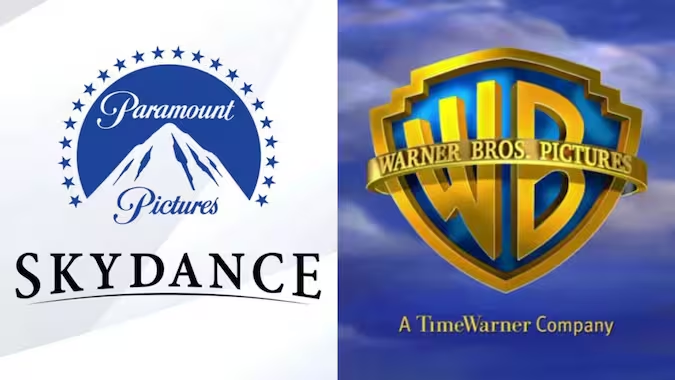
The Paramount-Warner Bros. deal has encountered another significant obstacle after a federal judge scheduled the blockbuster antitrust trial for March 2027, extending uncertainty around one of the largest proposed media mergers in recent years. The delayed timeline is a setback for77⁷77 Paramount, which had pushed for a November trial to speed up the transaction and reduce mounting financial obligations tied to the agreement.
The decision adds a new chapter to an increasingly contentious legal battle that pits Paramount against a coalition of 12 U.S. states, labor organizations, and regulators questioning whether the merger would reduce competition in the entertainment industry.
Why the Paramount-Warner Bros. merger trial was delayed
A federal court has officially scheduled the antitrust trial challenging the proposed Paramount-Warner Bros. merger to begin on March 2, 2027, with proceedings expected to continue through March 19.
Judge Araceli Martinez-Olguin also established several important milestones before the trial:
Key court dates
- February 24, 2027: Pretrial conference
- March 2–19, 2027: Twelve-day trial
- August 13, 2026: Deadline for both parties to submit a joint case management statement
The schedule comes despite Paramount’s request for a significantly earlier trial in November, making the ruling a meaningful procedural victory for those challenging the merger.
Why does the March 2027 trial matter?
For companies pursuing billion-dollar mergers, time often translates directly into money.
The later trial means Paramount will likely continue paying what are commonly referred to as “ticking fees”—contractual costs designed to compensate parties when a merger remains incomplete for an extended period. While the exact financial impact has not been publicly disclosed, these fees can become substantial in transactions of this size.
Beyond financial costs, prolonged uncertainty also affects:
- Long-term business planning
- Investor confidence
- Integration planning
- Employee retention
- Strategic investments
Media companies typically avoid lengthy merger reviews because they delay operational efficiencies and expected cost savings.
What is the antitrust lawsuit against the Paramount-Warner Bros. deal?
The legal challenge was brought by 12 U.S. states led by California, arguing that the merger could substantially reduce competition within the entertainment and media industries.
Antitrust lawsuits generally focus on whether a proposed merger could:
- Reduce consumer choice
- Increase market concentration
- Limit competition for creative talent
- Reduce bargaining power for content creators
- Harm advertisers or distributors over time
The states believe the transaction deserves closer judicial scrutiny before it can proceed.
Writers Guild also opposes the merger
The legal opposition extends beyond state governments.
The Writers Guild has also filed legal action seeking to block the merger, arguing that additional industry consolidation could negatively affect writers, creative professionals, and employment opportunities throughout Hollywood.
The Guild reportedly requested a trial schedule extending into April 2027, reflecting its preference for additional time to litigate the case.
Paramount says the merger is lawful
Following the judge’s scheduling order, Paramount maintained its position that the merger complies with antitrust law.
In a statement submitted to the court, Paramount said it respects the judge’s decision while continuing to believe that a full trial will demonstrate the transaction is:
- Lawful
- Pro-competitive
- Beneficial for consumers
- Supportive of the creative community
The company also argued that the lawsuit lacks factual, economic, and legal support under existing antitrust principles.
Paramount emphasized that it remains committed to completing the transaction as soon as possible once legal challenges are resolved.
CEO David Ellison says politics are driving the legal fight
Paramount CEO David Ellison has publicly pushed back against the lawsuit.
In an opinion article published in The New York Times, Ellison argued that political considerations—not genuine competition concerns—are driving opposition to the merger.
His comments signal that Paramount intends to aggressively contest the states’ claims throughout the upcoming trial.
Whether those arguments persuade the court will ultimately depend on evidence presented during the March proceedings rather than public statements.
Why this merger is attracting so much attention
The proposed $110 billion Paramount-Warner Bros. deal ranks among the most consequential media transactions in years.
If approved, it would combine two major entertainment companies with extensive portfolios spanning:
Film studios
The combined company would oversee an enormous collection of blockbuster film franchises and production assets.
Television networks
The merger would bring together significant television operations, potentially reshaping the traditional broadcasting landscape.
Streaming services
Streaming competition remains one of the industry’s biggest battlegrounds. Regulators are closely examining whether consolidation would strengthen or weaken competition against other major entertainment companies.
Content libraries
Both companies own decades of valuable television shows and films, making their combined intellectual property one of the largest entertainment catalogs in the industry.
Because of this scale, regulators are carefully evaluating whether the transaction could reduce competition or create excessive market concentration.
What happens next?
The coming months will largely focus on pretrial preparation rather than courtroom arguments.
Before the trial begins:
- Both sides will exchange evidence.
- Legal teams will continue filing motions.
- Experts will prepare economic analyses.
- The court will hold a pretrial conference in February 2027.
If the court ultimately sides with the states, the merger could be blocked or require significant changes before approval.
If Paramount prevails, the company would move one step closer to completing the acquisition, although additional regulatory hurdles could still remain depending on future legal developments.
What this means for the media industry
The outcome of the Paramount-Warner Bros. case could influence how future mega-mergers are evaluated across the entertainment industry.
Recent years have seen regulators take a more aggressive approach toward large corporate consolidations, particularly in technology, healthcare, and media. A ruling in this case may establish important guidance for future transactions involving major content producers.
For investors, creators, and consumers alike, the March 2027 trial has become one of the most closely watched antitrust cases in the entertainment business.
TL;DR
- A federal judge has scheduled the Paramount-Warner Bros. merger trial for March 2–19, 2027.
- Paramount had requested a November 2026 trial to avoid costly merger-related fees.
- Twelve U.S. states, led by California, are attempting to block the $110 billion transaction on antitrust grounds.
- Paramount insists the merger is lawful and says the legal challenge is politically motivated.
- The delayed trial could increase financial pressure while leaving the future of the merger uncertain.