
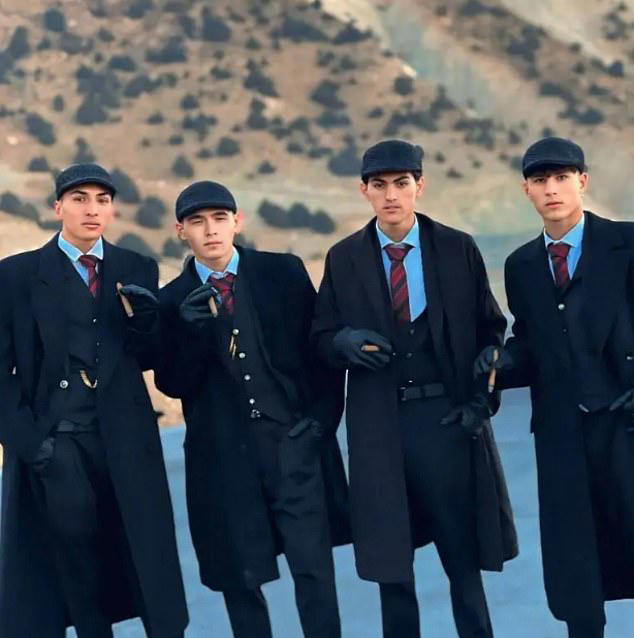
Four teens in western Afghanistan were detained and reprimanded by the Taliban after dressing up as characters from the British crime drama Peaky Blinders, highlighting the group’s tightening restrictions on cultural expression and its campaign against what it calls “foreign influence.”
The incident unfolded in Herat after social media photos of the youths—wearing flat caps, dark coats, and tailored suits reminiscent of the TV show’s Shelby brothers, spread online. The group’s playful homage quickly turned into a confrontation with Taliban authorities, who viewed the outfits as an attack on Afghan identity.
TL;DR
- Four Afghan teens were detained by the Taliban for dressing as Peaky Blinders characters.
- Officials accused them of promoting “foreign culture” and violating Afghan dress codes.
- The Ministry for the Promotion of Virtue and Prevention of Vice intervened after videos circulated online.
- The young men were later released with a warning and told to avoid “imitating foreign actors.”
- The incident reflects the Taliban’s broader campaign to enforce strict cultural, religious, and clothing norms.
Why the Taliban Detained the Teens
According to Taliban authorities, the youths—identified as Asghar Husinai, Jalil Yaqoobi, Ashore Akbari, and Daud Rasa—were not simply wearing fashionable Western coats. Their outfits, which mimicked fictional gangsters from Peaky Blinders, were interpreted as an endorsement of non-Islamic values.
Officials said the Ministry for the Promotion of Virtue and Prevention of Vice intervened when images and videos of the group began circulating across Afghan social media. Some users had jokingly dubbed them the “Jebrael Shelbys,” a nod to the characters’ swaggering personas.
Taliban spokesperson Saif-ur-Islam Khyber said the attire violated Afghanistan’s cultural standards.
“We have our own religious and cultural values,” he said. “Praise be to Allah, we are Muslims and Afghans… We have protected this country from harmful cultures, and now we are defending it.”
What Happened to the Four Teens?
Initial reports suggested the youths were sent to a rehabilitation or re-education program. Later, Khyber clarified to CBS News that they were:
- summoned,
- warned,
- and released.
One of the young men later declared that he had been “advised” not to engage in such activities again and vowed to avoid similar behaviour in the future.
Their release does not lessen the seriousness of the message: the Taliban is watching, and even symbolic gestures that seem harmless elsewhere can be interpreted as ideological violations inside Afghanistan.
How Clothing Became a Cultural Fault Line
Taliban’s view on dress and identity
Since returning to power in 2021, the Taliban has enforced sweeping regulations on clothing for both men and women. Western fashion, modern hairstyles, and nontraditional attire have been repeatedly targeted as “harmful” or “un-Islamic.”
Khyber emphasised that the outfits worn by the teens had “no Afghan identity at all.”
He argued that imitating foreign actors contradicts Islamic principles, saying:
“If we are to follow someone, we should follow our righteous religious predecessors in good and lawful matters.”
Why Peaky Blinders specifically drew attention
The show’s aesthetic—razor-flat caps, three-piece suits, gangster bravado—has become a global fashion trend. But in Afghanistan, such clothing is now politically loaded:
- It signals modernity and Western influence.
- It represents entertainment media the Taliban often criticizes as immoral.
- It challenges strict interpretations of Islamic modesty.
For Taliban authorities, the combination of viral images and Western symbolism was enough to trigger intervention.
A Wider Pattern: Culture Under Taliban Scrutiny
This episode fits into a broader crackdown on entertainment, fashion, and expression:
- Barbers have been warned against “Western” haircuts.
- Musicians, artists, and performers have faced intimidation or bans.
- Women face severe dress restrictions enforced by religious police.
- Social media users have been detained for dancing or making comedy videos.
For Afghan youth—many of whom grew up during a two-decade period of relative openness—the restrictions feel especially stark.
Why This Incident Resonates Beyond Afghanistan
The detention of the four teens drew international attention not because of the outfits themselves but because:
1. It highlights growing limits on personal expression
Even harmless pop-culture references can be criminalised.
2. It reflects ideological rigidity
The Taliban sees cultural identity as a battlefield and Western media as a threat.
3. It reveals generational tension
Afghanistan’s young population consumes global content online, but the state seeks to erase or control those influences.
4. It shows how social media fuels enforcement
What went viral as a lighthearted imitation triggered real consequences.
Suggested external sources for fact-checking:
- Taliban Ministry for Virtue and Vice statements
- CBS News interview with Saif-ur-Islam Khyber
- Human Rights Watch reports on cultural restrictions in Afghanistan
What Happens Next?
While the four young men were released, the Taliban’s messaging is unmistakable: public displays of Western fashion or media references will be monitored and penalised.
For Afghanistan’s younger generation—largely born after 2000 and accustomed to global cultural trends—the clash between self-expression and state enforcement is likely to intensify.