

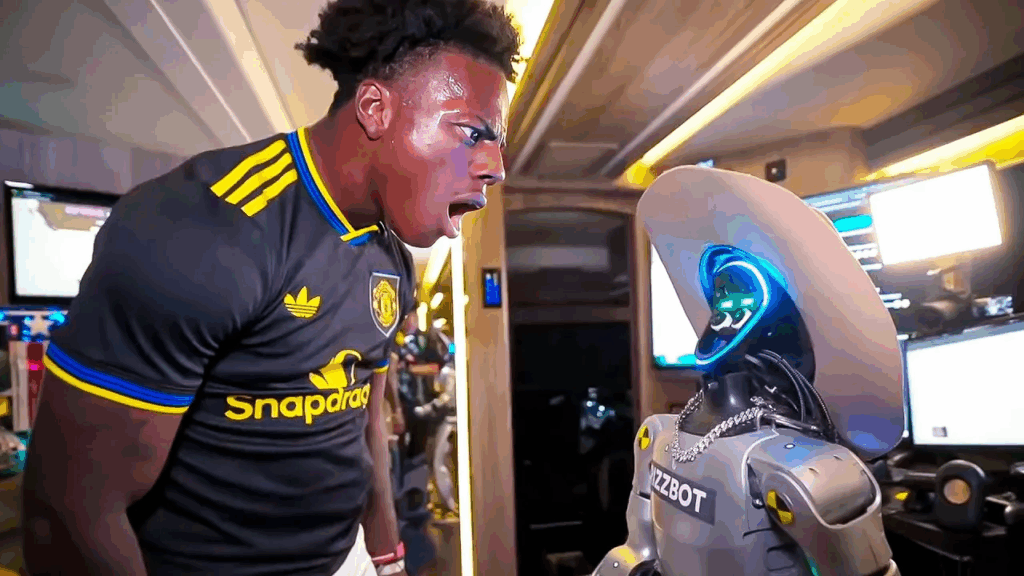
YouTube star IShowSpeed is facing a $1 million lawsuit after a resurfaced livestream clip appeared to show him punching and choking Rizzbot, a viral humanoid robot known for its sarcastic humor and chaotic social media presence. The complaint, filed by Social Robotics, accuses the creator, real name Darren Jason Watkins Jr., of intentionally damaging the robot. The incident has reignited debates about creator conduct, AI-powered entertainment, and the legal gray zones around human–robot interaction.
This article breaks down what happened, why it matters, and how the lawsuit could influence the future of influencer–robot collaborations.
What Triggered the Rizzbot Lawsuit?
In a livestream recorded in September, IShowSpeed is seen reacting to Rizzbot’s signature gestures—mocking commentary, sarcastic “roasts,” and its habit of flipping people off. The video shows Speed flipping from amused to irritated, culminating in him slamming the robot onto a couch, striking its body, and grabbing it by the neck.
Social Robotics alleges these actions caused “complete loss of functionality.”
In the lawsuit filing, the company claims:
“Speed absolutely knew that this was not an appropriate way to interact with a sophisticated robot and knew that such actions would inflict irreparable damage to Rizzbot.”
The filing also details several mechanical failures:
- Non-functioning head cameras
- Damaged neck ports connecting the visual and audio sensors
- Loss of stability, with the robot reportedly unable to walk straight
The company maintains that the physical damage directly resulted from Speed’s actions and that the viral clip—still circulating online—serves as the primary evidence.

Who Are IShowSpeed and Rizzbot?
Understanding the lawsuit requires understanding the two personalities involved—one human, one robotic.
IShowSpeed: A high-octane creator with global influence
With an audience of nearly 50 million followers, IShowSpeed has built a career on chaotic, unpredictable humor, massive reactions, and celebrity interactions—particularly with football icons like Zlatan Ibrahimovic and Cristiano Ronaldo. His appeal stems largely from volatility, spectacle, and fast-moving livestream formats.
Rizzbot: A robot engineered to go viral
Rizzbot, developed by Social Robotics, is intentionally designed to behave like a rebellious internet personality.
The robot is known for:
- Sharp-tongued one-liners
- Comedic “roasts”
- Irreverent gestures
- An intentionally confrontational persona
With over one million followers, Rizzbot has become a social media character in its own right, part of a growing category of AI-driven influencers engineered for entertainment.
Because the robot’s personality is built on provocation, some viewers saw the confrontation as humorous, even inevitable.
One viral comment captured the sentiment:
“When artificial intelligence meets non-intelligence.”
Others jokingly suggested the incident was a staged crossover:
“This is clearly a two-party promotional bit.”
What the Lawsuit Says About Robot Rights and Creator Responsibility
This case tests emerging questions about liability in human–robot entertainment collisions.
Who bears responsibility when a robot is damaged during content creation?
Robots like Rizzbot blur the line between personified characters and high-value devices.
For creators, the issue raises practical questions:
- Is a robot treated like a prop?
- A piece of technology?
- Or something more akin to a co-performer?
Legal experts say that even though robots lack personhood, property damage, negligence, and contractual obligations still apply.
A robotics law scholar might frame it as:
“Rizzbot may be a character, but behind the character is expensive engineering. When creators treat robots like fictional actors, they forget that the law sees them as assets.”
The lawsuit could set a precedent for AI influencer collaborations
As social platforms become saturated with AI-generated personalities, humans and robots increasingly appear together in videos. Brands also use AI characters for marketing campaigns.
Any legal ruling here could:
- Establish clearer boundaries for physical interaction
- Influence how companies ensure robotic devices
- Shape creator guidelines for working with AI characters
- Encourage platforms like YouTube to update policies on robotic or hardware abuse
This case, therefore, goes beyond entertainment—it’s an early test of robotic risk management in the influencer economy.
Why Online Reactions Matter
The internet has largely responded with humor, memes, and skepticism about whether the robot is truly damaged.
But this collective reaction reveals something deeper about how audiences perceive AI personalities:
1. Viewers anthropomorphize robots—but dismiss their vulnerability.
People treat Rizzbot as a comedic character, not as a fragile machine with expensive components.
2. The harm is interpreted through narrative, not hardware.
If an AI influencer “can’t feel pain,” then many viewers assume the interaction is harmless—even when the company documents physical damage.
3. The influencer economy thrives on chaos.
Audiences often reward controversy, which creates powerful incentives for such stunts—real or orchestrated.
This cultural context complicates legal proceedings. If large portions of the audience believe the video is staged marketing, potential jurors may also enter the conversation with preconceived notions.
Could This Be a Publicity Stunt?
Some users insist the video is “clearly scripted,” arguing that no company would let a valuable robot be handled so violently without protection or restriction.
However, three things matter legally:
- Intent (did Speed knowingly damage property?)
- Extent of damage (engineering assessments will be crucial)
- Contractual terms (was Speed briefed on handling protocols?)
If Social Robotics can provide repair invoices, sensor diagnostics, and expert testimony, any claim of a staged stunt becomes weaker.
If they cannot, the defense could argue the robot was pre-damaged, improperly maintained, or that the act was part of a mutually beneficial promotional campaign.
Either way, the trial is likely to become a case study in robot–human brand partnerships.
Why This Lawsuit Matters for the Future of AI Entertainment
This story combines three fast-moving cultural forces:
- Influencer behavior
- AI-driven entertainment
- Robotics law
Together, they form a blueprint for future disputes. Here’s what the industry should pay attention to.
Platforms will face pressure to update rules
YouTube, Twitch, and TikTok will likely need clearer language around:
- Abuse of robotic devices
- Safety protocols during live AI interactions
- Disclosure requirements for staged content
Robotics firms may need standardized creator agreements
Future contracts may include:
- Handling guidelines
- Liability clauses
- Required supervision during livestreams
- Insurance minimums
Creators will be held to higher standards
As more AI characters join the entertainment ecosystem, creators will need to adapt to:
- Treating robots as expensive hardware
- Respecting operational limitations
- Understanding that “playing rough” may carry legal consequences
TL;DR
- IShowSpeed is being sued for $1 million for allegedly punching and choking the viral robot Rizzbot during a livestream.
- The robot’s maker claims the assault caused major mechanical damage.
- Online reactions are mostly humorous, with some suggesting the altercation was staged.
- The case could shape future legal and ethical rules around human–robot interactions in creator spaces.
- The outcome may influence how platforms regulate AI personalities and how robotics firms structure partnerships with influencers.