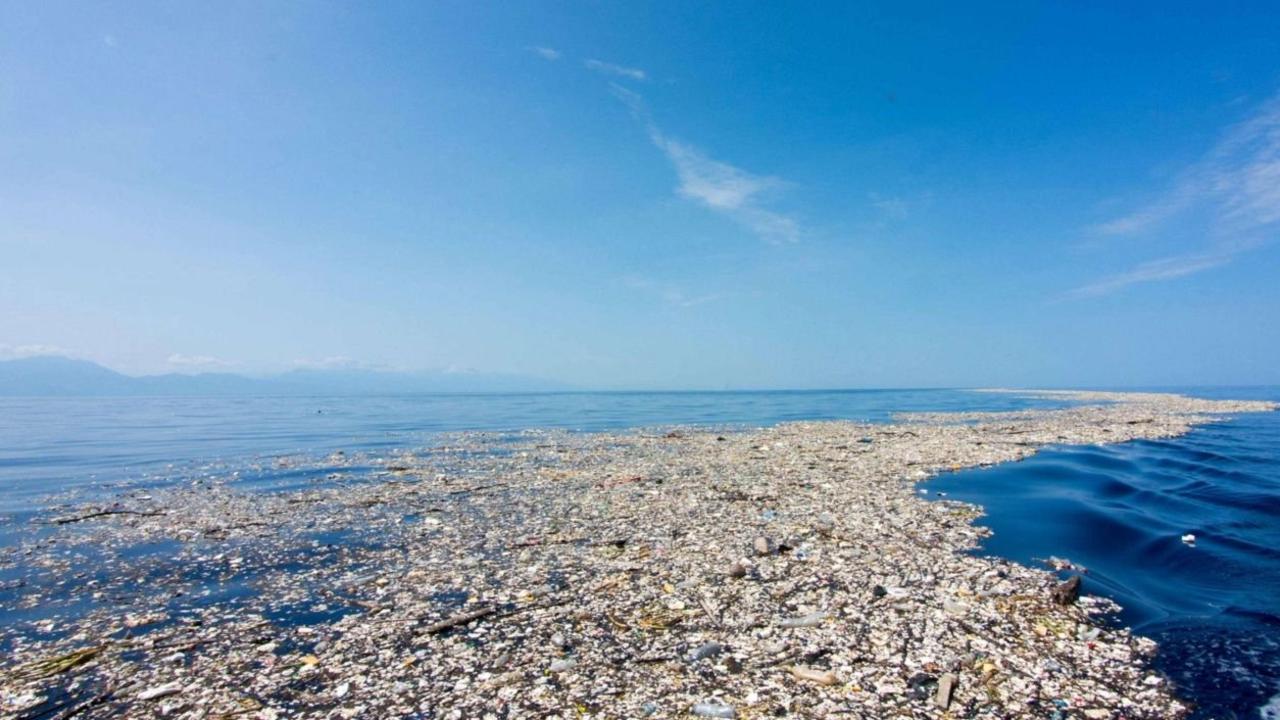
Scientists have found coastal communities thriving on the great Pacific garbage patch. Read to know more.
Coastal life on the Great Pacific garbage patch:
Scientists found coastal creatures including anemones and tiny crabs living on the great Pacific patch. The ‘patch’ is a massive trash spanning about 620,000 square miles between California and Hawaii. A new study published in Nature Ecology and Evolution revealed dozens of coastal invertebrates surviving and reproducing on the garbage patch. Scientists revealed these findings suggest that plastic pollution may be enabling new floating ecosystems of species that are normally unable to survive in the open ocean.
Unlike organic matter that decomposes with time, plastic debris floats for much longer, offering creatures a new opportunity. “It was surprising to see how frequent the coastal species were. They were on 70% of the debris that we found,” stated Linsey Haram. Haram is the lead author of the study and a science fellow at the National Institute of Food and Agriculture.
More on the new study
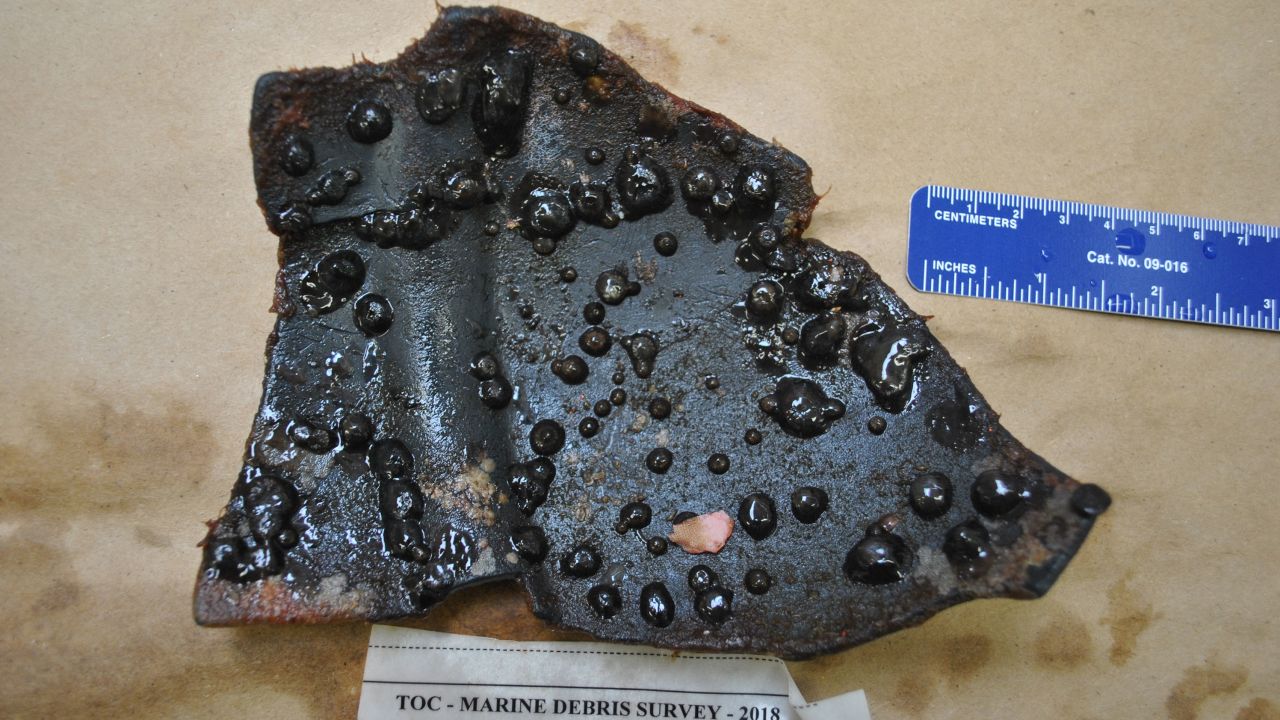
Haram and her colleagues examined 105 plastic items from the Great Pacific Garbage Patch between November 2018 and January 2019. They were able to identify 484 marine invertebrate organisms. They account for 46 different species and among them 80 percent were coastal organisms. “Quite a large percentage of the diversity that we found were coastal species and not the native pelagic open ocean species that we were largely expecting to find. On two-thirds of the debris, we found both communities together. Competing for space, but very likely interacting in other ways,” explained Haram.
However, the introduction of new species into the remote areas of the ocean is not clear. “There’s likely competition for space because space is at a premium in the open ocean, there’s likely competition for food resources – but they may also be eating each other. It’s hard to know exactly what’s going on, but we have seen evidence of some of the coastal anemones eating open ocean species, so we know there is some predation going on between the two communities,” she explained.