
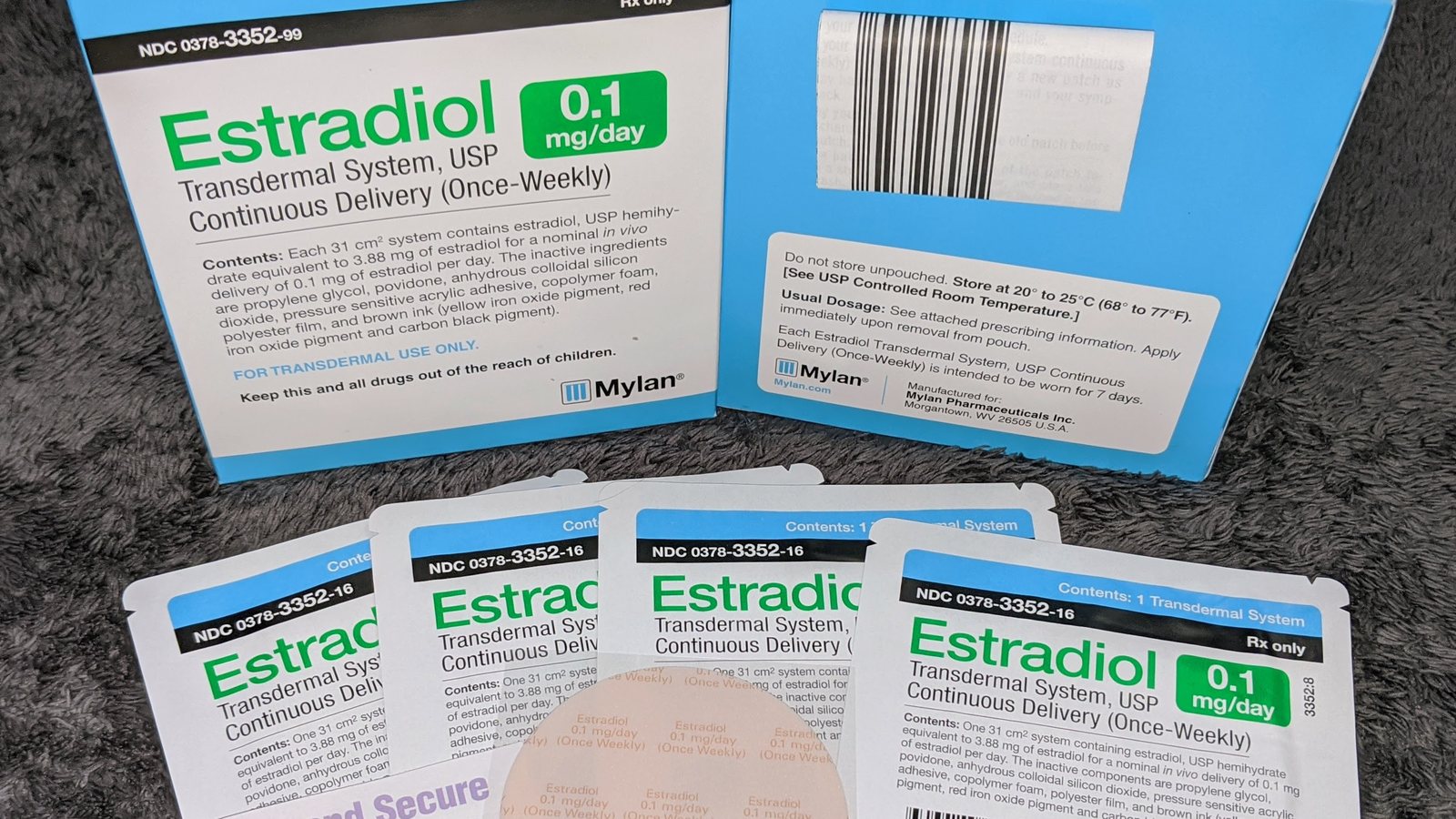

The estrogen patch shortage that has sent women from pharmacy to pharmacy this year still doesn’t exist on paper. As of October 29, estradiol patches do not appear in the FDA’s drug shortage database, even as the agency says it is working with all six manufacturers to make more.
That gap is no longer just a matter of wording. Reuters reported on October 28 that the squeeze has spread to some estradiol injections and vaginal creams as patients switch products. Three senators have given the FDA until November 16 to explain how it decides what counts as a shortage.
Pharmacies say back order; the FDA says available
The FDA’s position rests on a September 3 update. It says the supply of FDA-approved estradiol patches “has nearly doubled” over the past year. The patches “remain available,” the agency says, though particular brands or strengths may vary by pharmacy or location.
Patients describe something else. At PEHP, one of Utah’s largest health plans, estradiol patch use rose 167% in two years, KSL reported on October 26. The reporter’s own pharmacy said the product had been on back order since May.
The American Society of Health-System Pharmacists keeps its own list, and it first flagged estrogen patches in January. By May it counted 14 patch brands or dosages, according to NBC News. ASHP’s Michael Ganio told NBC that the group’s list is “100% reported” by clinicians, pharmacists, patients and caregivers.
FDA Commissioner Dr. Marty Makary told NBC at the time that the patches had not met the criteria for the shortage list. “The industry has been able to keep up but barely,” he said.
Two lists, two definitions
Both lists can be accurate at once, because they measure different things.
The FDA’s shortage FAQ defines a shortage as a period when US demand, or projected demand, “exceeds the supply of the drug.” The agency judges that on a nationwide level. It says local supply problems are usually temporary and tied to distribution.
Under that test, one manufacturer’s empty shelf does not count if another maker’s patch could cover the market. ASHP counts the empty shelf. Ganio also told NBC that the FDA relies on historic demand data, which can lag behind a surge like this one.
The surge has a clear starting point. In November 2025, the FDA moved to remove boxed warnings about breast cancer, cardiovascular disease and dementia from menopausal hormone therapy labels. The agency’s own September update names that action as one reason demand rose.
Patches were the obvious first choice for many women. They are often covered by insurance and carry a lower blood-clot risk than pills, Baylor College of Medicine’s Dr. Nina Ali told NBC News in February. The twice-weekly versions seem hardest hit, she said.
Women are also staying on hormone therapy longer than older guidance advised, Dr. Kathleen Jordan, chief medical officer of telehealth provider Midi Health, told NBC in May. The years after menopause can take up as much as 40% of a woman’s life, as our report on women’s heart risk by life stage noted.
In mid-October, the American College of Obstetricians and Gynecologists issued its first menopause symptom guidance update since 2014, NPR reported. It backs hormone therapy for women who can take it. ACOG is also one of the groups behind this month’s new four-stage approach to women’s heart health, which singles out the years after menopause.
Why the shortage label matters
The label is more than a statistic. Listing a drug lets regulators pursue alternative suppliers and extend expiration dates, NBC News reported.
It also changes what pharmacies may make themselves. The FDA’s compounding rules say a drug “is not considered to be commercially available” while it is on the shortage list. That lifts the normal limit on compounders making what amount to copies of an approved product. Outsourcing facilities gain similar room.
Neither applies to estradiol patches today. Compounded drugs are not FDA-approved. The same FDA page says one might fit when an approved drug can’t meet a patient’s medical needs.
So the FDA’s choice keeps patch supply in the hands of six manufacturers. They are racing to expand, but patches need specialized equipment and processes, the FDA says, so larger expansions take longer.
Manufacturers add shifts as shortages spread
Viatris, one of those makers, told Reuters it moved its St. Albans, Vermont, plant to around-the-clock production this year and is adding a new line. Amneal said it is working to raise output. Bayer expects supply limits on one Climara dose until early 2027, Reuters reported in September.
Erin Fox of the University of Utah told KSL that manufacturing is up about 50% from last year.
Back in April, Reuters reported that industry sources expected the shortages could last up to three years. Patches are low-margin generics, which gives makers little reason to build new lines, a process that can take years.
The newest Reuters report shows the problem moving. ASHP lists several estradiol injections and vaginal estradiol creams as in short supply or on allocation. Midi Health’s Jordan called it a “domino effect” as prescribers shift patients to gels and creams.
One new option arrived this month, though it won’t help most patch users. The FDA approved Zydus’s generic of Bayer’s Climara Pro, a once-weekly patch that combines estradiol with a progestin, Contemporary OB/GYN reported on October 20. It comes in a single strength, is limited to women with a uterus and has no announced launch date.
What to ask your pharmacist and doctor
The FDA’s advice is short. Ask your pharmacist whether another FDA-approved patch can substitute, talk to your provider about alternatives and “do not stop or change your medication” without that conversation.
Pharmacists and menopause doctors quoted in coverage this year add practical steps:
- Widen the search. Utah pharmacist Phil Cowley told KSL to call other pharmacies and start refills early.
- Get both schedules on file. Cowley suggested asking the doctor to prescribe both once-weekly and twice-weekly patches, so the pharmacy can fill whichever it has.
- Ask about other forms. Mayo Clinic’s Dr. Stephanie Faubion listed other patch brands, creams, gels, oral estrogen and vaginal rings as options in her interview with NBC News. Oral estrogen isn’t for women with a history of blood clots, she said.
- Check cost before switching. Non-patch forms are less often covered by insurance, Northwestern’s Dr. Lauren Streicher told NBC.
Switching isn’t always smooth. Some women feel more symptoms on weekly patches than on twice-weekly ones, UCLA’s Dr. Rajita Patil told NBC News.
Patients and pharmacists can track which products ASHP considers short on its public drug shortages list.
The next marker is the senators’ deadline. Sens. Kirsten Gillibrand, Tammy Duckworth and Adam Schiff asked the FDA what conditions must be met to list estradiol patches and whether it is weighing temporary imports, FingerLakes1.com reported. They want written answers by November 16.