
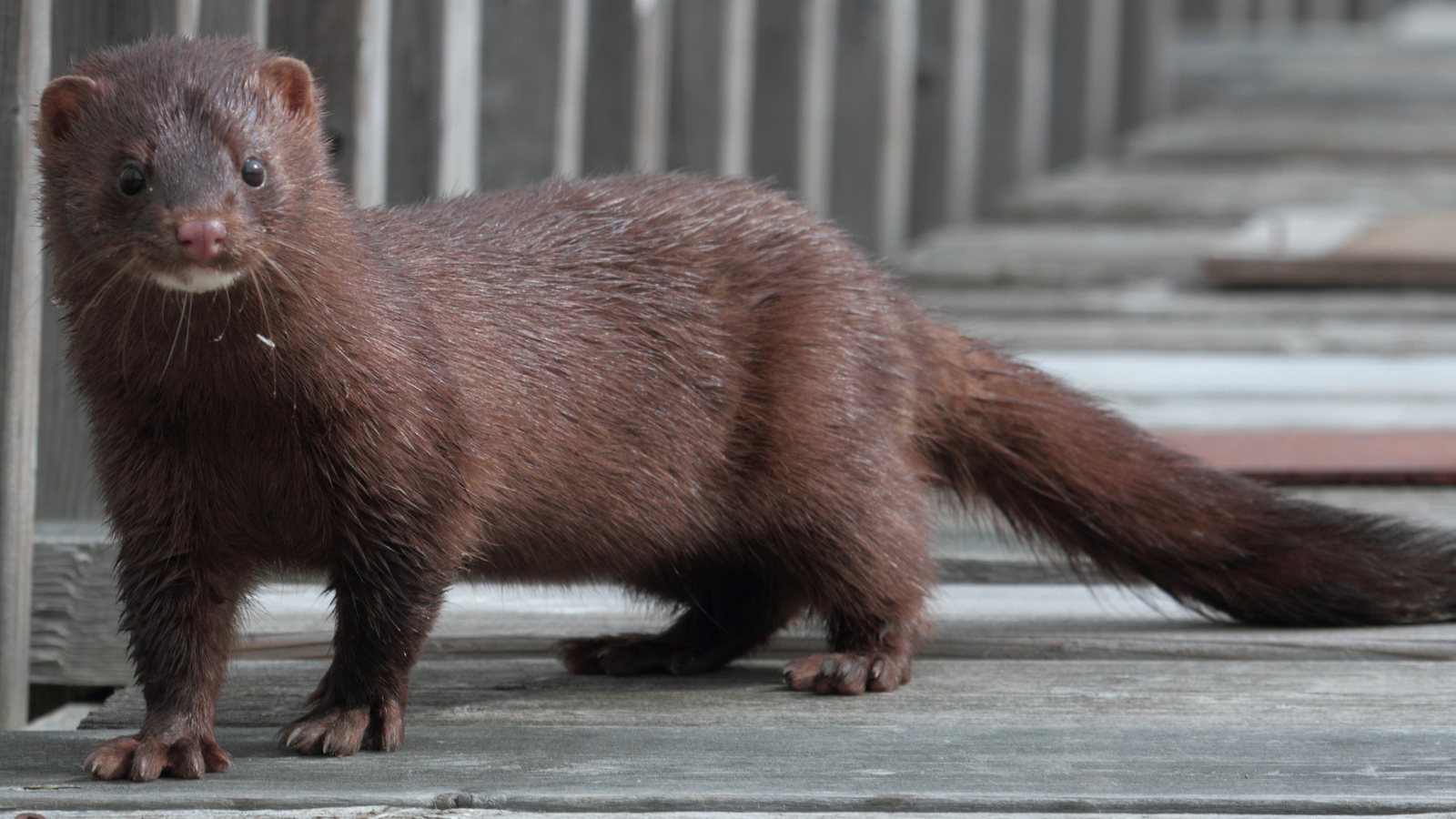

Bird flu has been spreading through a Utah mink farm since mid-August, and the state has neither culled the animals nor monitored the people who work with them, ProPublica reported on October 23. For most Americans, the direct risk is still low. The CDC says so, and so do the experts who are most critical of Utah’s response.
The worry is about what the virus could become. Mink can catch both bird and human flu viruses, and an outbreak that runs for months gives H5N1 many chances to change. That is why flu researchers reacted so sharply, even though no human infection has turned up.
What ProPublica found at C&T Fenn Farms
ProPublica’s Nat Lash and Julie Leopo broke the story using Utah public records. Utah agriculture officials learned in mid-August that mink were dying of bird flu at C&T Fenn Farms, about an hour’s drive south of Salt Lake City, according to those records.
Federal data already showed it. The USDA’s list of H5N1 detections in mammals shows seven captive American mink in Utah, sampled on August 7 and confirmed on August 17. That is the first captive mink entry in the dataset. The listed county, Salt Lake, is a stand-in: the USDA’s notes say it uses the state capital’s location for some detections “to protect data confidentiality.”
State veterinarian Amanda Price asked the USDA for help, and federal officials told her they didn’t regulate mink or have a vaccine approved for them, ProPublica reported. The USDA told the outlet it has no “species-specific regulatory authority or dedicated programs” to vaccinate mink, cull them or compensate owners.
Instead of a quarantine, Price placed the farm under a “verbal hold” on moving mink, manure or carcasses. She has not visited the property. “There’s just not a lot of options out there other than kind of sitting and waiting and seeing what happens,” she told ProPublica.
Workers were not monitored either. Under a 2025 agreement, Utah’s health department monitors workers only if there is evidence of human-to-human spread, ProPublica found.
On October 17, a ProPublica reporter met two farm workers, and one had a visibly red eye. Owner Chad Fenn said the worker had dust in his eye, and that the Utah County Health Department did not recommend testing.
Fenn said the virus is still spreading on the farm, though more slowly. The Guardian followed the story on October 25; the USDA and Price did not immediately respond to it.
Why mink worry flu scientists more than chickens
H5N1 is still a bird virus. It binds best to receptors found in birds, not the ones that line human noses and throats. That is a big reason it has not spread from person to person.
Mink are different. Their airways carry plenty of the human-type receptors, ProPublica noted. Lab and field studies show mink are “susceptible and permissive to both avian and human influenza A viruses.” That makes them a possible “mixing vessel,” according to a 2023 paper in Eurosurveillance.
Two routes concern virologists. Each mink-to-mink infection gives the virus another chance to mutate toward human receptors; a 2024 Scripps study, cited by ProPublica, found a single mutation could switch the dairy-cow strain’s preference.
The second route is reassortment. If a bird flu virus and a seasonal flu virus infect the same cell, they can swap genes.
“The most likely scenario for a pandemic is that we have a virus that reassorts with another virus,” Jennifer Nuzzo, director of the Pandemic Center at Brown University School of Public Health, told ProPublica. “Obviously, having this circulate amid human flu season is not great.” This year’s flu season started unusually early, in September.
Genetic data from the first dead mink show the same strain that has spread in US dairy herds since 2024. Experts and the CDC told ProPublica those early sequences showed no particularly concerning mutations. Officials do not know how the mink caught it.
Spain culled 51,986 mink in 2022. Utah has culled none
Europe has faced this exact situation before. In October 2022, H5N1 hit a mink farm in Carral, in Spain’s Galicia region. The Eurosurveillance report by Spanish and Italian scientists describes what happened next.
Officials counted 51,986 mink on the farm. Weekly deaths climbed until the week of October 17 to 23, when 4.3% of the animals died. The virus carried an uncommon mutation, T271A, which helps flu viruses copy themselves in mammal cells. The authors wrote that mink-to-mink transmission “may have occurred.”
Spain ordered a cull on October 18, and every mink was dead by November 17. All 11 workers who had handled the animals tested negative. They then spent 10 days in semi-quarantine.
“Every other country that I’m aware of that has had H5N1 in fur farms, depopulation has happened pretty quickly,” Tom Peacock, an avian influenza researcher at the Pirbright Institute, told ProPublica. “The fact that the first instinct wasn’t just to depopulate and figure stuff out later is very concerning to me.”
Fenn told ProPublica he blames anti-fur activists for the fears about mink. “Europeans are a little scared of everything,” he said.
Utah has had a mink outbreak before
Utah officials were far more responsive to the spillover threat in 2020, ProPublica reported. From July to November that year, Covid-19 killed mink on 12 Utah farms, according to a CDC-led investigation published in the journal Viruses. Workers most likely brought the virus in. The mink then passed it to other animals, but investigators found no mink-to-human spread.
Federal wildlife teams trapped animals around the infected farms that August. All 11 presumed escaped farm mink they caught had Covid antibodies, a USDA-led team reported in Emerging Infectious Diseases. ProPublica reports that the farm now hit by bird flu was among those infected in 2020.
Denmark shows what can happen when mink spread a virus back to people. By December 2020, the virus had reached 289 Danish mink farms. A mink-linked coronavirus variant called “Cluster 5” turned up in 12 people in North Jutland, the World Health Organization reported. Denmark then ordered every farmed mink in the country culled.
What the CDC says about your risk
The CDC’s current situation summary, updated October 15, says “the current public health risk is low.” It counts 72 human H5 cases in the US since February 2024. It describes them as sporadic cases in dairy and poultry workers.
ProPublica reports that two people have died after catching the virus from animals. Officials have reported no human case linked to the Utah farm. For scale, the CDC counted 4,588 confirmed US measles cases this year by October 22.
Nuzzo, who told the Guardian that officials’ apparent lack of transparency was very troubling, was just as plain about the public risk. “The risk is greatest among people who have exposure to sick animals. If that is not you, I think you can take this off your worry list,” she said. She added that this “does not abdicate the government of its responsibility to try to prevent a pandemic.”
The CDC’s prevention guidance for the public is short:
- Avoid touching sick or dead birds and other animals, and watch wildlife from a distance.
- Don’t drink raw milk or eat raw milk products.
- Cook poultry, eggs and beef to safe temperatures, which kills the virus.
- If you get sick within 10 days of contact with a possibly infected animal, stay home and call your health department.
A seasonal flu shot won’t protect against H5N1, the CDC says. For farm workers, though, it may cut the very rare chance of catching both viruses at once.
For workers, CDC guidance calls for monitoring anyone exposed to infected animals for 10 days, and testing those with eye redness or respiratory symptoms. Eye redness is the symptom ProPublica saw on the Utah worker.
New samples could show whether the virus has changed
Fenn told ProPublica of new samples taken in early October, and Price said she was still waiting for results. Those sequences will show whether the virus has picked up mammal-adapting mutations during two months on the farm. “I really want to know what the virus has done, from when it started to today,” John Korslund, a retired USDA official who helped coordinate the 2020 mink response, told ProPublica.
In Washington, the Senate will soon take up a Farm Bill that would lift a federal ban on subsidizing the fur trade, ProPublica reported. Animal welfare groups have pushed instead for a House bill that would phase out US fur farming.