
TL;DR
The United States is experiencing its worst measles outbreak in more than 30 years, with 2026 already recording more cases than any year since 1991. Public health officials say declining vaccination rates, prolonged outbreaks, and strained health departments are fuelling the resurgence of a disease that was declared eliminated in the U.S. in 2000.
Measles Outbreak in the US Reaches Highest Case Count Since 1991
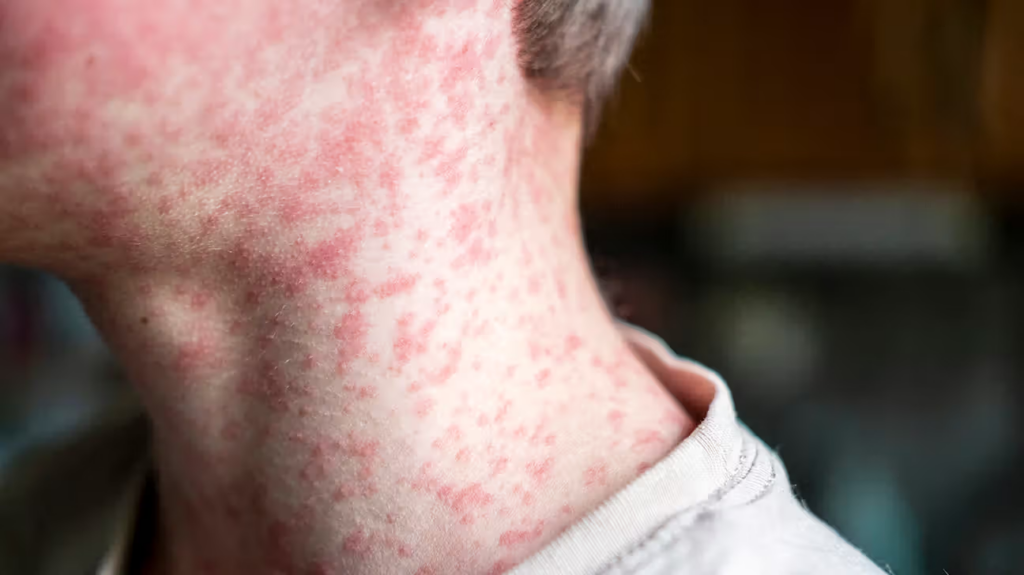
The United States is witnessing a dramatic resurgence of measles, marking the second consecutive year of record-breaking case numbers and raising fresh concerns among public health officials.
Just halfway through 2026, the country has already reported more measles cases than any year since 1991, surpassing the record set only last year. Health experts warn that the resurgence is largely preventable, pointing to declining vaccination rates and expanding outbreaks across multiple states.
The latest figures also threaten one of America’s biggest public health achievements: the elimination of endemic measles transmission, a status the country achieved in 2000.
Why Are Measles Cases Rising in the United States?
Health officials say several factors are driving the current surge.
The largest contributor is falling vaccination coverage in certain communities. While national vaccination rates remain relatively high, localized pockets of under-vaccinated populations have created opportunities for the highly contagious virus to spread rapidly.
Many of today’s outbreaks also began in 2025 and have continued well into 2026, creating sustained chains of transmission rather than isolated incidents.
According to the U.S. Centers for Disease Control and Prevention (CDC), more than 90% of reported cases involve people who are either unvaccinated or whose vaccination status is unknown.
How Serious Is the Current Measles Resurgence?
The numbers underscore how quickly the situation has worsened.
Key developments include:
- More than 2,318 measles cases have already been reported in 2026.
- The current total has surpassed all annual case counts since 1991.
- The U.S. has now recorded more measles cases in the past 18 months than in the previous 25 years combined.
- At least 35 new outbreaks have emerged this year.
- Nearly every state has reported at least one case.
The trend has prompted renewed concern that the U.S. could eventually lose its measles elimination status if prolonged outbreaks continue.
Which States Are Seeing the Biggest Outbreaks?
South Carolina
South Carolina has become the epicenter of the nation’s largest outbreak.
An outbreak that began in Spartanburg County in October 2025 eventually grew to nearly 1,000 cases before ending in April 2026, making it the largest measles outbreak the United States has experienced in decades.
One local church unexpectedly found itself at the center of the public health response after a person infected with measles attended a Christmas community gathering.
Because organizers had no attendance list, volunteers had to identify attendees using photographs so health officials could perform contact tracing.
Virginia
Virginia has also experienced a growing outbreak centered in Buckingham County.
More than 150 cases have been linked to the outbreak, prompting extensive community outreach, mobile testing services, and vaccination campaigns.
Pennsylvania
Pennsylvania’s Lancaster County continues to report rising case numbers.
State officials say more than 100 infections have been confirmed this year, and none of the affected individuals had received the recommended two-dose MMR vaccine.
Why Are Public Health Officials Concerned?
Beyond the growing case count, experts say measles outbreaks consume enormous public health resources.
Each confirmed case requires investigators to:
- Identify everyone exposed.
- Notify potentially affected individuals.
- Arrange testing and vaccination.
- Monitor symptoms.
- Coordinate with hospitals, schools, and local organizations.
Officials in San Francisco said even responding to two measles cases required activating most of the city’s disease investigation team, illustrating how resource-intensive outbreak management has become.
Dr. Andrew Racine, president of the American Academy of Pediatrics, described the resurgence as “a public health failure” that is largely avoidable because most infections occur among unvaccinated children.
How Communities Are Responding
Health departments across the country are expanding vaccination campaigns and community outreach.
Some initiatives include:
- Mobile vaccination clinics.
- Pop-up immunization events.
- Home visits for measles testing.
- Public education campaigns.
- Coordination with religious organizations and local healthcare providers.
Following the South Carolina outbreak, one church began hosting vaccination clinics after seeing firsthand how quickly the virus could spread.
Virginia health officials also worked with community leaders to encourage vaccination while advising unvaccinated residents to avoid large public gatherings during active outbreaks.
Why Vaccination Remains the Best Protection
Medical experts continue to emphasize that measles is among the most contagious infectious diseases known.
The disease spreads through respiratory droplets and can remain in the air even after an infected person has left a room.
Public health experts recommend maintaining vaccination rates above 95% to achieve community immunity, helping protect infants, immunocompromised individuals, and others who cannot be vaccinated.
The standard two-dose measles, mumps, and rubella (MMR) vaccine provides approximately 97% lifetime protection against measles.
What This Means for the Future
The continued spread of measles represents more than an increase in case numbers—it is testing the resilience of America’s public health infrastructure.
If vaccination rates continue to decline in certain communities, experts warn that outbreaks could become more frequent, more widespread, and increasingly difficult to contain.
The resurgence also serves as a reminder that diseases once considered under control can quickly return when immunization coverage falls below recommended levels.
For public health officials, the focus remains on increasing vaccine confidence, strengthening surveillance, and ensuring rapid responses before isolated cases become widespread outbreaks.
Key Takeaways
- The U.S. has already recorded more measles cases in 2026 than in any year since 1991.
- More than 2,300 infections have been reported, surpassing last year’s record.
- Most cases involve people who are unvaccinated or whose vaccination status is unknown.
- South Carolina, Virginia, and Pennsylvania are among the states experiencing significant outbreaks.
- Public health officials say maintaining high vaccination coverage remains the most effective way to prevent future outbreaks.