
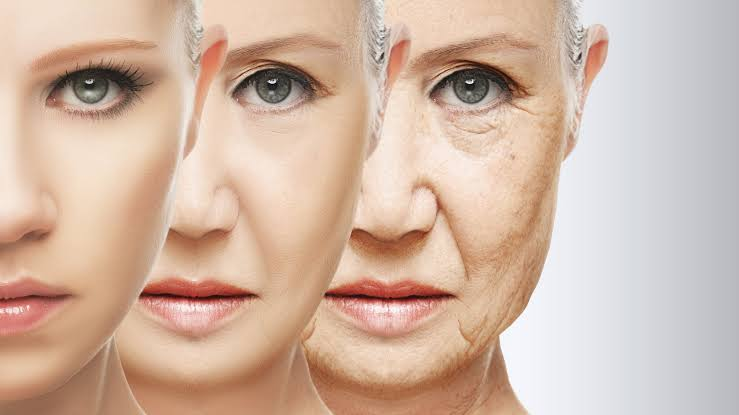
For decades, scientists and futurists have debated one question that seems pulled from science fiction: How long can humans really live? New research suggests the answer may be far lower than some longevity enthusiasts hope.
A new study published in npj Aging argues that 156 years represents the theoretical upper limit of the human lifespan, even if scientists manage to eliminate nearly every known cause of biological aging. The reason isn’t wrinkles, weakened muscles, or slower metabolism. Instead, it comes down to something much harder to fix: irreversible genetic damage inside cells that never regenerate.
The findings offer a new way of thinking about longevity. Rather than asking how long people have lived, researchers asked how long people could live if medicine solved almost every age-related problem except one.
TL;DR
- A new mathematical model suggests the maximum human lifespan is around 156 years.
- Researchers eliminated nearly every known hallmark of aging in their model except somatic mutations—irreversible DNA damage that builds up over time.
- Brain cells and heart muscle cells appear to be the biggest obstacle because they cannot regenerate throughout life.
- Even revolutionary anti-aging treatments may not push human lifespan beyond this biological ceiling unless genomic damage can also be prevented or repaired.
- The study establishes one of the first mathematically derived upper limits for human longevity based on irreversible cellular damage.
What Is the Human Lifespan Limit?
The human lifespan limit has remained one of biology’s biggest unanswered questions.
Some scientists argue there is no fixed maximum if medicine continues advancing. Others believe biology eventually reaches a point where repair becomes impossible.
The new study takes a different approach. Instead of analyzing historical records of exceptionally old people, researchers built a mathematical model simulating what would happen if aging itself could largely be switched off.
Their conclusion: Even under nearly ideal biological conditions, humans would still be unlikely to live beyond roughly 156 years.
That figure isn’t based on lifestyle choices, diseases, or accidents. It reflects the point at which irreversible cellular damage becomes overwhelming.
How Did Scientists Calculate the 156-Year Limit?
Researchers developed a multistage mathematical model that activated different biological aging mechanisms one after another.
Rather than studying today’s humans, they imagined a hypothetical future where medicine had solved nearly every reversible aspect of aging.
The model removed nearly every hallmark of aging
Scientists assumed therapies could eliminate problems such as:
- Cellular dysfunction
- Declining tissue repair
- Age-related physiological deterioration
- Other reversible biological hallmarks
Only one factor remained untouched:
- Somatic mutations, permanent DNA changes that accumulate in cells throughout life.
When every other aging process was removed, the model predicted a median lifespan ranging from approximately 146 to 194 years, with 156 years emerging as the central estimate.
Why Are Brain and Heart Cells the Biggest Barrier?
The study argues that the body’s greatest weakness isn’t found in organs like the liver or skin.
Instead, the biggest challenge comes from tissues that cannot continually replace their cells.
Neurons have no easy replacement
Brain cells, known as neurons, generally last for an entire lifetime.
Every year, they accumulate tiny amounts of DNA damage.
Because they rarely divide or regenerate, those mutations remain permanently.
Eventually, enough damage accumulates that normal function becomes impossible.
Heart muscle cells face the same problem
Cardiomyocytes—the specialised muscle cells responsible for keeping the heart beating—also regenerate very slowly.
Unlike many other tissues, damaged heart cells cannot simply be replaced with fresh ones.
According to the researchers, these two cell types become the ultimate bottleneck for human longevity.
Why Doesn’t the Liver Face the Same Problem?
One of the study’s more surprising findings is that many organs could theoretically function for far longer than people currently live.
The reason is continuous cell turnover.
Organs such as:
- Liver
- Skin
- Blood
- Intestinal lining
constantly replace old cells with new ones.
This ongoing renewal helps eliminate many damaged cells before mutations accumulate to dangerous levels.
According to the mathematical model, these tissues could potentially tolerate thousands of years’ worth of mutation accumulation because damaged cells are continuously replaced.
The brain and heart, however, lack this natural reset mechanism.
What Are Somatic Mutations?
Somatic mutations are DNA changes that occur after birth.
Unlike inherited genetic mutations, they are acquired throughout life as cells experience:
- Natural DNA replication errors
- Radiation exposure
- Environmental toxins
- Oxidative stress
- Normal metabolic activity
Most mutations cause no noticeable problems.
But over decades, the total number steadily increases.
Researchers argue that once enough mutations accumulate inside long-lived cells, biological systems eventually begin to fail—even if every other aging process has been eliminated.
Could Anti-Aging Medicine Break This Barrier?
Not yet.
Scientists have made significant progress in understanding biological aging.
Areas receiving enormous attention include:
- Senolytic drugs that remove senescent cells
- Stem-cell therapies
- Cellular reprogramming
- Gene editing
- Regenerative medicine
Many of these approaches target aging processes that appear reversible.
The new study suggests those therapies could dramatically increase healthy lifespan—but they may still encounter a hard biological ceiling unless researchers learn how to prevent or repair irreversible genomic damage.
That makes DNA maintenance one of the most important frontiers in longevity science.
What Happened in the Researchers’ “Non-Aging Human” Scenario?
The researchers also modeled an imaginary person who experienced no age-related increase in mortality whatsoever.
Under those unrealistic conditions, the projected median lifespan reached 1,759 years.
Then they introduced only one variable: somatic mutations.
The result was dramatic.
Median lifespan immediately collapsed to 156 years.
The comparison illustrates how profoundly irreversible DNA damage influences long-term survival.
Does This Mean No One Will Ever Live Past 156?
Not necessarily.
The study does not claim that 156 years is an absolute physical impossibility to exceed.
Instead, it suggests that under our current understanding of biology, irreversible genomic damage creates an upper limit that medicine cannot overcome simply by reversing other aging processes.
Future breakthroughs could change that assumption.
For example, scientists may eventually develop technologies capable of:
- Repairing accumulated DNA damage
- Replacing damaged neurons
- Regenerating heart muscle
- Preventing mutations from accumulating in the first place
Researchers say they plan to expand their mathematical model to include additional hallmarks of aging in future work.
Why This Study Matters
Life expectancy has more than doubled over the past two centuries because of advances in sanitation, vaccines, nutrition, and medicine.
But increasing average lifespan is different from extending maximum lifespan.
This research highlights an important distinction.
Living longer may become increasingly achievable through better healthcare and anti-aging treatments.
Living dramatically beyond today’s oldest humans may require solving a much deeper biological problem—one written directly into our DNA.
If these findings hold up through future research, the next great challenge in longevity science won’t simply be slowing aging. It will be finding a way to preserve the genetic integrity of the cells we can never replace.
What Scientists Still Don’t Know
While the model offers an intriguing framework, several questions remain unanswered:
- Can somatic mutations eventually be repaired at scale?
- Could future gene-editing technologies alter the lifespan ceiling?
- How do other hallmarks of aging interact with irreversible DNA damage?
- Would replacing brain or heart cells fundamentally change the model’s predictions?
Because the research is based on mathematical modeling rather than clinical trials, additional experimental evidence will be needed before scientists can determine whether the proposed lifespan limit reflects real-world biology.