
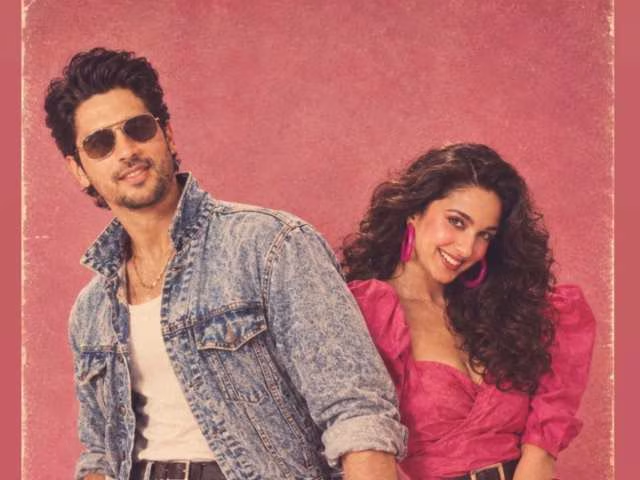
Big hair, bold eyeliner, oversized hoops, bright colors and a generous dose of studio glamour are back in fashion, at least on social media. A viral AI trend is giving celebrities and public figures a chance to see themselves reimagined as 1980s Bollywood stars. Instead of digging through vintage photo archives, users can now upload an ordinary portrait and ask an AI image generator to transform it into a retro film-magazine cover, movie poster or studio portrait.
The trend has already attracted celebrities including Kiara Advani, Sidharth Malhotra and Kajal Aggarwal, while Union Minister Piyush Goyal has also joined in with an AI-generated version of himself as an ’80s Bollywood hero.
What makes the trend especially interesting is that AI is not merely changing clothes. It can recreate an entire visual language associated with the decade.
Why is the ’80s Bollywood look suddenly trending?
The appeal of the 1980s lies in how instantly recognizable its visual style is.
Women were often styled with voluminous curls, dramatic eye makeup, bold jewelry and vibrant silhouettes. Men were frequently pictured in relaxed tailoring, open shirts, aviator sunglasses and denim-heavy looks.
Modern social media gives users another reason to embrace the aesthetic: nostalgia can now be generated on demand.
A single contemporary photograph can be transformed into an image that looks as though it came from an old Bollywood publicity shoot, complete with period styling, lighting and film-like texture.
How did Kiara Advani and Sidharth Malhotra join the trend?
Bollywood couple Kiara Advani and Sidharth Malhotra shared AI-generated images imagining themselves as an ’80s Bollywood hero and heroine.
Malhotra’s version features a classic double-denim outfit and dark aviator sunglasses, while Advani is styled in a vivid pink dress with puffed sleeves, oversized hoop earrings and stacked bangles.
The transformation works because it captures several recognizable elements of the period without simply copying one particular movie character.
Instead, AI is creating a generalized version of what audiences remember as vintage Bollywood glamour.
How did Kajal Aggarwal’s retro makeover look?
Kajal Aggarwal also embraced the trend with an AI-generated retro portrait.
Her imagined ’80s look features a denim outfit, large hoop earrings and bangles, paired with voluminous curls.
The makeup is equally important. The image emphasizes winged eyeliner, sharply defined brows and a muted lip color, creating a polished version of the decade’s beauty aesthetic.
It demonstrates one of the strengths of generative AI: users can combine several stylistic references in a single prompt instead of manually recreating each element.
Why did Piyush Goyal’s AI portrait go viral?
The trend crossed the entertainment world when Union Minister Piyush Goyal posted an AI-generated image of himself styled as a Bollywood star from the 1980s.
Goyal appears in the portrait wearing a sharp blue suit, an open-collared shirt and sunglasses.
He captioned the post, “Vibing to the 80s trend.”
The image quickly drew attention because the trend had moved beyond actors and influencers into political and public life. It also showed how quickly generative AI aesthetics can jump from niche internet experiments into mainstream social media.
What makes an AI-generated ’80s photo look convincing?
The trick is specificity.
A generic request such as “Make me look like I’m from the ’80s” gives an AI system too much room to improvise. The result can easily mix decades, modern fashion and inaccurate visual details.
A stronger prompt identifies several elements at once.
Users can specify the hairstyle, clothing, jewelry, makeup, camera style, lighting, background and even the type of publication or film aesthetic they want.
For example, asking for a glossy 1980s Indian film magazine cover gives the model a much clearer visual target than simply asking for an “old photo.”
How can you recreate the viral ’80s AI trend?
Start with a sharp, well-lit photograph in which the face is clearly visible.
Portrait or waist-up images usually work well because they give the model enough information about facial features while leaving room to generate clothing and surroundings.
Upload the image to an AI image-generation tool and describe the exact style you want.
The more details you provide, the more control you have over the result.
What prompt can you use for an ’80s Bollywood makeover?
Try a prompt like this:
Classic Bollywood Portrait
Transform a photo into an authentic 1980s Bollywood studio portrait while preserving the subject’s facial features and identity. Add period-appropriate Indian clothing, hairstyles and accessories, complemented by warm studio lighting, soft focus, subtle film grain and slightly faded colours. The final image should resemble a genuine photograph taken in India during the 1980s, rather than a modern image with a vintage filter. Avoid altering the subject’s facial structure, excessive ageing effects, sepia tones or artificial-looking retro styling.
Classic Hollywood Portrait
Reimagine a photo as a glamorous 1980s Hollywood studio portrait while keeping the subject’s face and defining features unchanged. Incorporate era-accurate hairstyles, makeup and clothing, along with dramatic studio lighting, soft focus, subtle film grain and the authentic look of analogue photography.
Old Family Album
Recreate a photo as though it were part of an Indian family album from the mid-1980s. Preserve the subject’s natural face and expression while adding period-appropriate clothing, hairstyles and interiors. Use soft lighting, realistic film colours, gentle grain and analogue camera textures to evoke the look of a family photograph from the era, avoiding a modern digital appearance.
1980s Bollywood Heroine
Transform a photo into the portrait of a glamorous 1980s Bollywood heroine while keeping the subject’s face natural and recognisable. Style the hair in a voluminous 1980s fashion, dress the subject in a colourful saree with statement jewellery, and place them in a classic Indian studio setting. Finish the image with warm lighting, soft focus, analogue film grain and the aesthetic of a vintage Bollywood publicity photograph.
1980s Bollywood Hero
Recreate a photo as a classic 1980s Bollywood hero studio portrait without changing the subject’s identity. Add an authentic period hairstyle, an optional moustache, a tucked or loose shirt, high-waisted trousers and a traditional studio backdrop. Use warm lighting, analogue film grain and slightly faded colours to replicate the look of a genuine 1980s photograph.
Wedding Album, 1980s India
Imagine the photo was taken at an Indian wedding in the 1980s while keeping the people in it clearly recognisable. Recreate the decade’s clothing, hairstyles, jewellery, decorations, lighting and photography style, using realistic analogue film grain, authentic colours and the slightly imperfect finish typical of old family wedding photographs.
1980s Magazine Cover
Turn a photo into an Indian magazine portrait from the 1980s while preserving the subject’s facial identity. Use period-appropriate hairstyles, clothing, jewellery and makeup, paired with a simple studio backdrop, natural yet dramatic lighting, soft focus and analogue film texture to recreate the look of an editorial photograph from the decade.
Retro Street Photograph
Reimagine a photo as though it were captured on an Indian street in 1987 while keeping the subject’s identity intact. Recreate the surroundings, clothing, hairstyles, vehicles, shop signs and colour palette to accurately reflect late-1980s India. Use natural daylight, realistic analogue film grain and the texture of a photograph printed from film for an authentic period look.
Why does specifying the decade matter?
AI image generators learn visual patterns from enormous collections of images.
Without enough context, a prompt for “retro” can produce anything from the 1920s to the 1990s.
Adding details such as “late 1980s Indian cinema,” “35mm studio photography,” “vintage film grain” or “analog magazine printing” narrows the visual target.
This is especially useful when users want the result to look historically coherent rather than simply old.
What should you avoid when making the image?
Avoid asking the model to completely redesign your identity.
Phrases that prioritize changing your face, age or body can produce an image that looks more like a new character than a vintage version of you.
A better approach is to ask the AI to preserve recognizable facial features while changing the styling, setting and photographic treatment.
It is also worth remembering that generative AI can introduce inaccurate jewelry, clothing details, extra fingers, altered facial proportions or strange text.
For images intended for social media, a final human review is still worthwhile.
Is the ’80s trend really a fashion comeback?
Not exactly.
The viral images are better understood as a nostalgia trend powered by generative AI rather than proof that people are suddenly dressing exactly like they did in 1985.
Still, retro influences have a long history of returning to fashion.
The difference now is speed.
A decade-inspired transformation that once required a photographer, stylist, makeup artist, costume designer and post-production team can now be attempted with a single photograph and a carefully written prompt.
AI has essentially turned nostalgia into an instant filter.
Why are celebrities using AI nostalgia trends?
There is a practical reason: they are highly shareable.
A familiar celebrity placed in an unexpected visual era creates an immediate before-and-after effect. Followers can recognize the person while also enjoying the novelty of seeing them in a completely different aesthetic.
That combination makes retro AI imagery particularly well suited to Instagram, X and other visual platforms.
It also gives celebrities a relatively simple way to participate in a trend without requiring an actual photoshoot.
Could this change how we think about old photographs?
Possibly.
AI-generated retro portraits blur the boundary between historical photography and modern digital recreation.
A convincing image may look as though it came from a 1980s magazine even though it was created decades later.
That means users should be careful when sharing such images outside the context of the trend. A synthetic image can be visually convincing without being a genuine piece of archival photography.
The same technology that makes nostalgia entertaining can also make fabricated historical-looking images harder to identify.
Why does the trend keep spreading?
It combines three powerful ingredients: nostalgia, celebrity culture and easy-to-use generative AI.
Nostalgia supplies the visual language. Celebrities provide recognizable faces. AI removes much of the technical work needed to recreate the style.
The result is a social-media trend that can reproduce itself almost endlessly.
One person sees a retro celebrity portrait, creates their own version, shares it and inspires another person to try something even more elaborate.
The ’80s may have ended decades ago, but AI has given the decade a very efficient second career.