Driven by his granddaughter’s diagnosis, Chandrakant Agarwal leads nationwide awareness and prevention efforts
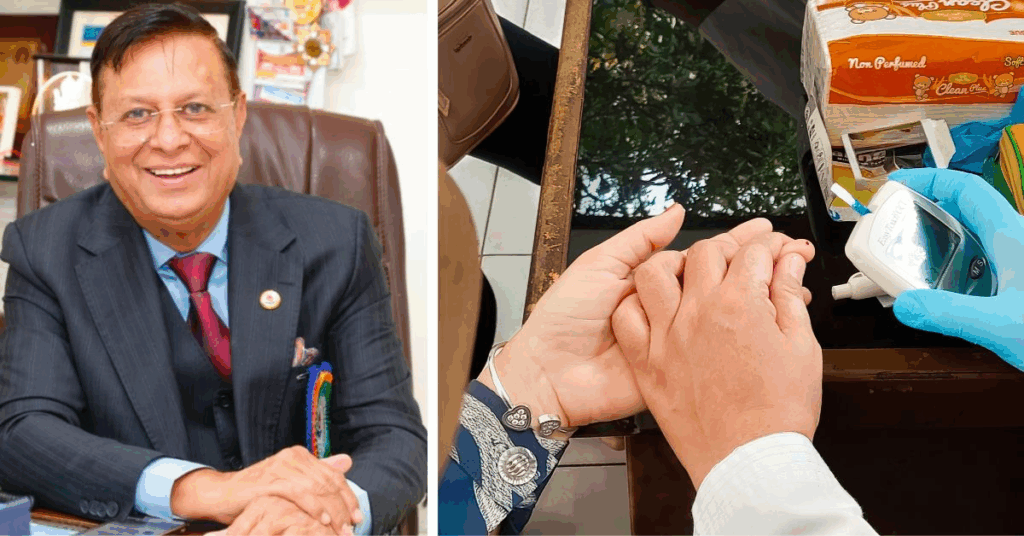
Hyderabad, India | June 11, 2025 — For families affected by thalassemia, life becomes a relentless cycle of hospital visits, blood transfusions, and emotional upheaval. For Dr. Chandrakant Agarwal, a 74-year-old PhD scholar and president of the Thalassemia and Sickle Cell Society (TSCS) of Hyderabad, this is more than just a public health issue—it’s personal.
Agarwal, who has been at the helm of TSCS for 13 years, was thrust into this world when his granddaughter Nitya was diagnosed with thalassemia major as an infant. Since then, he has accompanied her across the country for life-sustaining transfusions, transforming his family’s ordeal into a national crusade for awareness, screening, and prevention.
“When Nitya was born, she was healthy. But at eight months, her skin started turning yellow, and we presumed it was jaundice,” Agarwal recalls. Doctors soon discovered her plummeting hemoglobin levels, leading to her first blood transfusion.
“Within minutes of the transfusion, Nitya was fine! It was almost like a miracle,” he says.
Now 26, Nitya undergoes fortnightly transfusions and chelation therapy to manage iron overload, a side effect of frequent transfusions. Though she lives a full life, Agarwal believes no child should have to endure a condition that can be prevented with early screening.
Understanding thalassemia
Thalassemia is an inherited blood disorder caused by defective haemoglobin synthesis, reducing red blood cells’ ability to carry oxygen. In its severe form, thalassemia major symptoms include extreme fatigue, irritability, and organ enlargement.
“Low hemoglobin causes the child to become irritable, have low energy, and become restless. The abdomen starts protruding as the liver and spleen get enlarged,” explains Dr. Suman Jain, a pediatrician and chief medical research officer at TSCS.
Despite being preventable, thalassemia is often misunderstood. At TSCS, which was founded in 1998 as a nonprofit to assist patients, over 60 blood transfusions take place daily, all free of charge. Yet Agarwal points out that ignorance is still a major barrier.
“Parents believe their child will just get okay,” he laments. “They often turn to babas (godmen), hoping for a miracle cure.”
Bridging the gap with empathy and education
Over the years, Agarwal has devised a simple but effective solution: peer-led empathy. He connects new patients’ families with others who have seen the benefits of transfusion firsthand.
“Seeing is believing,” he says. “When a parent sees their child feel better after a transfusion, they begin to believe it is the right treatment.”
Still, treatment doesn’t stop at transfusions. A critical, and often overlooked, element is chelation therapy, which removes excess iron that builds up in the body from repeated blood infusions.
“The serum ferritin level needs to be less than 1000 ng/mL,” says Dr. Jain. “But 20-25% of parents don’t understand this. One round of counseling is not enough. We have to tell them repeatedly.”
A mission rooted in loss and love
Today, Agarwal’s commitment goes beyond advocacy; he is pushing for nationwide screening to identify carriers before childbirth, a strategy proven effective in countries like Iran and Cyprus.
“Thalassemia can be avoided altogether if both parents are tested for the gene,” he emphasizes.
His efforts are steadily gaining traction, with TSCS becoming one of the leading centers for comprehensive thalassemia care in India. Yet for Agarwal, the mission remains deeply personal, a tribute to his granddaughter and a pledge to every child who deserves a future without preventable suffering.
As he often says, “No child should suffer for something we already know how to prevent.”