
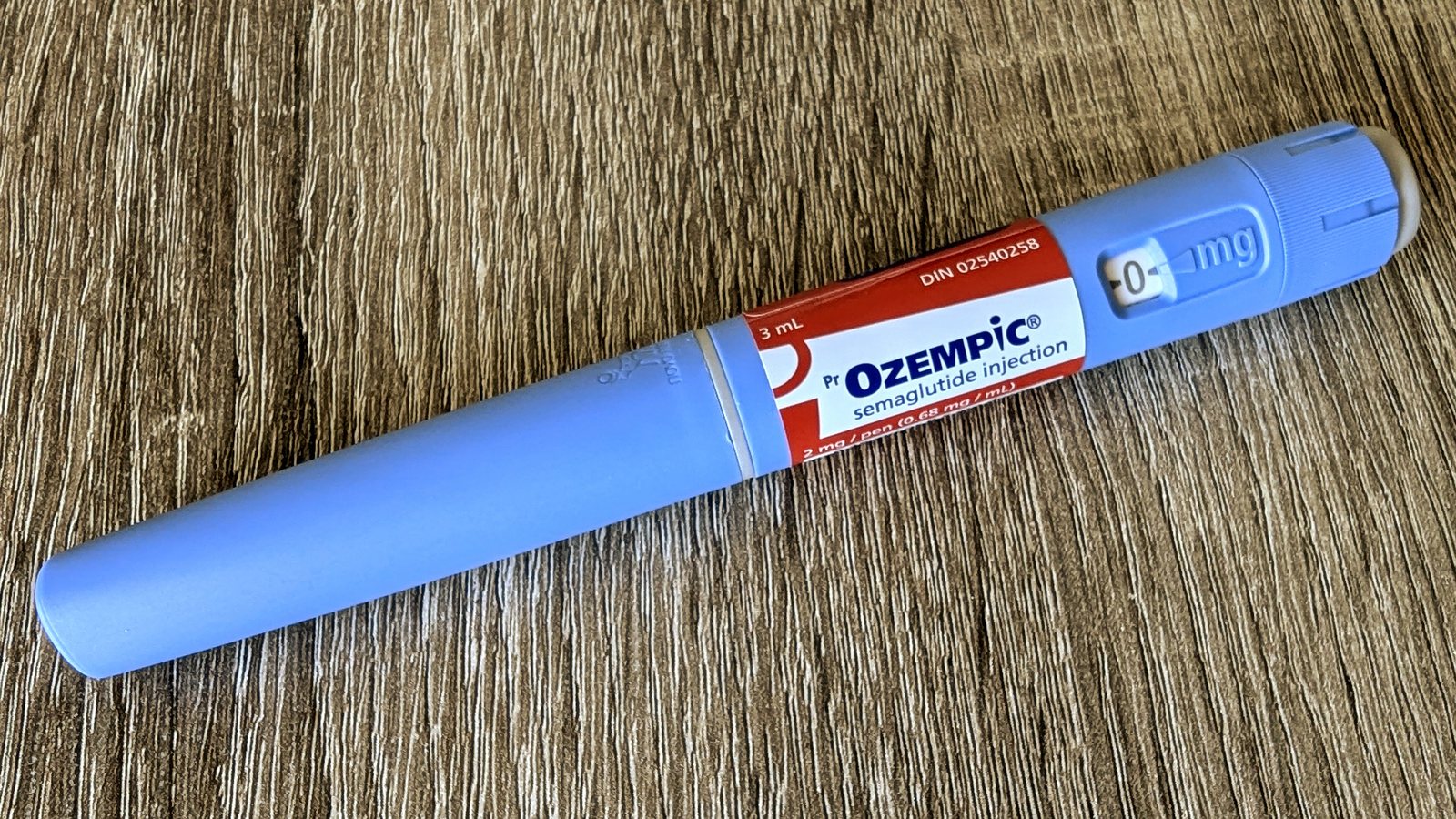

People with type 2 diabetes who quit GLP-1 drugs had about twice the rate of heart attack, stroke or death, an Italian study of 80,302 patients has found. The comparison was with patients who stayed on the drugs.
The paper was published November 9 in The Lancet Regional Health – Europe. It is observational. Its authors say stopping GLP-1 drugs may mark people already at higher risk rather than cause the harm.
That distinction matters for anyone weighing whether to stay on an Ozempic-type drug because of side effects or cost. The study is a reason to talk to a doctor before stopping. It does not show that quitting is what raises the risk.
Who was studied, and how
The team was led by Antonio Ceriello of IRCCS MultiMedica, a research hospital in the Milan area. They used records from 301 diabetes clinics in Italy’s AMD Annals network, covering 2004 to 2024. Everyone had type 2 diabetes and had started a GLP-1 receptor agonist. None had a heart attack or stroke on record when they began.
By their last clinic visit, 60.5% had stopped the drug. Stopping meant no GLP-1 prescription at two visits in a row. Continuers took the drugs for about three years on average, while those who stopped had taken them for about 1.2 years. Follow-up averaged around four years.
To compare like with like, the researchers matched 28,713 stoppers with 28,713 continuers. The matching covered age, sex, body mass index, blood sugar, diabetes duration and use of older pills called sulfonylureas.
They also counted each patient’s time on the drug separately from their time off it. That step guards against a known statistical trap called immortal time bias.
What “twice” means in real numbers
The main outcome bundled together non-fatal heart attacks, non-fatal strokes and deaths from any cause. Among people who stopped, it occurred at 3.94 events per 100 person-years, against 1.96 for continuers. Put simply, that is roughly four events a year per 100 people off the drug, and two per 100 still on it.
The hazard ratio was 2.03 (95% confidence interval 1.92 to 2.14). That is the figure behind the “double” headlines. The interval is tight because the sample is so large.
The death figures were starker. Deaths from any cause ran at 2.23 per 100 person-years after stopping and 0.48 for continuers. That is a hazard ratio of 4.81.
Here is the detail most coverage skipped: the death rate alone after stopping, 2.23 per 100 person-years, is more than half the combined rate of 3.94. The paper does not report heart attacks and strokes separately, so it does not show how much of the doubling comes from them rather than from deaths.
Still, it suggests the doubling comes mainly from deaths, not from twice as many heart attacks and strokes. The paper does not report heart attacks or strokes on their own. It also had no data on what people died of.
The gap was wider in people with obesity. The hazard ratio was 2.27 for those with a BMI of 30 or more and 1.61 for those below it.
Why the authors warn against reading it as cause and effect
The authors are unusually blunt about this. They write that the link with all-cause death is larger than the benefit GLP-1 drugs showed in randomized trials. Such a large association, they say, “is unlikely to be explained solely by withdrawal” of the drug.
The likely culprit is reverse causation. Some people stop a drug because they are getting sicker, from frailty, cancer or another serious illness. That illness then raises their risk of dying. The study had no data on why anyone stopped, and none on income or social circumstances.
Naveed Sattar, a professor of cardiometabolic medicine at the University of Glasgow, made the same point. “The reported excess risks could readily reflect residual confounding,” he told the Science Media Centre.
He listed poorer adherence, side effects, socioeconomic circumstances and declining health as factors that could drive both stopping and bad outcomes. Sattar declared fees from several drugmakers, including Novo Nordisk and Eli Lilly.
The researchers offer some counter-evidence. Italy’s health service pays for GLP-1 drugs prescribed for type 2 diabetes. That makes it less likely that cost sorted poorer patients into the stopping group. Stoppers also looked no sicker on paper when they quit than when they started.
The usual suspects did not explain the gap either. After stopping, weight, blood sugar and blood pressure changed only modestly. They barely differed between stoppers who later had an event and those who did not. The authors call the findings “hypothesis generating.”
The drugs and patients it does not cover
This was a diabetes study, so it says little about people taking Wegovy or Zepbound for weight loss alone. Only a minor share of patients took semaglutide, the ingredient in Ozempic and Wegovy. None took tirzepatide, sold as Mounjaro and Zepbound, which reached Italy after the study period ended. Most patients were on older GLP-1 drugs.
A larger US study points the same way, but with a much smaller effect. In March, researchers at Washington University in St. Louis reported in BMJ Medicine on 333,687 veterans with type 2 diabetes.
A year off a GLP-1 drug without restarting was linked to a 14% higher risk of major cardiovascular events than continuous use. After two years off, the gap was 22%. That is a long way from double.
Talking to a doctor before stopping
None of this means anyone should stay on a drug that is not working for them. It does mean stopping is a decision to make with the prescriber. They can weigh why you want to stop, what replaces the drug and what to monitor afterwards.
The authors suggest one fix on the clinic side: slower, more flexible dose increases, so fewer people quit over nausea and other stomach side effects. If side effects are the problem, that is worth raising.
For a rarer risk, see the FDA’s new warning on sudden vision loss with GLP-1 drugs. The agency’s own figures put it at a few extra cases per 100,000 patients a year. It is also worth knowing the warning signs of a stroke, whatever medication you take.
Whether stopping itself causes harm is still open. The authors say only prospective studies designed for that purpose can answer it, and until those report, the Italian data are a signal to test rather than a verdict.