
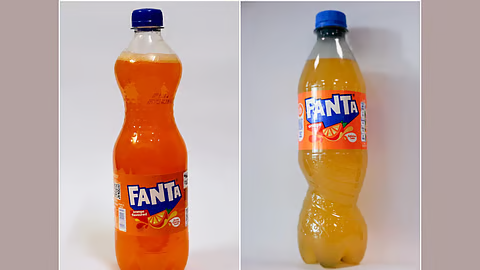
A can of Fanta bought in London may look almost identical to one sold in India, but the nutritional information and labeling around the drink can be noticeably different.
A Reuters comparison highlighted a major difference in sugar content between the two markets. It also raised questions about the use of artificial colorants and the way health information is presented to consumers in India compared with the UK and parts of Europe.
The issue goes beyond one soft drink.
It has become part of a wider debate over whether consumers in India receive enough clear information about the health implications of highly processed foods and sugary drinks.
How different is Fanta sold in the UK and India?
According to the Reuters comparison cited in the supplied report, a can of Fanta sold in London contains about 63 calories, while the Indian version contains roughly three times as much sugar.
That difference matters because sugar intake is closely connected to concerns over obesity and other diet-related health problems.
The comparison also drew attention to the use of artificial coloring.
The specific colorant identified in the report is subject to more prominent labeling requirements in Europe, while in India its presence is listed in comparatively small print on the back of the can.
The result is two products carrying the same brand name but operating under different regulatory and labeling environments.
Why does the colorant matter?
Artificial food colors have become a major point of debate in food regulation.
In parts of Europe, products containing certain artificial colors are required to carry prominent warnings indicating that they may have an adverse effect on activity and attention in children.
The Reuters report argues that the same type of warning is not displayed as prominently on the Indian version.
Instead, consumers are expected to find the relevant information in the ingredient list or other small-print labeling.
That creates a broader question about how much effort consumers should have to make to understand the contents of packaged food and drinks.
Why are front-of-pack warnings important?
Front-of-pack labels are designed to communicate nutritional information before a consumer buys or opens a product.
Unlike detailed nutrition tables, warning labels can provide an immediate signal that a product contains high levels of sugar, salt or fat.
Health experts have argued that such systems can help consumers make quicker and more informed choices.
The Reuters report says roughly 20 countries have introduced some form of interpretive front-of-pack labeling, including systems that use colors or symbols to identify nutritional concerns.
These systems vary widely.
Some use traffic-light colors.
Others use warning symbols or text.
The underlying idea is the same: make important nutritional information harder to miss.
Why hasn’t India adopted prominent warning labels?
The issue has become contentious.
India’s Food Safety and Standards Authority of India has considered stronger front-of-pack nutritional warnings, but the regulator abandoned a push for colorful warning labels in August, according to the supplied report.
FSSAI instead proposed a black-and-white nutritional table showing sugar, salt and fat levels.
The regulator reportedly argued that international labeling systems should not simply be copied for India because Indian diets and eating patterns differ from those in Western countries.
That position has drawn opposition from public-health advocates.
Why is India’s Supreme Court involved?
The labeling debate has moved beyond regulators and the food industry.
Public-health activists have challenged the government’s approach in the Supreme Court.
The court previously directed regulators to examine stronger warning-label options, including systems used in other countries.
That means the question is no longer simply whether companies should voluntarily provide more information.
It has become a regulatory and public-health dispute over what information consumers should be required to see before purchasing packaged food.
What does Coca-Cola say?
Coca-Cola, which owns the Fanta brand, has challenged the effectiveness of prominent warning labels.
According to Reuters’ account of a March 19 meeting with industry representatives, Coca-Cola India executive Mili Bhattacharya argued that it was too simplistic to assume consumers would substantially change their diets simply because a warning symbol appeared on packaging.
She also argued that Indian doctors already provide patients with guidance about unhealthy foods.
Her comments reflect the industry’s broader argument that labeling alone cannot solve unhealthy eating habits.
That does not mean consumers are opposed to better information.
It means the debate is partly about whether interpretive warnings actually change behavior.
Why is Coca-Cola’s position attracting attention?
The issue has become more complicated because Coca-Cola-affiliated businesses have supported clearer labeling in some other markets.
Coca-Cola HBC, a Switzerland-based Coca-Cola bottling company, has voluntarily used traffic-light-style nutritional labels in multiple European countries.
The company describes those labels as providing clear and transparent information to consumers.
That contrast has attracted scrutiny from public-health advocates.
The broader question is whether labeling policies should differ significantly according to the regulatory environment in each country.
Is Indian Fanta really three times sweeter?
The supplied article says the Indian version contains three times as much sugar as the UK product based on the Reuters comparison.
That figure should be treated carefully.
Different countries can sell products under the same brand name with different formulations, serving sizes and nutritional standards.
A proper comparison should therefore use the same container size and compare sugar per 100 milliliters or another standardized quantity.
Simply comparing the total sugar in different-sized cans could produce a misleading result.
Before publication, the exact nutrition panels for the UK and Indian products should be checked independently.
Why can the same brand have different formulations?
Global food and beverage companies frequently adjust products for different markets.
Recipes can vary because of:
- Local consumer preferences
- Ingredient availability
- Tax structures
- Food regulations
- Manufacturing practices
- Public-health policies
- Regional taste preferences
A product sold in one country therefore does not necessarily have the identical formula sold under the same brand in another.
The Fanta comparison highlights that reality.
What does this mean for Indian consumers?
The bigger concern is transparency.
Consumers may reasonably expect to know how much sugar a drink contains and which additives are present.
A detailed ingredient list provides that information, but health activists argue that consumers should not have to inspect small print to identify products with particularly high levels of sugar, salt or fat.
The debate is therefore about how information is communicated, not simply whether information exists.
Could front-of-pack warnings reduce obesity?
They may help, but they are not a complete solution.
Obesity is influenced by many factors, including overall diet, physical activity, income, sleep, genetics and access to healthier food.
A warning label cannot compensate for an entire environment that encourages excessive consumption of high-calorie foods.
Still, public-health researchers argue that clearer labels can influence purchasing decisions and make nutritional information easier to understand.
The real question is how effective such systems are in the Indian market and whether they work better than the alternatives currently being proposed.
Why is this becoming a bigger issue in India?
India is facing growing concerns about overweight and obesity, particularly as urban diets change and consumption of packaged foods increases.
The Reuters report cites research projecting that approximately 450 million Indians could be overweight or obese by 2050.
That projection gives greater urgency to debates about sugar, processed food and consumer labeling.
If consumption patterns are changing, policymakers face pressure to ensure consumers can understand the health implications of the products they buy.
What happened at the March industry meeting?
Reuters reported that industry representatives and regulators held a tense meeting on March 19 over proposed interpretive labeling.
During the discussion, industry executives argued that warning labels could confuse consumers and would not necessarily change behavior.
They also urged regulators to emphasize portion control.
Coca-Cola executive Mili Bhattacharya reportedly argued that consumers who already ignored ingredient lists would not necessarily make healthier choices simply because they saw a symbol or icon on the front of a package.
The meeting became significant because regulators later moved away from the proposed colored warning system.
What does the FSSAI’s alternative look like?
Instead of colorful warning symbols, FSSAI proposed a black-and-white nutritional information table.
The system would display the amount of sugar, fat and salt in a standardized format.
The debate is over whether that approach is sufficiently easy to understand.
A detailed table requires consumers to interpret numbers.
A warning symbol is designed to make the interpretation almost immediate.
That difference reflects the broader disagreement between regulatory simplicity and consumer readability.
What are health activists demanding?
Public-health advocates want stronger and more visible nutritional information.
They argue that consumers should be able to identify products high in sugar, salt or unhealthy fats without having to study the back of a package.
They have therefore pushed for interpretive front-of-pack labels and challenged the government’s decision to abandon the proposed colored-warning approach.
The Supreme Court’s involvement has kept the issue under scrutiny.
The bigger picture
The Fanta comparison is not really just about Fanta.
It highlights a larger question about how multinational food and beverage companies formulate products for different markets and how governments communicate health risks to consumers.
The supplied Reuters comparison points to a significant difference in sugar content between Fanta sold in the UK and India and draws attention to differences in how artificial colors are disclosed.
At the same time, India’s labeling debate shows how difficult it can be to balance public-health concerns with industry objections and regulatory realities.
There is also an important caution.
A difference in formulation does not automatically mean one product is unsafe and the other is safe.
Similarly, the presence of an artificial color does not by itself establish that a product causes illness.
The more defensible question is whether consumers are receiving clear, prominent and useful information that allows them to make informed choices.
That is ultimately what India’s front-of-pack labeling debate is about.