
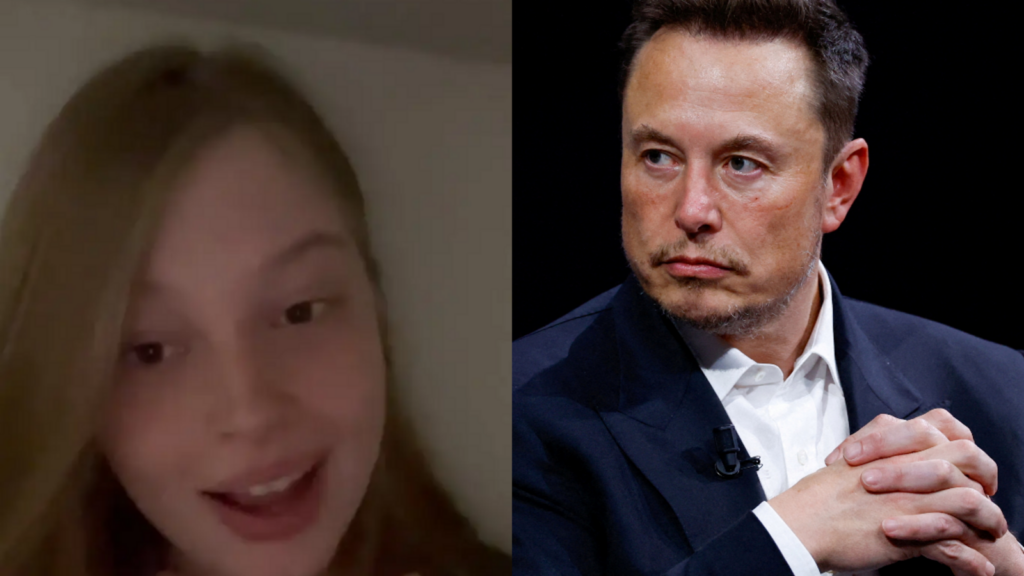
Billionaire tech CEO Elon Musk is once again at the center of a firestorm, this time over deeply personal remarks about his estranged transgender daughter that collided head-on with California politics. What began as a sharp jab from Governor Gavin Newsom’s office quickly escalated into a public exchange that mixed family conflict, culture wars, and the power of social media megaphones.
The episode underscores a larger question facing American public discourse: what happens when private family matters are weaponized in political and ideological battles?
What sparked the latest Elon Musk controversy?
The controversy erupted after California Governor Gavin Newsom, speaking on a podcast, said he wanted to see more transgender students in the state. The remark itself aligned with Newsom’s long-standing support for LGBTQ+ rights and inclusive education policies.
Shortly after, a video clip related to Newsom’s comments was shared on X (formerly Twitter) by Elon Musk’s Public Action Committee (PAC). That post prompted a pointed response from the California governor’s office.
“Correct. We’re sorry your daughter hates you, Elon,” Newsom’s office wrote on X.
The comment instantly went viral, drawing widespread attention, not just because it targeted Musk, but because it referenced his strained relationship with his transgender child.
How did Elon Musk respond to Newsom’s office?
Musk fired back with an emotional and controversial post of his own. Referring to his transgender daughter using her birth name, Musk wrote:
“I assume you’re referring to my son, Xavier, who has a tragic mental illness caused by the evil woke mind virus you push on vulnerable children. I love Xavier very much and hope he recovers.”
He went on to name his other children, adding that they “do indeed love me very much.”
The response drew immediate backlash for several reasons:
- Musk repeatedly misgendered his daughter.
- He characterized gender transition as a “tragic mental illness.”
- He framed transgender identity as the result of ideological manipulation
Why has Musk’s relationship with his daughter drawn attention before?
This is not the first time Elon Musk’s family life has spilled into the public arena.
In earlier interviews and social media posts, the Tesla and SpaceX CEO has:
- Referred to his daughter by her birth name despite her legal name change.
- Claimed she adopted “extreme ideologies.”
- Suggested her views progressed “beyond socialism to being a full communist.”
His daughter, who legally changed her name and gender in 2022, previously sought to sever ties with Musk, citing a lack of support. That court filing, which is public record, made headlines worldwide.
Why does this Elon Musk transgender daughter controversy matter?
This episode goes beyond celebrity drama. It highlights several broader issues shaping American public life.
1. The politicization of transgender identities
Transgender rights have become a defining issue in U.S. culture wars. When powerful figures frame gender identity as ideology or illness, it influences public perception and policy debates.
2. The collapse of private-public boundaries
Family estrangement is deeply personal. When political offices and billionaires alike use it as ammunition, it raises ethical questions about limits in public discourse.
3. The influence of social media platforms
Musk owns X, a platform where political messaging, personal grievances, and policy debates collide in real time—often without filters.
How did the public react online?
Reactions to the exchange were swift and divided, reflecting the polarized nature of the issue.
Some users criticized Newsom’s office for invoking Musk’s family:
- “No matter what you think about Elon, hitting him with his children is the lowest you can get.”
- “Kids are off limits. What Gavin Newsom’s team did was shameful.”
Others turned their focus on Musk’s comments:
- “Elon, why don’t you support your daughter?”
- “Classy move from a governor’s office: just mock a father’s estrangement from his child. Real moral high ground there.”
The backlash illustrates how quickly sympathy can shift depending on where readers place the moral line—family privacy or public accountability.
What does this say about political messaging in the social media age?
The Musk-Newsom exchange is a case study in modern political communication.
Key takeaways:
- Provocation drives engagement: Sharp language travels faster than nuanced arguments.
- Personal attacks overshadow policy: The original discussion about transgender students was quickly lost.
- Authority amplifies impact: Comments from a governor’s office or a billionaire CEO carry disproportionate weight.
For voters and readers, this makes it harder to separate policy substance from spectacle.
TL;DR
- Elon Musk lashed out on X after Newsom’s office mocked his estrangement from his transgender daughter.
- Musk called her transition a “tragic mental illness,” reigniting criticism.
- The exchange blends personal family conflict with national culture wars.
- Public reaction shows growing discomfort with using children as political targets.
- The incident highlights how social media amplifies polarization while burying policy debates.
Final thoughts
The Elon Musk transgender daughter controversy is less about one tweet and more about the state of American discourse. When political leaders and powerful figures turn deeply personal issues into public sparring matches, everyone loses clarity and often compassion.
For readers, the challenge is to look past the outrage and ask harder questions: What policies are being debated? Who benefits from the noise? And where should society draw the line between public accountability and private pain?