
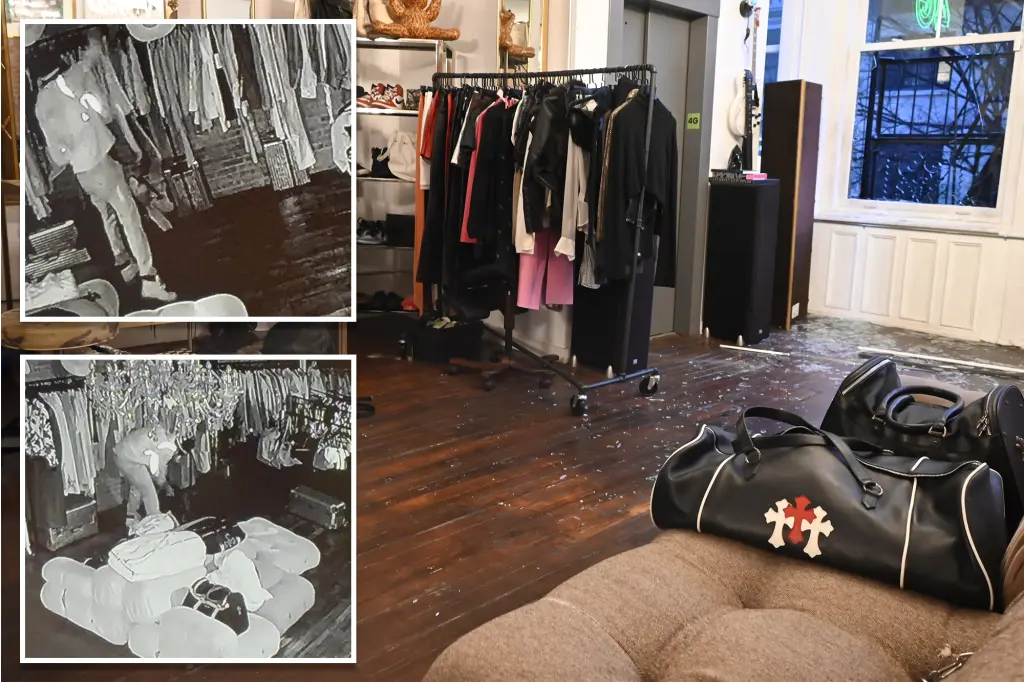
A luxury store heist in New York’s SoHo district has once again spotlighted the rising boldness and precision of smash-and-grab robberies across major US cities. In the early hours of Monday morning, a four-man crew looted nearly $1 million worth of rare menswear and high-end fashion pieces from 4G, an appointment-only boutique known for its celebrity clientele.
The entire operation lasted less than five minutes. By the time police arrived, just 91 seconds after receiving the call, the thieves were already gone.
This article examines what happened, why stores like 4G are being increasingly targeted, and what the incident reveals about the evolution of high-end retail crime in the US.
What happened during the SoHo luxury store heist?
According to police reports and the store’s internal team, the luxury store heist unfolded quickly and methodically.
A timed break-in executed before dawn
Around 4:45 am, the group pulled up to 4G on Spring Street and broke through a window, immediately heading for display areas that contained rare, high-value items.
Surveillance footage shows:
- A window smashed within seconds
- Bags positioned and filled with premium clothing and accessories
- Coordinated communication between the crew inside and a spotter outside
- A waiting sedan was used for the getaway
The targeted products included limited-edition menswear pieces, many costing $1,000 or more, items that are extremely valuable in the resale market because of their rarity.
A heist finished in under five minutes
Tom Macari, a brand ambassador for 4G, told PIX11 that the operation was striking in its precision. He noted that the thieves moved with clear knowledge of what they wanted and where it was kept.
He said the robbery resembled a smaller-scale version of a recent theft at the Louvre Museum, where thieves on scooters stole historic jewels worth an estimated $100 million.
At 4G, the entire break-in lasted roughly 270 seconds. By Macari’s estimate, the thieves were out before nearby responders even had a chance to process the alert.
Why are luxury resale boutiques becoming prime targets?
Luxury store heists have been steadily increasing across major cities. But appointment-only resale boutiques like 4G are especially vulnerable for several reasons.
Exclusivity creates a high-stakes environment
4G is known for:
- One-of-a-kind menswear pieces
- Limited-edition luxury fashion
- Celebrity clients, including Drake and Mark Wahlberg
- Flashy inventory that’s widely shared on social media
Such stores unintentionally advertise their value simply through the nature of their business.
The resale market incentivises precision theft
Rare menswear, especially streetwear and luxury collaborations, can be flipped quickly. The resale market has grown dramatically over the last decade, fueled by scarcity and online demand.
Thieves know:
- High-end items have serial numbers but are hard to track at scale
- Niche buyers don’t always ask for provenance
- International resale channels offer anonymity
- Popular brands like Louis Vuitton, Chrome Hearts, Fear of God, and limited-edition Nike pieces can fetch 2–10x retail
These economic incentives make luxury resale boutiques more appealing targets than traditional chain stores.
How did this heist compare to other recent high-profile thefts?
The robbery at 4G echoes patterns seen in other major thefts over the past two years.
Rapid-entry coordinated teams
Much like the Louvre incident referenced by Macari, recent high-value thefts increasingly involve:
- Small teams working with a spotter and a getaway driver
- Pre-planned routes and timed entry
- Precision targeting of items with the highest resale value
- Ultra-fast execution to outrun emergency response times
In some cases, criminal groups are believed to study store layouts, social media posts, and previous news stories to plan their entry.
Social media’s unintended role
A boutique like 4G naturally draws attention: its curated, visually appealing fashion collections are regularly displayed online. While essential for marketing, these images can also guide potential thieves toward the most profitable targets.
Physical security gaps in boutique stores
Unlike large commercial retailers, independent boutiques often rely on:
- Standard locks
- Basic alarm systems
- Limited overnight staffing
- Non-bulletproof glass
These limitations make them more susceptible to smash-and-grab operations that can be completed before alarms trigger an effective response.
What does this luxury store heist reveal about the evolving threat to high-end retail?
The SoHo incident underscores broader shifts in how retail crime is evolving in the US.
Criminals are moving toward higher-value, lower-volume theft
Instead of stealing dozens of mid-priced items, thieves increasingly seek:
- Fewer items
- Higher value per unit
- Rare pieces that are harder to trace
- Quick liquidation opportunities
A single rare jacket can be worth several thousand dollars on the resale market, making it a more attractive target than electronics or cosmetics.
Response times are no longer a deterrent
Despite NYPD arriving within 91 seconds, the thieves were already gone. This suggests:
- Traditional alarm-triggered response systems are insufficient
- More proactive technology may be needed, such as biometric locks, silent alarms, or reinforced storefronts
- Retailers must assume criminals can complete heists in under three minutes
Insurance and operating costs may rise for boutique retailers
Following such incidents, independent stores may face:
- Higher insurance premiums
- Stricter coverage requirements
- Additional costs for upgraded security
- Recruitment challenges for overnight staffing
For a boutique that thrives on exclusivity, this can significantly impact operations.
How can luxury retailers protect themselves against fast, coordinated thefts?
While no method guarantees prevention, several strategies can reduce vulnerability.
Physical reinforcements
- Reinforced glass or polycarbonate barriers
- Windowless display areas overnight
- Metal shutters or gates
- Layout adjustments that make smash-and-grab tactics less effective
Technology-led solutions
- Silent alarms connected directly to local precincts
- AI-powered motion sensors
- Real-time video analytics that detect group movements
- Smart inventory tracking to trace stolen items
Operational changes
- Rotating inventory locations
- Securing rare items away from windows
- Reducing overnight inventory on the sales floor
- Limiting publicly shared behind-the-scenes content
Why this heist matters beyond one store
A Rs 9 crore luxury store heist in under five minutes is not only a financial loss, but it’s also a signal.
It highlights the growing sophistication of retail crimes, the challenges faced by high-end boutiques, and the rising global demand for ultra-rare fashion pieces. It also shows that even a rapid police response cannot always counter organized theft groups that plan with precision and escape within minutes.
The bigger picture suggests that as the luxury resale industry continues to grow, so will the risks associated with its visibility and exclusivity.
For retailers, this incident is a warning. For law enforcement agencies, it’s a challenge. And for consumers, it’s a reminder that the meteoric rise of luxury fashion resale hasn’t come without consequences.
TL;DR
A four-man crew stole nearly Rs 9 crore worth of rare luxury menswear from SoHo boutique 4G in under five minutes. The precision of the heist reflects rising trends in targeted, high-value retail crime fueled by a booming resale market. Despite arriving within 91 seconds, police could not stop the getaway. The incident highlights security gaps in boutique luxury retail and the growing sophistication of smash-and-grab operations.