
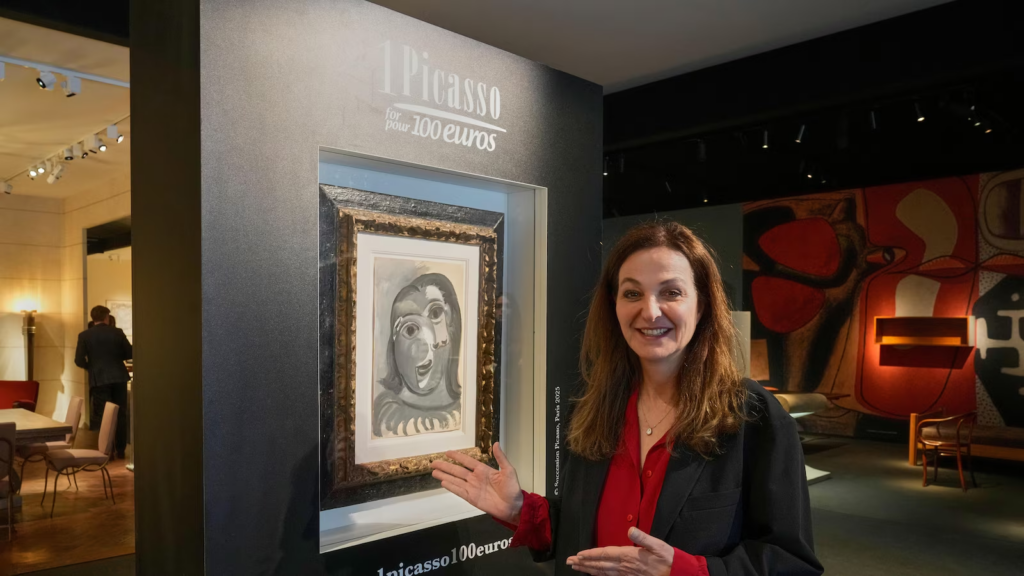
A Parisian engineer spent €100 on a raffle ticket and walked away with a seven-figure artwork. It sounds like a plot twist written by chance itself, but it’s real. The prize is an original painting by Pablo Picasso, valued at over €1 million.
The story isn’t just about luck. It’s also about how art, philanthropy, and creative fundraising can intersect in surprising ways.
What happened at the Picasso raffle in Paris?
The winning moment unfolded at Christie’s, where a charity raffle was livestreamed to a global audience. The winner, 58-year-old engineer Ari Hodara, held one ticket among 120,000.
That single entry turned into ownership of Tête de femme, a delicate gouache-on-paper portrait created in 1941.
What makes the artwork special
- It depicts Dora Maar, one of Picasso’s most influential muses
- Created during World War II, a period that shaped much of Picasso’s emotional and artistic tone
- Gouache medium gives it a softer, more intimate texture compared to his oil works
For collectors, even a “small” Picasso carries immense historical and financial value.
How the €100 raffle raised €12 million
Behind the headline-grabbing win is a much bigger story: fundraising at scale.
The numbers
- 120,000 tickets sold
- €100 per ticket
- €12 million total raised
The proceeds will go toward Alzheimer’s research, making the event less about luck and more about impact.
Why this model works
- Accessibility: €100 opens the door to art ownership for a wider audience
- Excitement factor: The chance to win a masterpiece creates global buzz
- Cause-driven motivation: Buyers feel they’re contributing to something meaningful
Why Alzheimer’s research needs funding like this
The raffle supports the Alzheimer’s Research Foundation, one of France’s leading private funders in this field.
The growing urgency
- Aging populations are increasing Alzheimer’s cases worldwide
- Research funding still lags behind other major diseases
- Breakthroughs require long-term, consistent investment
Foundation head Olivier de Ladoucette didn’t mince words, calling current funding levels inadequate for a problem of this scale.
Not the first time: the history of Picasso raffles
This isn’t a one-off stunt. It’s part of a growing tradition of high-value art raffles for charity.
Previous editions
- 2013: A Pennsylvania man won Man in the Opera Hat (1914)
- 2020: Italian accountant Claudia Borgogno won another Picasso, gifted via a Christmas ticket
Each event raised millions, blending art-world prestige with grassroots participation.
Why Picasso’s works are ideal for raffles
- Instantly recognizable name
- Strong market value
- Broad emotional and cultural appeal
In other words, Picasso is the perfect bridge between elite art and mass engagement.
What this win means for the art world
Events like this challenge traditional ideas about art ownership.
A shift in access
Historically, owning a Picasso required the following:
- Deep pockets
- Insider connections
- Auction house participation
Now, a €100 ticket can technically get you there.
But there’s a catch
- Odds remain extremely low
- Winners face decisions: keep, insure, or sell the artwork
- Market dynamics still favor wealthy collectors
Still, the symbolic shift matters. It democratizes the dream, even if not the reality.
The psychology of the raffle: why people buy in
There’s something uniquely compelling about this kind of gamble.
It blends three powerful motivators
- Hope: The chance of a life-changing win
- Altruism: Supporting a meaningful cause
- Storytelling: Being part of something bigger than a transaction
Unlike a lottery, the outcome feels culturally significant. You’re not just winning money; you’re inheriting a piece of history.
What happens next for the winner?
Winning the painting is only the beginning.
Key decisions ahead
- Keep it: A rare personal treasure
- Sell it: Potentially life-changing financial gain
- Loan it: Share it with museums or exhibitions
There’s also the matter of insurance, security, and taxes, all of which come with high-value art ownership.
The bigger picture: where art meets impact
This story works on two levels.
On the surface, it’s about a lucky ticket. Beneath that, it’s about how cultural assets can be leveraged for public good.
Why this model could grow
- High-value art creates attention
- Digital platforms enable global participation
- Charities gain new fundraising channels
It’s not hard to imagine similar raffles expanding beyond Picasso, potentially including contemporary artists or other cultural artifacts.
TL;DR
- A Paris engineer won a €1M Picasso with a €100 raffle ticket
- The event raised €12 million for Alzheimer’s research
- It’s part of a growing trend of art raffles for charity
- The model blends accessibility, excitement, and social impact