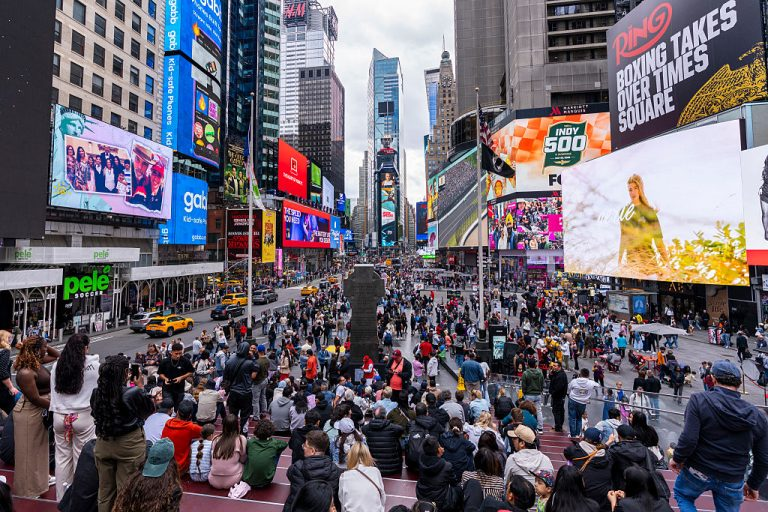
New York has retained its position as the world’s leading city in Oxford Economics‘ Global Cities Index 2026, outperforming London and Paris as major urban centers compete for economic influence, skilled workers and a higher quality of life. Tokyo, ranked ninth overall, emerged as Asia’s highest-placed city in the latest edition.
The index evaluates 1,000 cities worldwide across five categories: economics, human capital, quality of life, environment and governance. Its results highlight how economic power, educational opportunities, living conditions and environmental risks can shape a city’s global standing.
While New York continues to dominate the overall rankings, the results also reveal an important distinction: a strong economy alone does not guarantee that a city performs well across every measure of urban development.
Which cities ranked highest in the Global Cities Index 2026?
New York secured first place, followed by London in second and Paris in third. The United States maintained a strong presence among the top 10, with Seattle, San Francisco and San Jose also earning high positions.
Tokyo, at ninth, was the highest-ranked Asian city, reflecting its strengths in education, skills and human capital despite weaker performance in the environment category.
The leading cities demonstrate different paths to global influence. Some benefit from financial markets and corporate headquarters, while others draw strength from universities, highly skilled populations, cultural institutions or strong public services.
Eight of the 10 cities that featured in the 2025 top 10 retained their positions in the leading group in 2026, suggesting considerable stability among the world’s most established urban centers.
How does Oxford Economics rank the world’s cities?
Oxford Economics’ Global Cities Index compares urban centers using five categories, each assigned a different weight in the overall score.
The methodology gives the greatest combined emphasis to economic performance, human capital and quality of life, while also accounting for environmental conditions and governance.
The five categories are weighted as follows:
- Economics: 30% of the overall score.
- Human capital: 25%.
- Quality of life: 25%.
- Environment: 10%.
- Governance: 10%.
The economics category examines the strength and performance of a city’s economy. Human capital captures factors associated with education and the skills of its population, while quality of life considers conditions that affect residents’ everyday experiences.
The environment category evaluates environmental conditions and related risks. Governance is assessed at the national level, meaning cities within the same country receive the same governance score under this methodology.
This framework helps explain why cities with enormous economic output may rank lower in other areas. It also highlights the difference between being a powerful business center and offering consistently strong living conditions.
Why did New York retain the top position?
New York’s economic strength remains the central pillar of its first-place ranking. The city’s metropolitan economy was valued at approximately $2.6 trillion in 2025, the largest among the cities covered by the index.
Its concentration of financial institutions, technology businesses, media companies and corporate headquarters supports a broad economic base with significant global reach.
New York ranked first in the economics category and fifth in human capital, according to the reported results. These performances helped it maintain an advantage in the overall standings.
The city’s influence extends beyond Wall Street. Its role in international commerce, entertainment, professional services and technology connects it to business activity across multiple regions.
However, its leading position should not be interpreted as evidence that New York performs best in every aspect of urban life. Housing affordability, living costs and inequality remain important challenges for large American metropolitan areas, illustrating the difference between economic scale and residents’ individual experiences.
How did London and Paris perform?
London placed second overall, supported by its concentration of universities, highly educated workers and international talent. It ranked first in the human capital category, demonstrating the importance of education and skills in the competition between global cities.
Around 40% of London’s residents are foreign-born, according to the supplied report. Its international population contributes to a diverse labor market and helps sustain its position as a major center for business, education and culture.
Paris ranked third overall, combining a substantial economy with cultural attractions and relatively strong quality-of-life indicators. The city placed 10th in the quality-of-life category, with factors such as life expectancy, incomes and cultural amenities contributing to its performance.
Paris is also home to approximately 130 museums, underscoring its cultural importance. Its position illustrates how a city’s appeal can extend beyond economic output to include public amenities, heritage and opportunities for residents and visitors.
Together, London and Paris demonstrate that global competitiveness depends on more than financial activity. Skilled populations, educational institutions and the wider urban experience also contribute to a city’s standing.
How did US technology hubs perform?
American technology centers remained prominent in the 2026 rankings, with Seattle placing fourth, San Francisco fifth and San Jose eighth overall.
Seattle benefits from the presence of major companies, including Microsoft and Amazon, alongside its aerospace and retail sectors. Its economic base combines technology with other industries, supporting its strong overall position.
San Francisco continues to draw strength from its technology ecosystem and connections to venture capital and entrepreneurship. San Jose, at the heart of Silicon Valley, also benefits from the concentration of technology companies and highly productive economic activity.
San Jose recorded the highest gross domestic product per person among the cities in the index, at an estimated $238,700 in 2025. It ranked third in economics, highlighting the region’s exceptional economic output relative to its population.
Yet the city placed 121st in human capital, according to the reported figures. The contrast demonstrates that strong economic productivity does not automatically translate into equally strong results across all categories.
Boston provides another example of uneven performance. It ranked ninth in economics but 289th in environment, with exposure to flooding cited as one factor affecting its position.
High housing costs, income inequality and dependence on concentrated industries remain broader concerns for American technology hubs. These pressures can complicate the relationship between economic success and the quality of life experienced by residents.
Which other cities stood out in the rankings?
Several European cities delivered strong performances in individual categories, even when they did not make the overall top five.
Dublin ranked sixth overall and ninth in the environment category. Low pollution and a temperate climate supported its environmental performance, although housing affordability remains a significant challenge.
Oslo ranked sixth in quality of life and eighth in governance, reflecting its strong performance in areas associated with living conditions and public institutions.
Copenhagen secured first place in governance but ranked 18th overall. Zurich also featured in the overall top 10, supported by its financial-services sector, educational institutions and high living standards.
These results show why category-level rankings can be useful alongside the overall list. A city may excel in governance, education or environmental conditions without achieving the highest combined score across all five measures.
For residents, businesses and policymakers, those differences can be more informative than the overall ranking alone.
Why is Tokyo the highest-ranked Asian city?
Tokyo ranked ninth overall, making it Asia’s highest-placed city in the 2026 index. Its strongest reported performance came in human capital, where it ranked third globally.
The Japanese capital benefits from a large pool of skilled workers, major educational institutions and an extensive economic ecosystem. Its position reflects the importance of workforce capabilities and education in determining a city’s global competitiveness.
However, Tokyo ranked 454th in the environment category, the weakest environmental placement among the overall top 10 cities, according to the supplied report. Natural hazards, including earthquakes and typhoons, were cited as factors weighing on its performance.
This contrast illustrates the challenges of assessing major cities through a single overall score. Tokyo’s strengths in human capital coexist with environmental vulnerabilities that influence its broader ranking.
Oxford Economics expects fast-growing Asian cities to gain greater economic influence as they expand in advanced manufacturing, technology and business services. If these sectors continue to develop, competition between established Western centers and emerging Asian hubs could intensify in future editions.
What does the Global Cities Index 2026 reveal about urban competitiveness?
The 2026 rankings highlight the continued influence of established economic centers while showing that cities must balance several priorities to maintain their global standing.
New York’s first-place position reflects its enormous economic scale, while London’s human capital advantage and Paris’s quality-of-life performance demonstrate alternative sources of urban strength.
The results also expose trade-offs. San Jose’s high economic productivity does not translate into an equally high human capital ranking, while Tokyo’s strong skills base contrasts with its weaker environmental score.
For city leaders, the findings suggest that long-term competitiveness involves more than attracting businesses and increasing economic output. Education, affordability, environmental resilience and effective institutions also matter.
As Asian economies expand and cities invest in technology and advanced industries, the global urban hierarchy may become more competitive. For now, however, New York remains at the top, with London and Paris holding the next two positions in Oxford Economics’ Global Cities Index 2026.