
In 2016, Sayaka Murata published Convenience Store Woman, a slim, quietly radical novel about a woman working part-time at a convenience store. There are no murders, no sweeping romances, no dramatic twists. The protagonist stocks shelves, greets customers, and finds comfort in routine. The book went on to win Japan’s prestigious Akutagawa Prize, sell over 1.5 million copies domestically, and reach readers in more than 30 languages.
It didn’t just succeed, it signalled a shift. A growing number of readers are gravitating toward what can best be described as quiet fiction: stories set in small, contained spaces where emotional depth replaces plot spectacle.
What Is “Quiet Fiction” and Why Is It Trending?
“Quiet fiction” isn’t an official genre, but it’s becoming a recognizable category in global publishing. These books typically share a few traits:
- Limited settings (often a single location)
- Minimal external conflict
- Focus on routine, introspection, and emotional nuance
- Ordinary characters navigating everyday life
Recent international hits reinforce the pattern:
- Before the Coffee Gets Cold by Toshikazu Kawaguchi
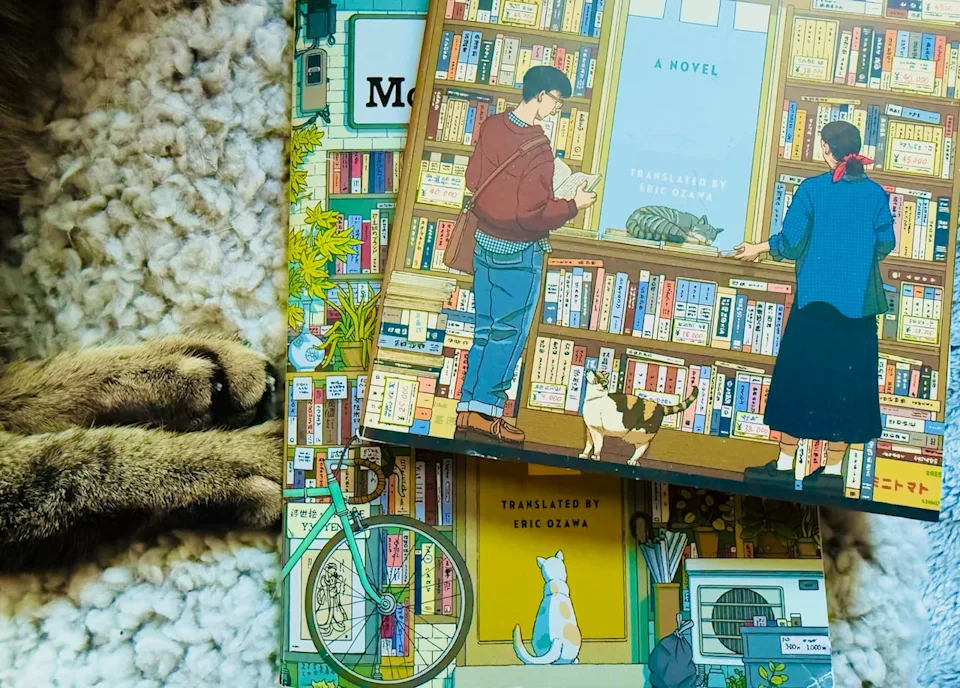
- Days at the Morisaki Bookshop by Satoshi Yagisawa
- The Cat Who Saved Books
- What You Are Looking For Is in the Library
- The Kamogawa Food Detectives
- Sweet Bean Paste
These books are often set in cafés, bookshops, or small neighbourhood establishments. The stakes are internal, not external.
Why now?
Because modern readers are overwhelmed.
In an era dominated by algorithm-driven feeds, breaking news cycles, and high-stakes entertainment, these stories offer something different: stillness.
Why “Convenience Store Woman” Changed the Game
A story about routine—without apology
Murata’s novel doesn’t frame ordinary life as something to escape. Instead, it treats routine as meaningful, even liberating.
That’s a sharp departure from Western storytelling norms, where:
- Characters are expected to “grow” in visible, dramatic ways
- Jobs like retail are often portrayed as temporary or unfulfilling
- Stability is seen as stagnation
In Convenience Store Woman, the protagonist doesn’t “level up.” She finds peace exactly where she is.
It validated a different kind of narrative
The book proved that:
- A single-location story can sustain global interest
- Emotional insight can replace plot twists
- Readers are willing to sit with discomfort and ambiguity
How Japanese Fiction Became the Face of the Trend
While quiet fiction isn’t exclusive to Japan, Japanese authors have become its most visible ambassadors globally.
Cultural storytelling differences
Japanese literature often emphasizes:
- Mono no aware (an awareness of impermanence)
- Subtle emotional shifts over dramatic events
- The beauty of routine and repetition
Books like Before the Coffee Gets Cold use small, contained settings (a café) to explore big themes (time, regret, memory).
Translation boom and global reach
Over the past decade:
- More Japanese titles have been translated into English
- Independent publishers have championed these works
- Social media (especially BookTok and Bookstagram) has amplified its reach
Why Readers Are Choosing Small Stories Over Big Plots
1. Emotional relatability
These books mirror real life more closely than high-concept thrillers or fantasy epics.
Readers see themselves in:
- Repetitive workdays
- Quiet loneliness
- Small, meaningful interactions
2. A sense of control and order
In chaotic times, structured environments—like a convenience store or café—offer psychological comfort.
Murata’s protagonist thrives on:
- Predictable schedules
- Clear rules
- Defined roles
That resonates with readers navigating uncertain careers and social expectations.
3. Low-stakes doesn’t mean low impact
Quiet fiction proves that:
- A conversation can carry as much weight as a car chase
- Internal conflict can be just as gripping as external danger
4. It’s highly shareable
These books tend to be:
- Short (often under 250 pages)
- Accessible in language and structure
- Easy to recommend
That makes them ideal for viral reading communities.
The Business Case: Why Publishers Are Paying Attention
This isn’t just a literary trend—it’s a commercial one.
Consistent international performance
Books like Before the Coffee Gets Cold have:
- Spawned multiple sequels
- Sold across markets (U.S., U.K., Asia, Europe)
- Maintained long-tail sales years after release
Adaptation potential
Contained settings make these stories:
- Affordable to adapt for film and TV
- Easy to stage for the theatre
Brand-building for authors
Authors in this space often develop:
- Recognisable thematic identities
- Loyal, repeat readership
Is This a Passing Trend—or a Lasting Shift?
There’s a strong case that quiet fiction is here to stay.
It fills a gap in the market
For years, mainstream publishing leaned heavily on:
- High-concept thrillers
- Fantasy franchises
- Romance with strong plot hooks
Quiet fiction offers an alternative for readers who want:
- Reflection over adrenaline
- Atmosphere over action
It aligns with broader cultural shifts
Across industries, there’s a move toward:
- Slow living
- Mindfulness
- Minimalism
These books mirror those values.
What This Means for Writers and Readers
For writers
There’s growing permission to:
- Write small stories
- Focus on mood and character
- Break away from traditional plot expectations
For readers
It expands what “entertaining” can mean.
Not every book needs:
- A villain
- A twist ending
- A dramatic climax
Sometimes, watching someone make coffee—or stock shelves—is enough.
TL;DR
- Convenience Store Woman helped popularise a wave of “quiet fiction.”
- These books focus on ordinary settings and internal experiences.
- Japanese authors have led the trend globally.
- Readers are drawn to their calm, reflective tone in a chaotic world.
- Publishers see strong commercial potential in this category.