
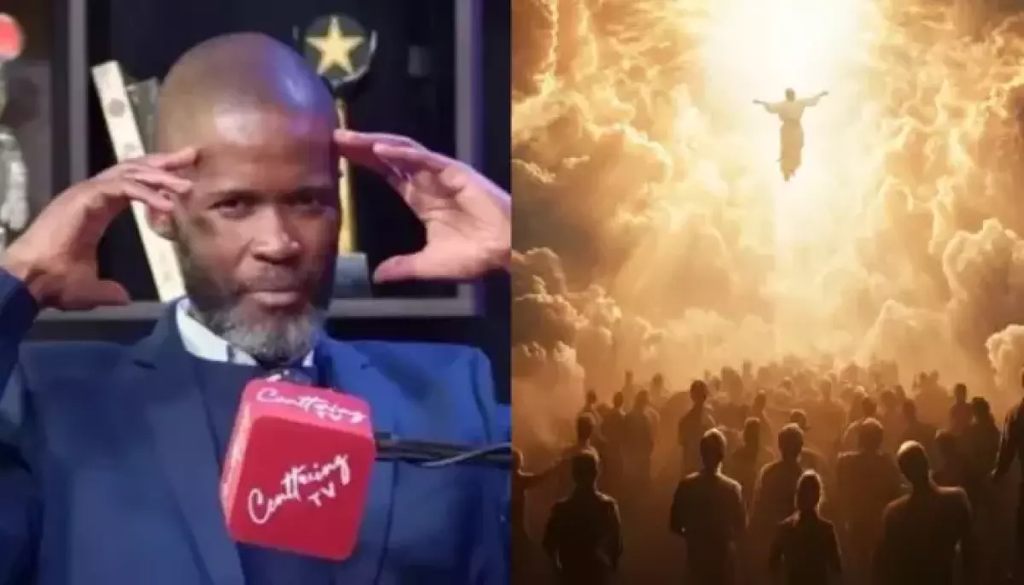
A South African pastor whose highly publicized Rapture prediction failed in 2025 is once again naming dates for the event, this time pointing to October 12 and 13, 2026.
Joshua Mhlakela has revived his end-times claim after previously predicting that the Rapture would occur on September 23 or 24, 2025. When those dates passed without the event taking place, he later offered alternative dates and explanations.
Mhlakela is now presenting October 12-13 as the date he believes the Rapture will occur. His latest prediction has again spread online, where end-times theories can quickly move from a niche religious discussion into a broader social-media phenomenon.
But there is a major problem with one of the arguments being used to support the new date: October 12-13 is not the 2026 date of Rosh Hashanah, the Jewish New Year commonly associated with the biblical Feast of Trumpets.
That holiday fell in September this year, making the theological and calendar basis for the new prediction especially important to examine.
What is Joshua Mhlakela predicting now?
Mhlakela has publicly claimed that the Rapture will take place around October 12 or 13, 2026.
In his latest material, he has connected the prediction to what he describes as the “true Feast of Trumpets” and to the Hebrew calendar. He has also presented the new date with the kind of certainty that accompanied his earlier prediction.
The claim is not based on any scientific forecast. It is a religious prophecy based on Mhlakela’s interpretation of visions, biblical passages and calendar calculations.
Joshua Mhlakela said in multiple YouTube videos and interviews that he had visions of the Rapture, a day when the world will end. He said, “God told me because there’s no other date coming out, 12 to 13 October, which is the true feast of trumpets, which is when I will be meeting my saviour face to face in the rapture.”
What is the Rapture?
The Rapture is an end-times belief held by some Christians, particularly within evangelical and fundamentalist traditions.
In the commonly described version, faithful Christians are suddenly taken up to meet Christ, while others remain on Earth. Some interpretations place the Rapture before a period known as the Great Tribulation, although Christians disagree strongly about the sequence of events.
The concept is associated with passages including 1 Thessalonians 4, which describes believers being “caught up” to meet the Lord.
The modern formulation of the Rapture developed particularly within 19th-century Protestant theology and is not understood in exactly the same way across all Christian denominations.
That distinction matters because there is no single universally accepted Christian interpretation of when or how the Rapture will occur.
Why is October 12-13 being linked to the Feast of Trumpets?
Mhlakela’s new prediction relies heavily on a calendar argument.
The Feast of Trumpets, known in Jewish tradition as Rosh Hashanah or Yom Teruah, occurs on the first day of the Hebrew month of Tishrei. Because the Hebrew calendar is lunisolar, its Gregorian-calendar date changes from year to year.
For 2026, Rosh Hashanah began at sunset on September 11 and continued through September 13, depending on the convention used to describe the holiday period. The first day of the biblical Feast of Trumpets was September 12.
That means October 12-13 does not correspond to the ordinary 2026 date of Rosh Hashanah.
Mhlakela appears to be using his own interpretation of what constitutes the “true” date rather than simply referring to the standard Jewish calendar.
What happened with his 2025 prediction?
Mhlakela first gained widespread attention in 2025 after saying he had experienced a vision in which Jesus told him the Rapture would take place on September 23 or 24.
The dates were significant because they coincided with Rosh Hashanah in 2025.
As the predicted dates approached, the claim spread across social media and attracted people who took the warning seriously, as well as large numbers of skeptical viewers.
Some followers reportedly made dramatic personal decisions in anticipation of the event, including selling possessions or leaving jobs.
September 23 and 24 passed without the predicted Rapture.
Instead of abandoning the prediction, Mhlakela subsequently offered another explanation for why the date had not materialized.
How did Mhlakela explain the failed prediction?
After the September 2025 dates passed, Mhlakela argued that the wrong calendar had been used.
He shifted his explanation toward a Julian-calendar interpretation and subsequently promoted October dates as the corrected timing.
That second prediction also passed without the Rapture taking place.
The pattern is important because it means the October 2026 prediction is not the first revision to the original claim.
There has now been a documented sequence of changing dates and interpretations surrounding Mhlakela’s broader end-times prophecy.
Did the 2025 prediction simply move to another date?
Not exactly.
Mhlakela’s explanations have changed over time, with different calendar calculations and prophetic interpretations being used to support new windows.
A record maintained by researchers tracking his claims shows several dates being proposed or discussed after the original September 2025 prediction, including alternative dates in October and later periods.
That history provides important context for the current October 12-13 claim.
It also illustrates a familiar pattern in failed apocalyptic predictions: when the predicted event does not occur, supporters may reinterpret the original calculation rather than treating the failed date as conclusive evidence against the prophecy.
What does the Bible say about predicting the exact date?
This is where the debate becomes particularly interesting.
One of the most frequently cited passages is Matthew 24:36, in which Jesus says that no one knows the day or hour, with the timing known only to the Father.
That verse has long been used by Christians who oppose efforts to calculate a precise date for the end times.
Other biblical passages also emphasize uncertainty and the need for watchfulness rather than a calendar formula.
As a result, even within Christian communities that believe in the Rapture, there is substantial disagreement over whether an exact date can be predicted at all.
Mhlakela’s approach therefore sits on one side of a much larger theological disagreement.
Why does Rosh Hashanah matter in Rapture theories?
The connection between the Jewish Feast of Trumpets and the Rapture has been debated in some Christian circles for decades.
The appeal comes partly from the symbolism of trumpets in biblical passages dealing with major religious and eschatological events.
Some Christians therefore view the Feast of Trumpets as potentially significant when interpreting end-times passages.
But that does not establish that the Rapture must occur on Rosh Hashanah, still less that a particular modern Gregorian date can be extracted from it.
The Jewish holiday itself has an established calendar date. Linking it to a modern prophecy requires additional theological assumptions that are not universally accepted.
Why the 2026 date raises a calendar problem
The biggest factual issue with the current claim is straightforward.
The standard Jewish calendar places Rosh Hashanah 5787 in September 2026, not October 12-13.
The first day of Tishrei fell on September 12, 2026, with the holiday observed across September 12-13 in the Jewish calendar’s traditional two-day observance.
October 12-13 is therefore not simply a delayed or alternate standard date for Rosh Hashanah.
Anyone presenting those October dates as the “true Feast of Trumpets” is relying on a specific alternative calculation or interpretation that should be identified as such.
That distinction is essential for readers because a religious interpretation should not be presented as though it were an uncontested calendar fact.
Is the Rapture the same as the end of the world?
Not necessarily.
The terms are often used interchangeably in popular discussions, but many Christian interpretations distinguish between the Rapture, the Second Coming and the final judgment.
In some theological systems, the Rapture is understood as an event preceding the Great Tribulation. In others, the timing is placed differently, while some Christian traditions do not accept the doctrine in the modern evangelical form at all.
Calling October 12-13 the “end of the world” therefore oversimplifies the belief.
A more accurate description is that Mhlakela is predicting a specific Rapture event, which he associates with broader end-times developments.
Why did his previous prediction attract so much attention?
The 2025 prophecy became unusually visible because social-media platforms amplified both believers and skeptics.
The resulting online trend was sometimes referred to as “RaptureTok.”
Videos showed people discussing preparation, questioning what would happen to those left behind and, in some cases, documenting major life decisions made in anticipation of the predicted date.
The phenomenon demonstrated how quickly religious prophecy can become a digital mass event.
It also showed the real-world consequences of highly confident predictions. For people who genuinely believe an apocalypse is imminent, decisions involving money, employment, housing and family can become difficult to reverse.
What happened after the predicted date passed?
When September 23 and 24, 2025 passed uneventfully, reactions ranged from disappointment to ridicule.
Mhlakela did not simply concede that the prediction had failed. Instead, he proposed new interpretations of the date and calendar.
That response is not unique to apocalyptic movements. Researchers studying failed prophecies have long documented cases in which followers reinterpret a failed prediction as a spiritual test, a delayed event or evidence that humanity was granted additional time.
Mhlakela has similarly argued that the failure should not necessarily be interpreted as evidence that his broader warning was false.
Could the October 12-13 prediction fail again?
There is no evidence that allows anyone to establish that a Rapture will occur on those dates.
The claim is a religious prophecy, not a scientifically testable prediction supported by astronomical, geological or other empirical evidence.
The fact that a date is connected by someone to an ancient religious calendar does not make the event predictable.
The history of Mhlakela’s earlier predictions also provides a reason for skepticism. His September 2025 dates passed, and subsequent alternative dates did as well.
That record does not prove what will or will not happen in the future, but it does show that previous precise predictions attributed to him have not been fulfilled.
What should readers make of the latest claim?
The October 12-13 prediction should be understood as Mhlakela’s personal religious interpretation rather than an established forecast.
There is also a clear calendar issue surrounding his reference to the Feast of Trumpets. The standard 2026 Jewish calendar places Rosh Hashanah in September, not October.
And from a Christian theological perspective, the idea that anyone can identify the precise day of the end-times event remains deeply disputed.
For now, October 12-13 is simply another date attached to a prophecy that has already undergone several revisions.
The real story is less about whether the world is about to end and more about how an unverified prediction can gain extraordinary momentum online, survive an earlier failed forecast and return with a new date almost a year later.