A new obesity drug candidate is generating major attention after delivering average weight loss of more than 30% in a long-term clinical-trial extension. The drug is retatrutide, an experimental once-weekly injection being developed by Eli Lilly. In a Phase 3 obesity study, people receiving the highest dose lost an average of 28.3% of their body weight after 80 weeks.
A smaller group of participants who started with a body mass index of at least 35 and continued treatment through a 104-week extension lost an average of 30.3% of their initial body weight on the 12 mg dose.
The distinction is important.
The 30.3% figure does not mean that everyone enrolled in the trial lost 30% of their weight. It came from a pre-specified extension involving 532 participants with a baseline BMI of 35 or higher. Within that group, those receiving 12 mg retatrutide lost an average of 85 pounds, or 30.3%, over 104 weeks.
Even with that qualification, the result is significant because weight loss at this scale has traditionally been difficult to achieve with medication alone.
How much weight did retatrutide help patients lose?
The main TRIUMPH-1 trial enrolled 2,339 adults with obesity or overweight and at least one weight-related medical condition, excluding diabetes.
Participants were randomly assigned to receive retatrutide at 4 mg, 9 mg, or 12 mg, or a placebo.
After 80 weeks, average weight loss was
4 mg: 19.0%
9 mg: 25.9%
12 mg: 28.3%
Placebo: 2.2%
The highest-dose group therefore lost nearly three times as much of their starting body weight as the 9 mg group.
The difference becomes even more striking when looking at the proportion of people who achieved very large reductions. At 80 weeks, 45.3% of participants receiving 12 mg had lost at least 30% of their body weight, compared with just 0.5% of those receiving placebo.
In the 104-week extension, the participants who continued on 12 mg reached an average 30.3% reduction.
For someone weighing 250 pounds at the relevant baseline, a 30% reduction would be about 75 pounds. The actual trial participants had different starting weights, so that example is only an illustration rather than an individual treatment expectation.
Why the 30% number matters
A 30% reduction in body weight is considerably beyond what has typically been expected from earlier generations of anti-obesity medications.
That does not mean every person taking retatrutide would lose 30%.
Clinical-trial averages hide substantial differences between individual participants. Some people lose considerably more, while others lose substantially less or stop treatment because of side effects or other reasons.
Still, the magnitude of the average result has drawn attention from obesity researchers because it begins to approach weight reductions that can otherwise be difficult to achieve without bariatric surgery.
Lilly reported that 27.2% of people in the 12 mg group achieved at least 35% weight loss by week 80.
The data suggest that the medication’s effect had not necessarily reached a plateau by the end of the main 80-week study.
That is one reason researchers are watching the longer-term data closely.
How does retatrutide work?
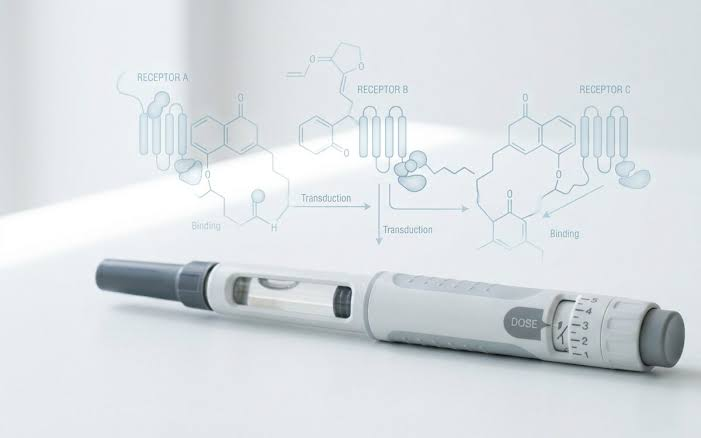
Retatrutide belongs to a newer category of drugs designed to activate multiple hormonal pathways involved in metabolism.
The molecule simultaneously targets three receptors:
GIP, or glucose-dependent insulinotropic polypeptide
GLP-1, or glucagon-like peptide-1
Glucagon
That makes retatrutide different from drugs that target only one of these pathways.
GLP-1-based medicines can reduce appetite and increase satiety, while GIP is involved in the body’s response to food and insulin regulation. The glucagon component is being investigated partly for its effects on energy expenditure and metabolism.
Lilly describes retatrutide as a “triple hormone receptor agonist.” The company notes that informal descriptions such as “GLP-3” are scientifically inaccurate because GLP-3 is not an established hormone classification.
The hope is that activating the three pathways together can produce a stronger effect on body weight and metabolic health than targeting fewer pathways.
The trial participants started with severe obesity on average
The people enrolled in TRIUMPH-1 were not a representative sample of the general population.
The average baseline weight was approximately 112.7 kilograms, or 248.5 pounds, and the average BMI was 40.0, which falls within the class 3 obesity range.
That matters when interpreting the results.
The findings are highly relevant to people with obesity, but they should not automatically be extrapolated to someone who is only mildly overweight or to people without the medical characteristics required for participation in the trial.
The extension showing the 30.3% average reduction was narrower still. It included participants with baseline BMI of at least 35 who had completed the original study and tolerated their assigned treatment. A total of 532 people entered that extension.
That creates an important selection effect.
The extension group was made up of people who had already completed the main trial and could continue taking the drug. It therefore should not be interpreted as though every person beginning retatrutide can expect the same 104-week result.
Retatrutide also improved other obesity-related problems
The weight-loss result is not the only reason Lilly is studying retatrutide.
The TRIUMPH-1 program also included groups with obesity-related knee osteoarthritis and moderate-to-severe obstructive sleep apnea.
In the knee osteoarthritis group, the highest reductions in pain scores reached 73.1% from baseline.
In the sleep-apnea group, the apnea-hypopnea index, which measures the number of breathing interruptions or reductions during sleep, fell by as much as 60.6%.
The drug also produced improvements in several cardiometabolic measurements.
Lilly reported reductions in waist circumference, triglycerides, non-HDL cholesterol, systolic blood pressure and high-sensitivity C-reactive protein.
These findings matter because obesity is not simply a question of body size.
Excess body fat is associated with a broad range of conditions, including hypertension, abnormal blood lipids, sleep apnea, insulin resistance and osteoarthritis.
A treatment that reduces body weight while also improving several of those risk factors could potentially have effects extending beyond the number on a scale.
What happened to people with prediabetes?
Blood-sugar measures also improved during TRIUMPH-1.
Among participants who had prediabetes at baseline, more than 95% of those receiving the 12 mg dose reportedly returned to the normal blood-glucose range by the end of the 80-week study, according to analyses presented by Lilly.
That does not mean retatrutide should be considered a cure for diabetes or prediabetes.
The participants in TRIUMPH-1 did not have diabetes at baseline, and other Phase 3 trials are separately evaluating retatrutide in people with type 2 diabetes.
In those studies, the drug has also produced substantial reductions in both blood sugar and body weight.
For example, Lilly’s September 29 results from TRIUMPH-2 showed that participants with obesity and type 2 diabetes taking 12 mg lost an average of 20.8% of their body weight over 80 weeks. Their average HbA1c reduction reached 1.6 percentage points.
That difference highlights why results from different retatrutide trials should not be lumped together.
The population being studied changes the result.
The drug is not yet approved
This is perhaps the most important fact for anyone reading about retatrutide online.
Retatrutide is not currently an approved obesity medication.
Lilly classifies it as an investigational drug, and its clinical safety and effectiveness are still being evaluated.
The company says retatrutide is legally available only to participants in Lilly-sponsored clinical trials and has not been approved by any regulatory agency.
The U.S. Food and Drug Administration has also warned companies selling unapproved retatrutide products that the drug does not have an FDA-approved application and that unauthorized versions cannot be assumed to have been evaluated for safety, effectiveness or quality.
That means people should not interpret the Phase 3 data as an invitation to obtain retatrutide outside a legitimate clinical setting.
What side effects were reported?
The impressive weight-loss numbers need to be considered alongside tolerability.
In TRIUMPH-1, gastrointestinal problems were the most common side effects.
At the 12 mg dose, about 42% of participants reported nausea, 32% reported diarrhea, 26% reported constipation and 25% reported vomiting.
The corresponding figures in the placebo group were considerably lower.
Treatment discontinuation because of adverse events occurred in about 11% of the 12 mg group compared with 5% of people receiving placebo. Gastrointestinal adverse events were the most common reason for stopping treatment.
The study also recorded other adverse events of interest, including dysesthesia, injection-site reactions and reported hypotension.
Serious adverse events occurred in 7.7% to 10.5% of retatrutide participants across the dose groups compared with 5.5% in the placebo group in the main trial.
That does not establish that retatrutide causes all serious events reported during a trial, because events can occur for reasons unrelated to the study drug.
It does show why a regulatory review is necessary before a medication is broadly marketed.
Why these results are exciting but not the finish line
The latest data represent an important milestone for Eli Lilly’s obesity program, but they do not amount to the end of the drug-development process.
A successful Phase 3 trial provides evidence that a medicine may work and can provide a detailed safety dataset.
Regulators then have to examine the totality of evidence.
Lilly said in July that it planned to submit a Biologics License Application for retatrutide to the FDA in the first quarter of 2027. The company said its Phase 3 program had generated the data package needed to support planned regulatory submissions for obesity and certain obesity-related conditions.
Approval is therefore still a future regulatory decision.
A clinical-trial result and a regulatory approval are not the same thing.
How retatrutide fits into the obesity-drug race
The obesity-drug market has changed dramatically with the arrival of medicines targeting the incretin system.
Semaglutide, tirzepatide and other therapies have demonstrated that medication can produce substantially greater weight loss than older generations of anti-obesity drugs.
Retatrutide is designed to push that concept further by targeting three hormonal pathways simultaneously.
That makes comparisons with existing drugs inevitable.
But direct comparisons are complicated.
A trial’s patient population, starting BMI, dose-escalation schedule, duration, treatment adherence and statistical analysis can all affect the reported percentage of weight loss.
The cleanest comparison comes from a head-to-head trial, rather than placing results from separate studies side by side.
Such evidence will be particularly important if retatrutide moves toward regulatory approval and physicians begin deciding where it fits among existing treatments.
Could 30% average weight loss become a new benchmark?
The possibility is one of the most intriguing implications of the data.
For decades, obesity treatment involved a relatively small set of options, and medication-induced weight loss was often modest compared with the results seen in bariatric procedures.
The latest retatrutide findings suggest that pharmacological treatment may be capable of moving much closer to the magnitude of weight reduction traditionally associated with surgery in at least some patients.
But the 30.3% figure should not be transformed into a universal expectation.
It came from a selected subgroup receiving the highest dose after two years of treatment.
And even within that group, the average does not describe every individual response.
The long-term safety picture also needs continued observation.
What happens next for retatrutide?
Lilly is continuing additional Phase 3 research across obesity, type 2 diabetes, cardiovascular disease and other obesity-related conditions.
The company’s current program also includes studies looking at obstructive sleep apnea, knee osteoarthritis, chronic low back pain, cardiovascular and renal outcomes and metabolic dysfunction-associated steatotic liver disease.
The next major milestone will be regulatory submission.
If Lilly files its planned BLA in early 2027, regulators will then have to assess the evidence and determine whether the benefits of retatrutide outweigh its risks for the proposed indications.
Until then, the drug remains a research treatment rather than a prescription option.
The real significance of the 30% figure
Retatrutide’s latest results are eye-catching because they show that the biological ceiling of obesity medicines may be moving upward.
The headline number is 30.3%.
The more important context is what sits behind it.
A triple-action investigational drug produced an average 28.3% weight reduction at 80 weeks in the full high-dose group and more than 30% over 104 weeks in a smaller subgroup with severe obesity.
It also improved several obesity-related conditions and metabolic markers.
At the same time, side effects were common enough to cause treatment discontinuation in a meaningful minority of participants, and the drug has not yet been approved by regulators.
So the story is not that a miracle weight-loss drug has already arrived.
It is that retatrutide has produced some of the strongest weight-loss results yet reported from a late-stage obesity drug candidate, giving regulators, physicians and researchers a new set of numbers to scrutinize.
The next question is no longer simply how much weight people can lose.
It is how much of that loss can be achieved safely, sustainably and at a scale that can change the treatment of obesity.