
‘We outright grabbed the wallets’: How Washington is using cryptocurrency seizures to squeeze Iran
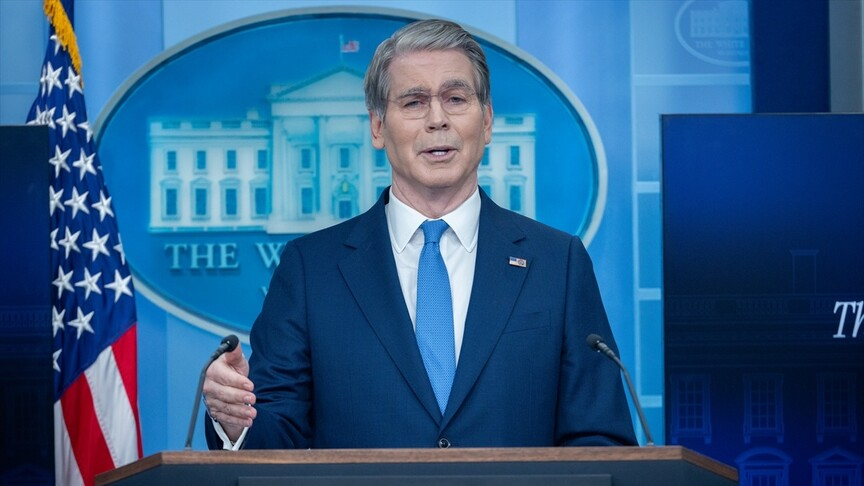
The United States has seized roughly $1 billion worth of Iranian crypto assets as part of an aggressive sanctions enforcement campaign aimed at cutting off Tehran’s access to global financial networks, according to Treasury Secretary Scott Bessent.
Speaking during an appearance on Fox Business’ Kudlow at the Reagan National Economic Forum, Bessent claimed the operation represents one of the most significant cryptocurrency enforcement actions ever undertaken against Iran.
“We have seized about a billion dollars of their crypto,” Bessent said. “Just outright grabbed the wallets.”
The remarks offer a rare glimpse into how the US government is increasingly using blockchain surveillance, sanctions enforcement, and digital asset seizures as tools of economic warfare.
What did Scott Bessent say about the crypto seizures?
Bessent described the effort as part of a broader campaign known as “Operation Economic Fury,” an initiative launched in 2025 to increase financial pressure on Iran.
According to the Treasury secretary, the operation has targeted:
- Cryptocurrency wallets
- Financial accounts
- Overseas assets
- Real estate holdings linked to sanctioned individuals
- Networks allegedly used to evade sanctions
Bessent suggested some wallet holders may not have immediately realised their assets had been seized.
“Some of them may be typing in right now and might not realise their wallet had been grabbed,” he said.
The comments underscore the growing ability of governments to identify and freeze digital assets despite the common perception that cryptocurrencies are beyond the reach of law enforcement.
What is Operation Economic Fury?
Operation Economic Fury was launched by the Trump administration in March 2025 as part of a broader strategy to weaken Iran’s financial infrastructure.
According to Bessent, the campaign seeks to:
- Restrict Iran’s access to foreign currency
- Disrupt sanctions-evasion networks
- Seize assets connected to Iranian entities
- Pressure international partners to freeze overseas holdings
- Limit funding streams linked to Iran’s military and strategic programs
The Treasury secretary said the United States has also worked with European allies to identify and confiscate overseas properties and assets connected to sanctioned individuals.
“We are working with our allies all over Europe to grab villas and houses and properties,” Bessent said.
Why is cryptocurrency important to Iran?
Cryptocurrency has become an increasingly important financial tool for countries facing international sanctions.
For years, analysts have argued that digital assets offer sanctioned governments alternative pathways to move money outside traditional banking systems.
How crypto can help bypass sanctions
Cryptocurrencies can potentially allow users to:
- Transfer funds across borders
- Conduct transactions without conventional banks
- Access global markets
- Convert assets into stablecoins pegged to the US dollar
Iran has been repeatedly accused by Western governments of using digital assets and alternative financial networks to reduce the impact of economic sanctions.
Stablecoins such as Tether (USDT) have attracted particular attention because they can facilitate large-value transactions while maintaining relatively stable prices.
How much crypto was actually seized?
Bessent’s comments appear to reference a series of enforcement actions rather than a single operation.
Reports indicate that US authorities and partners had already frozen hundreds of millions of dollars in cryptocurrency linked to Iranian entities during recent months.
Among the largest reported actions was a freeze involving Tether tokens on the Tron blockchain.
The cumulative value of those actions now appears to approach the $1 billion figure cited by the Treasury secretary.
However, officials have not publicly released a detailed breakdown of every wallet or transaction involved.
Can governments really seize crypto assets?
One of the biggest misconceptions surrounding crypto assets is that it cannot be controlled or confiscated.
In reality, modern blockchain investigations have become increasingly sophisticated.
How authorities track digital assets
Law enforcement agencies now routinely use:
- Blockchain analytics tools
- Exchange compliance records
- Wallet tracking systems
- Transaction monitoring software
- International cooperation agreements
If authorities gain control of private keys, secure cooperation from exchanges, or identify assets held through regulated platforms, they can often freeze or seize cryptocurrency holdings.
The US government has previously seized billions of dollars in cryptocurrency linked to cybercrime, sanctions violations, and illicit marketplaces.
What does this mean for Iran?
Bessent painted a bleak picture of Iran’s financial position, arguing that sanctions and military pressure have significantly weakened the country’s economic outlook.
“I think they are at the end of their tether now financially,” he said.
That assessment reflects the Trump administration’s view that sustained economic pressure can limit Iran’s ability to fund strategic programs and regional activities.
Iranian officials, however, have historically argued that sanctions have failed to achieve Washington’s broader political objectives and have primarily harmed ordinary citizens.
Why this matters for global crypto markets
The announcement highlights an important shift in the relationship between governments and crypto currency.
A decade ago, many crypto advocates viewed digital assets as largely immune from government intervention.
Today, authorities possess far greater capabilities to:
- Monitor blockchain transactions
- Identify wallet owners
- Freeze assets
- Enforce sanctions
- Coordinate international investigations
The Iranian crypto seizures demonstrate that digital assets are increasingly becoming part of geopolitical competition, not just financial innovation.
For governments, cryptocurrencies are no longer merely speculative investments. They are now strategic assets, sanctions targets, and instruments of national security policy.
TL;DR
- Treasury Secretary Scott Bessent says the US has seized about $1 billion in Iranian cryptocurrency assets.
- The action is part of “Operation Economic Fury,” launched in 2025 to increase financial pressure on Iran.
- The campaign targets crypto wallets, financial accounts, and overseas assets linked to sanctioned entities.
- Iran has increasingly relied on cryptocurrencies and stablecoins to mitigate the effects of sanctions.
- US officials say blockchain tracking and international cooperation have made large-scale crypto seizures possible.
- The move reflects how cryptocurrency has become a key battleground in global sanctions enforcement.