
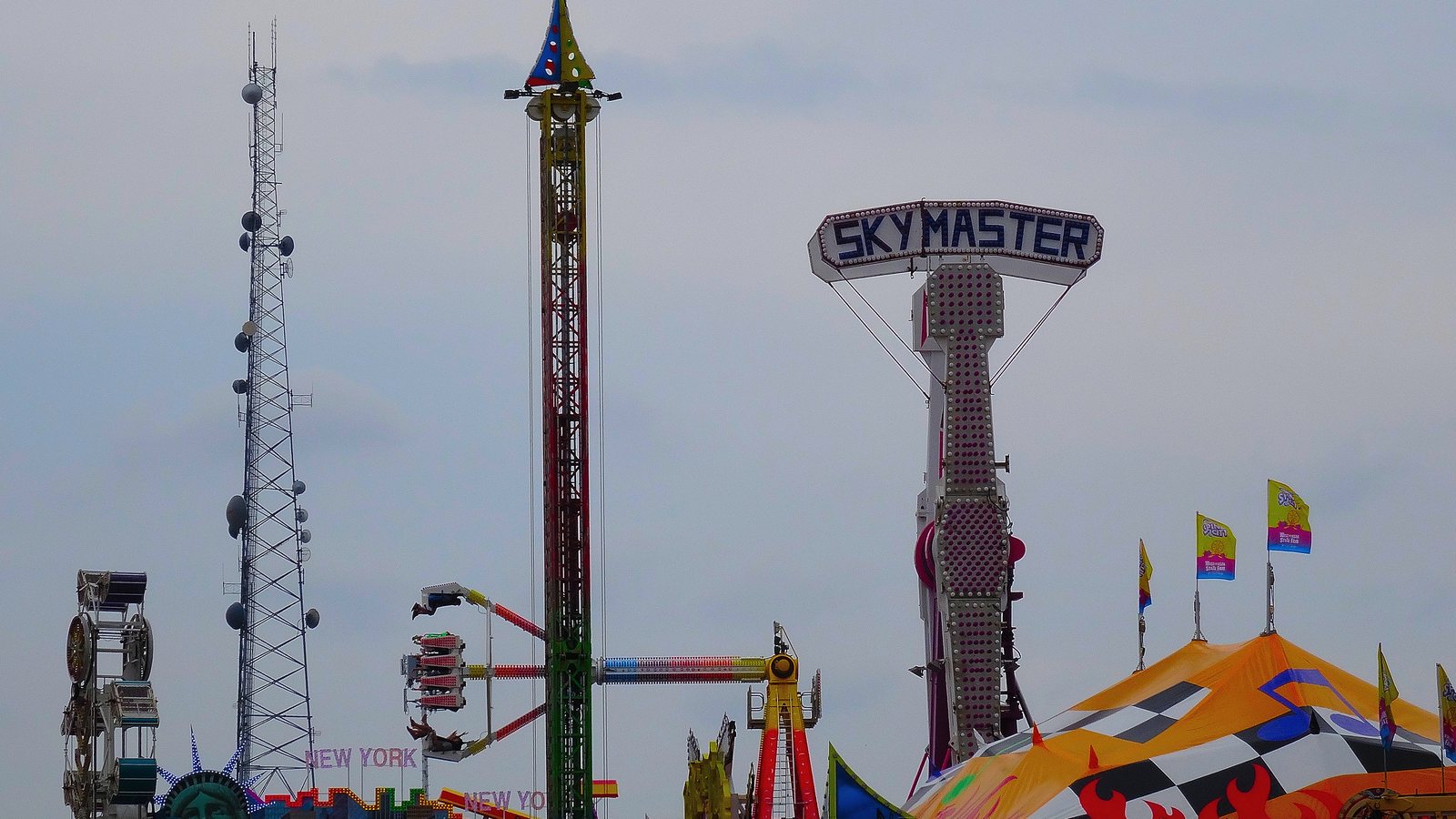

An 18-year-old woman died after falling from a Cabo San Lucas ride called “El Péndulo” (The Pendulum) on Tuesday night, Oct. 20, Los Cabos officials said. State prosecutors are investigating the fall. The city has also replaced its civil protection chief, whose team had inspected the fairground four days earlier.
The case raises a question for US fairgoers too. Traveling rides in the US are inspected under a patchwork of state rules. Federal safety staff flagged restraints that open mid-ride as a known hazard back in 2005.
What Los Cabos officials have confirmed
The young woman was Gabriela Rodríguez Tezoco, according to La Razón and Expreso. She graduated this year from Plantel 10 of the Colegio de Bachilleres de Baja California Sur. She fell from her seat while the ride was running, Expreso reported, citing official information.
The Mexican Red Cross gave her first aid at the fair, and an ambulance took her to hospital. On Wednesday, Oct. 21, the Los Cabos city council said she “lost her life despite the efforts of the health personnel.” Entertainment Weekly quoted the statement.
Mayor Christian Agúndez Gómez said the area was secured and El Péndulo shut down while every ride at the fair was checked, Expreso reported. At a festival concert, he asked the crowd to stand with her family. “It could have been any of us,” he said. “They are not alone.”
Her school paid tribute on social media. “May your smile remain alive in our memory,” it wrote, according to Expreso.
Prosecutors are examining the ride and its restraint
The Baja California Sur Attorney General’s Office (PGJE) has opened a criminal investigation. It wants to establish how the fall happened and whether anyone is legally responsible. Experts in engineering, architecture and safety are preparing technical reports on the likely cause, Expreso reported. They will also check whether the ride met the safety rules it needed to operate.
As of Oct. 22, the PGJE had announced no arrests. It had not publicly named the company that ran the ride.
La Razón and Entertainment Weekly reported that videos on social media appear to show the ride’s safety harness opening in motion. Officials have not confirmed that. Los Cabos Civil Protection asked people not to share the videos, out of respect for her and her family, La Razón reported. BreezyScroll is not linking to or describing them.
Private operators ran the fair’s rides, the city government said, as Astillero Informa reported. Civil Protection said its review after the fall checked each ride’s safety measures and paperwork.
Why the city replaced its civil protection chief
On Oct. 21, the council named Diego Camacho Hale acting head of the municipal Civil Protection and Risk Management department. He replaces Francisco Cota Márquez.
The council said the change would keep the investigation transparent and give investigators access to the department’s files. It did not sanction Cota or blame him for the accident, the Mirror reported.
The timing matters. On Oct. 16, Cota’s team said it had inspected the fairground, including the rides. He said “everything was in order,” according to local reports cited by the Mirror.
Residents had called for his resignation on social media, Metrópoli reported. Prosecutors will now have to say whether that inspection missed anything.
Who inspects traveling rides in the US
In the US, the answer depends on whether the ride moves. The Consumer Product Safety Commission (CPSC) covers mobile rides, “rides that are moved from location to location as part of fairs, carnivals, parties, or other events.” It does not cover rides “permanently affixed to a site,” its staff wrote in a 2005 injury report. Theme park coasters fall to state and local regulators.
Even for traveling rides, the hands-on inspection is local. The CPSC tracks incidents, works on voluntary industry standards and tells states about recalls. But “states and local communities are responsible for inspections and oversight,” the agency said in a 1998 release.
Coverage has gaps. Eight states had no state-run inspection program for portable rides, the agency’s 2015 directory of state ride safety officials says. Eight states and Washington, DC, had none for fixed-site rides. In some of those states, the directory shows, local governments decide, or the only rule is an insurance requirement.
Deaths are rare. CPSC staff estimated about 4.4 deaths a year on all US amusement rides from 1987 to 2002. That figure is two decades old. It is the most recent national estimate we could find on the agency’s website.
The restraint problem US regulators flagged in 2005
The Cabo case echoes an old warning. In a February 2005 review of restraint failures on mobile rides, CPSC staff looked at how riders were thrown. Most cases involved a restraint opening unexpectedly or a rider getting out of it. The “most effective preventive measure,” they wrote, would be backup restraints on any ride that could throw a rider if the main one opened.
A US investigation this month also turns on how a rider left his seat.
On Oct. 12, Hassan Kariem, 42, was “ejected from the ride” on the Goliath roller coaster at Six Flags Over Georgia, Cobb County police said, as NBC News reported. Goliath is a fixed-site ride, so a state official leads that inquiry: Georgia’s Insurance and Safety Fire Commissioner, John F. King, CBS News reported. A March state inspection of the ride found no violations, King said.
Earlier US cases show how long answers can take. A Florida jury awarded $310 million in 2024 to the family of Tyre Sampson, 14, who fell from an Orlando drop tower in 2022. In Phoenix, a rider said his lap bar unlocked on a coaster in 2024.
In Cabo San Lucas, the next step is the PGJE’s expert reports on El Péndulo. They will shape whether anyone at the ride company or City Hall faces charges.