
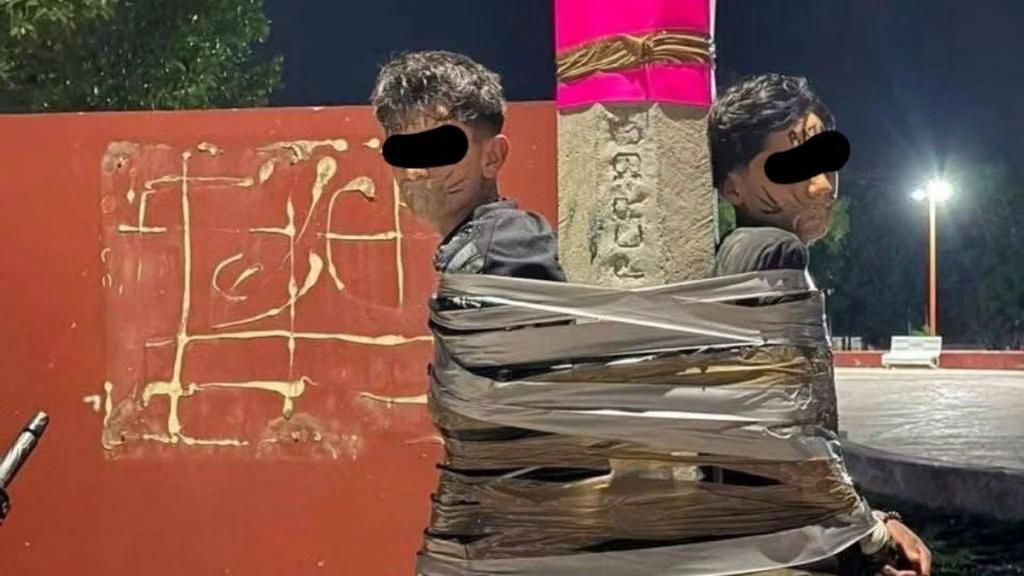
In the Mexican city of Lagos de Moreno, residents have begun talking about an unlikely crime fighter known as the “Mexican Batman.” Unlike the comic book superhero, this anonymous vigilante doesn’t wear a cape in public or hand suspects over to police. Instead, he allegedly catches suspected bicycle thieves, ties them to utility poles with duct tape, paints fake mustaches and cat whiskers on their faces, and labels them “ratero,” the Spanish word for “thief.”
While some locals have applauded the vigilante’s efforts amid rising bicycle thefts, authorities see the incidents very differently. Police say the tied-up suspects are victims of assault and unlawful detention, and they are now searching for the man behind the growing string of public humiliations.
Who is the “Mexican Batman”?
The identity of the self-styled vigilante remains unknown.
The nickname emerged on social media after photos circulated showing suspected thieves restrained to poles with tape and publicly identified using handwritten signs. Each incident appears to follow a similar pattern, leading residents to believe the same individual is responsible.
Authorities say the vigilante is believed to be operating in Lagos de Moreno, a city in the western Mexican state of Jalisco, where bicycle theft has reportedly become a growing concern.
Although no costume has been publicly linked to the suspect, the nickname reflects his role as a self-appointed crime fighter operating outside the law.
What is the vigilante accused of doing?
According to police, the unidentified man captures people he believes have stolen bicycles and stages highly visible public displays.
Victims are reportedly:
- Tied to utility poles with large amounts of duct tape.
- Marked with drawn-on mustaches and cat whiskers.
- Labeled with the word “ratero” (Spanish for “thief”) written across their foreheads.
- Left beside bicycles believed to have been stolen.
- Displayed beneath handwritten notes describing their alleged crimes.
Authorities also say some of the individuals showed signs of physical assault, with at least one requiring medical attention after being found badly beaten.
The unusual markings have become what investigators describe as the vigilante’s “calling card.”
When did the incidents begin?
The first publicly reported case emerged on June 13.
A young man was discovered taped to a pole beneath a cardboard sign accusing him of theft.
Over the following days, authorities documented several more nearly identical incidents.
According to Jalisco State Security Secretary Juan Pablo Hernández, investigators have confirmed at least five cases involving the same apparent method.
Police have since identified two vehicles that may be connected to the attacks and continue searching for those responsible.
Why are police treating the alleged thieves as victims?
While public opinion on social media has been divided, Mexican authorities stress that the law applies equally regardless of the accusations against the individuals involved.
Even if someone has committed theft, police say private citizens cannot legally:
- Kidnap or detain suspects.
- Assault them.
- Publicly humiliate them.
- Punish them outside the judicial system.
Instead, criminal suspects must be arrested through lawful procedures and given due process.
As a result, investigators are treating those tied to poles as victims of crimes that may include assault, unlawful detention, and public humiliation.
The alleged thefts remain separate criminal investigations.
Why has the vigilante gained public attention?
The case has resonated because it reflects growing frustration over property crime and public perceptions of ineffective policing.
Across many parts of Latin America, vigilante justice occasionally emerges when communities believe authorities are unable to respond quickly enough to recurring crimes.
Supporters argue such actions deter repeat offenders.
Critics warn they undermine the justice system and create the risk of innocent people being wrongly accused or seriously injured.
Legal experts generally caution that vigilantism can escalate violence rather than reduce crime.
Mexico’s broader vigilante problem
The “Mexican Batman” story comes as several communities across Mexico have organized their own security efforts in response to crime.
Women forming armed self-defense groups
In the neighboring state of Michoacán, women have recently formed armed vigilante groups to protect their communities from the Jalisco New Generation Cartel (CJNG), one of Mexico’s most powerful criminal organizations.
According to local reports, these women have:
- Carried assault rifles for community defense.
- Built homemade armored vehicles.
- Established roadblocks to prevent cartel incursions.
- Organized patrols after repeated attacks on residents.
Unlike the bicycle theft incidents, these groups have emerged in areas facing organized criminal violence rather than petty theft.
Their existence highlights broader concerns about security in parts of the country.
What does the law say about vigilantism?
Most legal systems, including Mexico’s, prohibit citizens from taking criminal justice into their own hands.
While individuals may defend themselves or others during immediate threats, punishing suspected offenders after the fact generally constitutes a criminal offense.
Potential charges against vigilantes can include:
- Assault
- Kidnapping or unlawful detention
- False imprisonment
- Criminal intimidation
- Property damage
Authorities argue that allowing citizens to become judge and executioner weakens the rule of law and risks wrongful punishment.
Why this story matters
The “Mexican Batman” has become an internet sensation because the story combines elements of comic book imagery with real-world frustrations over crime.
Yet beneath the viral photos lies a serious legal and social question: what happens when public confidence in law enforcement erodes enough that citizens begin enforcing justice themselves?
For some residents, the anonymous vigilante symbolizes action against persistent theft.
For police, however, he represents another criminal investigation.
As authorities continue searching for the person behind the incidents, the debate over vigilantism versus due process is likely to continue well beyond this unusual case.
TL;DR
- An unidentified vigilante nicknamed the “Mexican Batman” is targeting suspected bicycle thieves in Mexico.
- He allegedly ties suspects to street poles using duct tape and marks their faces with drawn-on mustaches and whiskers.
- Signs accusing them of theft are left hanging above them alongside the allegedly stolen bicycles.
- Police have recorded at least five incidents and are investigating the vigilante for assault and illegal detention.
- The case has reignited debate over vigilantism, public safety, and confidence in law enforcement.