
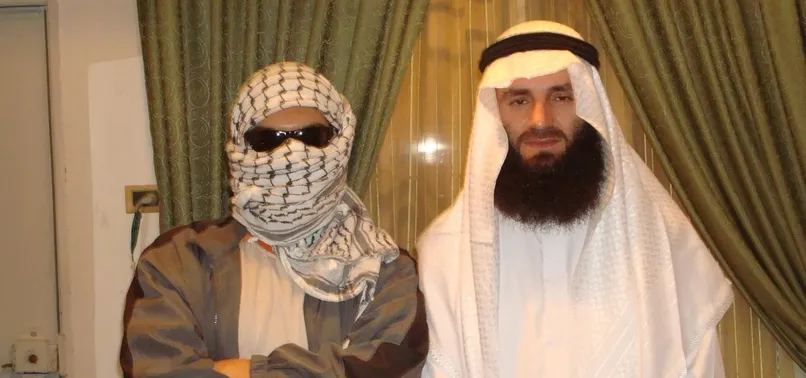
Blerim Skoro’s story began in a Brooklyn prison shortly after the September 11 attacks and took him deep inside some of the world’s most dangerous militant networks.
A Kosovo-born man who says he was recruited by US intelligence after 9/11, Skoro spent years working as an informant and infiltrating extremist groups. He says he supplied American authorities with intelligence on al-Qaeda and other terrorist suspects while repeatedly putting his own life at risk.
Now, decades later, Skoro is facing deportation from the United States.
The case has renewed questions about what happens to foreign nationals who cooperate with US intelligence agencies without receiving the permanent immigration status they say they were promised.
Blerim Skoro has described the situation as a betrayal. In a 2024 interview with The Times, he said: “I gave my life to the CIA. They betrayed me.”
Who is Blerim Skoro?
Blerim Skoro is a Kosovo-born former US intelligence informant who immigrated to the United States in the 1990s.
His path into intelligence work began while he was serving a seven-year sentence for drug trafficking in a federal prison in Brooklyn.
On September 12, 2001 — one day after the 9/11 attacks — Skoro says FBI and CIA officers approached him in prison.
The timing was significant. American intelligence agencies were urgently trying to identify individuals connected to extremist networks and understand the people who had supported or communicated with al-Qaeda.
According to The Times’ reporting, Skoro was considered useful because of his ability to interact with Muslim inmates and gain their trust.
He agreed to cooperate.
Why did the CIA recruit him?
Skoro has said that his decision was motivated partly by his gratitude toward the United States for its role in supporting Kosovo during the Balkan conflict.
In his 2024 interview with The Times, he described himself as a patriot who wanted to repay the country.
But there was also a personal incentive.
Blerim Skoro wanted to get back to his family and believed cooperating with US authorities could help him secure a future in America.
According to his account, intelligence officers offered him an opportunity to work with them in exchange for his cooperation.
What began as an arrangement inside a US prison eventually became a dangerous international intelligence operation.
How did Blerim Skoro become an informant?
Skoro’s initial role involved gathering information from people around him in prison.
The environment gave him access to inmates who had knowledge of extremist movements and individuals connected to Islamist militant networks.
The Times reported that one of his prison contacts had connections to people who had met Osama bin Laden. Skoro passed information to US authorities as he developed credibility among Muslim inmates.
CBS News has also reported that Skoro shared a prison cell with Mokhtar al-Hari, a man associated with the Millennium Plot targeting Los Angeles International Airport.
Skoro also provided information concerning Faysal Galab, who was connected to the group known as the Lackawanna Six.
These activities eventually took him far beyond the prison environment.
Did Blerim Skoro infiltrate al-Qaeda?
According to Skoro’s account and reporting by The Times, his intelligence work eventually took him inside militant networks overseas.
He has said that he spent time inside an al-Qaeda training environment near the Afghanistan-Pakistan border and gathered intelligence while operating undercover.
His reported missions extended across several countries and involved attempts to penetrate extremist organizations.
The Times reported that Skoro later infiltrated networks connected to al-Qaeda and Islamic State and provided intelligence to American authorities.
However, claims about intelligence operations are inherently difficult to independently verify because much of the underlying evidence remains classified.
That distinction matters. Skoro’s story is based partly on his own account and reporting by journalists who interviewed him, rather than a publicly released CIA record detailing his missions.
Was Skoro actually involved in the hunt for Osama bin Laden?
Skoro says his intelligence work included efforts to help US authorities locate information about Osama bin Laden.
His reported access to extremist networks made him potentially valuable to American intelligence agencies during the post-9/11 hunt for al-Qaeda’s leadership.
But it would be misleading to suggest that Skoro personally located or captured bin Laden.
The available reporting indicates that he provided intelligence from inside militant networks while US agencies pursued broader operations against al-Qaeda.
Bin Laden was eventually killed by US Navy SEALs in Abbottabad, Pakistan, in May 2011.
Skoro’s story is therefore better understood as one part of the much larger intelligence campaign against al-Qaeda rather than as the story of the man who found bin Laden.
What happened when Skoro was released from prison?
This is where Skoro’s relationship with the US government became complicated.
After completing his criminal sentence, he was deported to Kosovo in 2007, according to reporting by The Times and CBS News.
Skoro has said that he believed his cooperation with American intelligence would eventually lead to legal immigration status and allow him to return to his family in the United States.
Instead, he found himself outside the country.
According to The Times, Skoro continued cooperating with US intelligence after his deportation and eventually undertook additional dangerous assignments.
He later described feeling that promises made to him had not been honored.
How dangerous were his missions?
Skoro’s reported intelligence work was not limited to collecting information from a distance.
His account describes years spent attempting to establish credibility inside militant networks.
The Times reported that he lived among extremist groups and entered environments where discovery could have resulted in his death.
At one point, Skoro said he was wounded during an assassination attempt in Kosovo.
He also described being involved in efforts to penetrate militant networks in countries including Afghanistan, Pakistan, Syria, Iraq and Yemen.
The work reportedly required him to maintain his cover while simultaneously communicating information to US intelligence officers.
That kind of operation carries an obvious risk: if an undercover informant is exposed, the consequences can be fatal.
Why was Blerim Skoro deported from the US?
Skoro’s immigration history is complicated.
After his deportation to Kosovo, he eventually lived outside the United States and continued attempting to work with American intelligence.
He later returned to North America and spent time in Canada.
According to reporting surrounding his story, Skoro eventually entered the United States illegally and was detained by American authorities.
The Times reported that he was later given temporary protection from deportation under the UN Convention Against Torture.
That protection is significant because deportation can be prohibited when there is a credible risk that a person would face torture in the destination country.
His current legal situation is therefore not simply a conventional immigration case.
It also involves his claim that returning to Kosovo could expose him to serious danger because of his past intelligence activities.
Why does Blerim Skoro fear returning to Kosovo?
Skoro says his past work for US intelligence could make him a target if he is sent back to Kosovo.
He has described surviving an assassination attempt there and has argued that his previous intelligence activities exposed him to enemies.
In his interview with The Times from detention, he expressed fear that deportation could ultimately cost him his life.
“I never thought they were going to betray me like this,” he said.
He also appealed to US authorities to allow him to remain in the country where his family lives.
His wife, Susan, has publicly supported his case and accused the government of failing to honor the sacrifices he made while cooperating with US intelligence.
What does his wife say?
Susan has argued that Skoro has already paid the price for his earlier criminal conviction and subsequently risked his life assisting US authorities.
She has also emphasized that their family has been living in the United States.
CBS News reported her describing the government’s treatment of Skoro as a betrayal.
For the family, the case is therefore not only about immigration status.
It is also about whether the United States has a responsibility toward people who claim to have undertaken dangerous intelligence missions on its behalf.
What is the US government’s position?
Skoro’s claims about his intelligence work do not automatically give him US citizenship or permanent immigration status.
Working as an informant does not necessarily create an independent legal pathway to citizenship.
His current immigration case must therefore be considered under US immigration law, alongside his claims about potential danger if he is deported.
The fact that someone previously cooperated with an intelligence agency does not by itself mean that deportation proceedings automatically disappear.
This is one of the central legal issues surrounding Skoro’s case.
Why is his case attracting attention now?
The case comes at a time when the Trump administration has dramatically expanded its focus on immigration enforcement and deportation.
ICE has increased enforcement activity, while Congress has approved major additional funding for immigration enforcement agencies.
That broader political environment has placed individual deportation cases under greater scrutiny.
Skoro’s case is particularly unusual because he is not presenting himself simply as a longtime undocumented immigrant.
He says he once worked for the US government against terrorist organizations and that his intelligence activities could now make deportation dangerous.
That creates a striking contradiction: a man who says he risked his life helping US counterterrorism efforts now fears being removed by the same country.
What can be independently confirmed about his intelligence work?
This is an important question when covering Skoro’s story.
The Times has reported extensively on his account and interviewed him directly. Its reporting describes his recruitment after 9/11, his work infiltrating extremist networks and his subsequent immigration problems.
A documentary titled The Accidental Spy has also chronicled his story. The film describes Skoro as a man recruited from prison by the CIA who later operated inside al-Qaeda networks while hoping to secure a legal future in the United States.
However, intelligence agencies rarely disclose the identities of informants or the details of their operations.
As a result, some elements of Skoro’s account cannot be independently verified through publicly available CIA records.
Any responsible article should therefore distinguish between documented legal proceedings, statements from Skoro and his family, and claims about classified intelligence operations.
What happens next?
Skoro’s legal team is seeking to prevent or end the deportation proceedings against him.
The key question will be whether US immigration authorities and the courts accept his arguments regarding his past cooperation and the danger he says he would face if returned to Kosovo.
His case could also raise broader questions about the government’s obligations to foreign nationals who provide intelligence assistance.
For intelligence agencies, informants can provide access that official officers cannot obtain.
But informants also occupy an uncertain legal position. They may not receive the same protections or status as government employees, even when their work is critical to national security.
Skoro’s story illustrates the risks that can emerge when those two realities collide.
The bigger question: What does America owe its informants?
Blerim Skoro’s story is ultimately about more than one deportation case.
It raises a difficult question about the relationship between intelligence agencies and the people who work for them from the shadows.
Informants can enter places that government officers cannot. They can build relationships inside criminal and terrorist organizations and provide information that could save lives.
But they also operate under extraordinary personal risk.
If Skoro’s account is accurate, he spent years exposing himself to that danger while believing that the United States would eventually help secure his future.
Now, at 55, he is detained and fighting deportation.
His case will test not only the limits of US immigration law but also a much harder question: when someone risks their life for American intelligence, how far does America’s responsibility toward that person extend?
For Blerim Skoro, the answer is deeply personal.
He does not want to return to Kosovo.
He wants to remain in the United States, where his wife and children live, and where he believes he should be allowed to spend the rest of his life.