
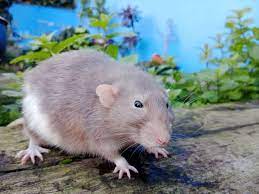


According to a new study, a new treatment derived from chemicals discovered in pig’s blood can reverse the ageing process in rats. According to a new study published recently in the journal GeroScience, the anti-ageing treatment named E5 was produced from the blood of a young pig and injected into ageing rats. According to researchers from the University of California, Los Angeles (UCLA), E5, which comprises sophisticated nanoparticles and young plasma derived from pigs, may reverse the biological clocks of rats by over 70% on average. If the findings can be applied to people, an 80-year-old may be reverted to the age of 26, according to scientists.
“Initially, I could hardly believe the profound epigenetic rejuvenation effects of E5. However, our findings are robustly supported by parallel rodent studies from different labs,” study co-author Steve Horvath said in a statement. In the research, scientists found when the pig blood treatment was applied to various rat tissues, it also appeared to reverse the biological age of the blood, heart and liver. “The treatment more than halved the epigenetic ages of blood, heart, and liver tissue,” scientists wrote in the study. There was also a “less pronounced, but statistically significant” rejuvenation effect on the brain’s hypothalamus.
“We found the plasma fraction treatment consistently effective in both male and female rats”
Researchers noticed “progressive improvement” in the functioning of these organs, as well as behavioural and cognitive changes. Overall, the data point to a therapy generated from young pig plasma that “markedly reverses ageing” in rats. “We found the plasma fraction treatment consistently effective in both male and female rats, drastically reducing the epigenetic age of multiple rat tissues,” researchers said. The new results also offer insights into the shared biological mechanisms across mammal species. While the treatment is yet to undergo human trials, researchers said there is room for optimism. In the future, there could be a possibility of using rejuvenation to systemically reduce disease onset risk “rather than treating diseases individually”.
There are other reasons to doubt that the findings will be applicable to humans. Scientists noted that the ageing markers detected in the rats in the study can differ greatly in terms of levels and patterns when compared to humans. “What may be harmful in one species may be insignificant in another,” they stated, implying that this could be why many rejuvenation treatments do not efficiently translate from rats to humans. Several of the study’s authors are founders, proprietors, employees, or consultants of the biotech firm Yuvan Research Inc, which works on rejuvenation treatment development.