
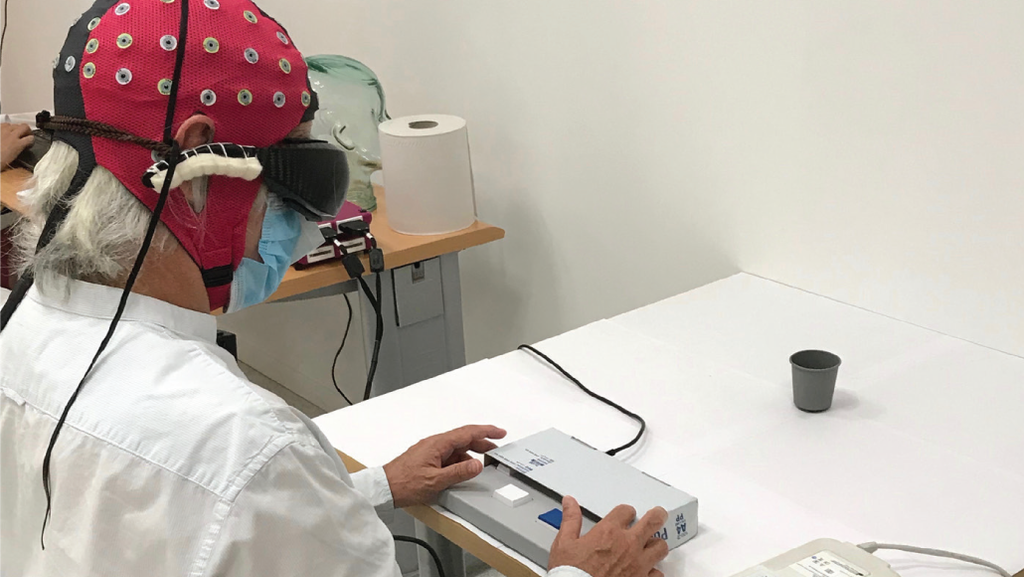
Researchers have developed an experimental treatment that has helped some people with advanced retinitis pigmentosa (RP) regain limited visual abilities by combining gene therapy with specialized goggles. The approach does not restore normal sight, but early clinical trial results suggest it may help some patients detect objects, locate them and reach toward them using visual information.
The study, published in The New England Journal of Medicine, involved 10 people with profound vision loss in both eyes. Researchers used a single injection of gene therapy in one eye, followed by training with goggles designed to convert visual information into light signals that the treated retina could detect.
The research was coauthored by ophthalmologist José-Alain Sahel of the University of Pittsburgh and vision researcher Botond Roska of the Institute of Molecular and Clinical Ophthalmology Basel in Switzerland.
Although the findings offer a potential new direction for treating advanced inherited blindness, the trial was small and uncontrolled. Not every participant experienced consistent improvements, and further research will be needed to establish how reliably the approach works and which patients are most likely to benefit.
What Is Retinitis Pigmentosa?
Retinitis pigmentosa is a group of inherited retinal disorders that progressively damage the light-sensitive cells responsible for vision. Symptoms often begin with difficulty seeing in dim light and a gradual loss of peripheral vision, which can make navigating unfamiliar environments increasingly difficult.
As the condition progresses, some patients experience a narrowing of their visual field, followed by a decline in central vision. The severity and speed of progression vary considerably between individuals.
RP is associated with mutations in more than 100 genes. Because different genetic changes can cause similar symptoms, developing a separate treatment for every underlying mutation presents a major challenge.
Why is retinitis pigmentosa difficult to treat?
The retina contains photoreceptors that convert incoming light into electrical signals. These signals pass through other retinal nerve cells before traveling along the optic nerve to the brain, where they are interpreted as vision.
In RP, photoreceptors gradually deteriorate. By the time some patients experience profound vision loss, many of these cells may no longer function, even though other retinal cells can remain alive.
This distinction is important: the loss of photoreceptors does not necessarily mean that every cell involved in transmitting visual information has disappeared.
Researchers are investigating ways to use surviving retinal cells to restore some ability to detect light. Optogenetic therapy, the method used in this trial, attempts to give those cells a new light-sensitive function.
How Does the Experimental Gene Therapy Work?
The treatment combines a gene therapy injection with specialized goggles. Each component serves a different purpose: the injection makes certain retinal nerve cells sensitive to light, while the goggles deliver light patterns designed to activate those cells.
Step 1: A gene therapy injection changes retinal cells
Each participant received a single injection in the eye with poorer vision. A modified, non-disease-causing viral vector delivered genetic instructions to retinal ganglion cells, which transmit visual information from the retina toward the brain.
The instructions enabled these cells to produce a light-sensitive protein called ChrimsonR.
Normally, retinal ganglion cells do not serve as the retina’s primary light-detecting cells. By introducing a new light-sensitive protein, the treatment aims to give them a function that can partly compensate for the loss of photoreceptors.
This approach is known as optogenetics, a technique that uses light-sensitive proteins to control the activity of cells.
Step 2: Specialized goggles convert images into light signals
The gene therapy alone is not sufficient to produce useful vision with this particular approach. Participants must also use specialized goggles that process visual information and deliver light suited to the newly introduced protein.
The device combines several functions:
- A camera: Captures the surrounding environment.
- An image processor: Converts visual information into patterns of light.
- Amber-light projection: Delivers light at wavelengths that activate the ChrimsonR protein in treated retinal cells.
- Light adaptation: Adjusts stimulation according to ambient lighting conditions.
The goggles effectively translate the outside world into a simplified visual signal that the treated retina can detect.
The researchers described the principle to ScienceAlert as a combination of a light sensor delivered to the blind retina through gene therapy and goggles that provide stimulation at the wavelength to which that sensor responds.
The system is designed to work together: the therapy changes how the retinal cells respond to light, while the goggles provide the specific light patterns needed to activate them.
What Did the Clinical Trial Find?
The study enrolled 10 participants with profound vision loss in both eyes. Researchers assessed their visual abilities after treatment, including how well they detected light and performed tasks involving everyday objects.
The results showed measurable improvements in some participants, although the degree of benefit varied.
Seven participants showed increased light sensitivity
After treatment, seven participants demonstrated increased sensitivity to light, with reported improvements ranging from approximately twofold to 62-fold.
Six participants reached increases of roughly fourfold or more. That threshold was informed by previous research rather than established in advance as a formal success criterion for this trial.
These findings suggest that the treatment enabled some participants to respond more strongly to light. However, increased light sensitivity does not automatically translate into clear images, normal visual acuity or independent navigation.
The researchers therefore also assessed whether participants could use the system to perform practical visual tasks.
Some participants improved at detecting and locating objects
Eight participants completed object-based tests using the goggles and, where appropriate, comparisons without them. The tasks included detecting a notebook, locating and touching objects such as a small box of staples, and identifying the orientation of a bar.
Four participants showed consistently better notebook detection with the goggles across repeated testing sessions over approximately 12 to 18 months.
Other participants did not show consistent improvement across repeated sessions. The study also did not establish a predefined set of criteria for classifying patients as treatment responders.
The findings point to a potentially meaningful improvement in limited visual function for some individuals, but they do not demonstrate that the treatment restores sight to everyone with advanced RP.
Why Did Some Patients Benefit More Than Others?
The differences in outcomes are an important part of the research. Although some participants demonstrated substantial gains in light sensitivity or object detection, others experienced smaller or less consistent changes.
The researchers suggested several possible explanations.
First, the gene therapy vector may not reach the same number of retinal cells in every patient. The number and condition of surviving retinal cells may also influence how effectively the treatment works.
Second, using the goggles requires training. Participants must learn to interpret the projected light patterns, and their ability to do so may improve with practice.
The study found an association between more training sessions and better performance. However, the statistical uncertainty meant that the findings could not conclusively establish that additional training caused the improvements.
Other differences between participants may also have contributed to the results. Larger studies will be needed to determine which factors most strongly predict a useful response.
Was the Treatment Safe?
Researchers described the treatment’s safety profile as very good within the limits of the trial. Across the 10 participants, investigators recorded 34 eye-related adverse events and 70 systemic adverse events.
Most events were mild, and none of the reported systemic events was attributed to the therapy. Participants were followed for periods ranging from two to five years.
These results provide preliminary information about safety, but the small number of participants limits the conclusions researchers can draw about uncommon complications or risks that might emerge in a larger population.
A treatment can also produce different safety outcomes depending on the patient’s condition, the procedure and the duration of follow-up. Larger clinical trials are therefore essential before its risks can be assessed with greater confidence.
The trial was funded by GenSight Biologics and was nonrandomized and uncontrolled. Without a randomized comparison group, it is harder to separate the treatment’s effects from other factors that may influence performance.
Could This Treatment Restore Sight to People Who Are Blind?
The research offers a possible route to recovering limited visual function in people whose photoreceptors have been severely damaged. However, it is important to distinguish the ability to detect objects from the ability to see normally.
The participants did not regain ordinary vision through the treatment. Instead, some learned to use the goggles to recognize the presence and location of objects or to guide their hands toward them.
The distinction matters because everyday sight involves several abilities, including recognizing faces, reading text, judging distances and navigating complex environments. The reported trial results do not establish that participants recovered these broader functions.
The treatment also relies on specialized hardware, so any potential benefit depends on the interaction between the gene therapy, the device and the user’s ability to learn the system.
Further studies will need to establish whether the improvements can be reproduced in more patients, how long the benefits last and which visual tasks patients can reliably perform.
What Happens Next for Optogenetic Therapy?
The next stage of research will need to examine the treatment in larger and more rigorously controlled clinical trials. Researchers will also need to refine the goggles, improve training methods and identify characteristics that may predict which patients are most likely to benefit.
Important questions include:
- Can the results be reproduced in a larger group of people with advanced RP?
- How consistently can participants detect and locate objects in everyday settings?
- How durable are the visual improvements over time?
- Which retinal characteristics are associated with better responses?
- What risks might emerge with broader use and longer follow-up?
- How practical is the treatment for patients who must use specialized goggles?
The approach is part of a broader effort to develop treatments for retinal diseases that have historically been difficult to address once extensive photoreceptor loss has occurred.
For people with advanced retinitis pigmentosa, the early findings offer cautious hope. The treatment has helped some participants recover specific, limited visual abilities, but it remains experimental and should not be described as a cure for blindness.
The central finding is that surviving retinal cells may still be useful targets for treatment even after the retina’s natural light-detecting cells have been severely damaged. If future trials confirm the benefits and establish the treatment’s limitations, optogenetics could become an additional option for selected patients with advanced retinal disease.