
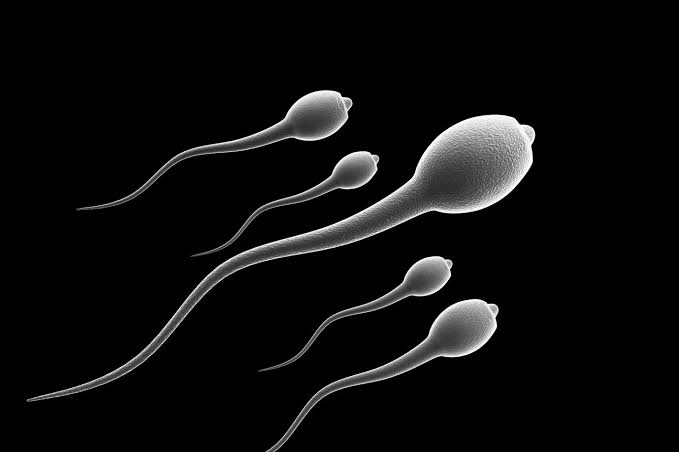
One of the most well-known laws of physics is Newton’s third rule of motion, which reads, “For every action, there is an equal and opposite reaction.” This may not be the case for biological swimmers such as sperm. Human sperm is the most recent lawbreaker, according to scientists, who can float by deforming their bodies in such a way that they do not elicit a response from their surroundings. As a result, it violates Newton’s third rule of motion, according to a recent study.
To reach this conclusion, they examined data on human sperm cells and Chlamydomonas algae to identify non-reciprocal mechanical interactions that defy Newton’s third law. They refer to these interactions as “odd elasticity.”
Flagellated cells are not limited to sperm and algae
Flagella, which are hair-like appendages, enable Chlamydomonas and sperm cells to migrate. These emerge from the cell in the shape of a tail. These protrude from the cell and assist it in movement by changing form in reaction to the surrounding fluid. They do so in a non-reciprocal manner, which violates Newton’s third law by not eliciting an equal and opposite reaction from their surroundings.
The flagellum’s flexibility alone does not explain how the cell can move. The concept of strange elasticity comes into play here. The unusual elasticity enables the cells to move their flagella without consuming a considerable amount of energy in their surroundings, which would normally impede their mobility.
Flagellated cells are not limited to sperm and algae; there are undoubtedly other rule-breakers out there waiting to be discovered. Understanding and classifying other cells or organisms capable of non-reciprocal movement could be highly valuable, according to the study’s authors. According to one of the study’s authors, Kenta Ishimoto of Kyoto University in Japan, their approach could aid in the building of miniature elastic robots capable of breaking Newton’s third law.