


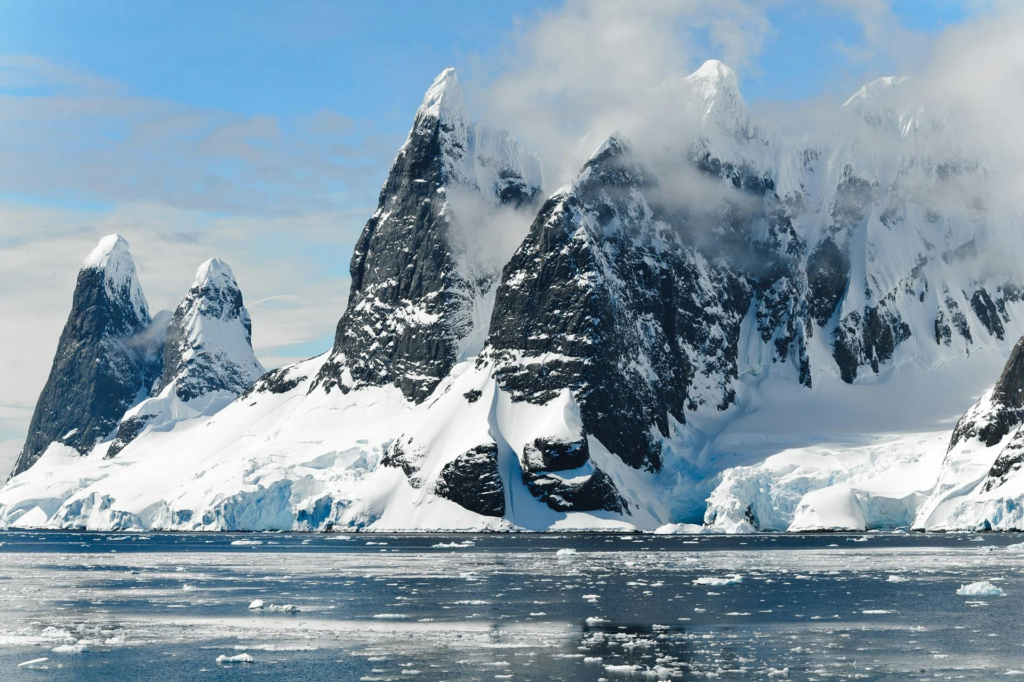
When scientists send robots under Antarctic ice shelves, the missions are planned to the millimeter. This one wasn’t. A free-floating ocean robot drifted off course beneath the ice and accidentally delivered one of the most important climate discoveries of the year. What it found under the Denman Glacier raises new concerns about how fast parts of East Antarctica could reshape global sea levels.
What Happened to the Robot in Antarctica?
The robot was deployed by researchers from Australia’s national science agency, CSIRO, as part of a mission to study Totten Glacier, one of Antarctica’s most closely watched ice bodies.
The device was a free-floating ocean robot designed to dive beneath ice shelves, measure water temperature and salinity, and surface once every 10 days to transmit data to satellites. Instead, strong ocean currents pulled it off its planned route. The robot never surfaced where expected, and for months, researchers assumed it was lost.
It wasn’t.
Nine months later, the robot reappeared with a vast cache of data from beneath an entirely different glacier.
Where Did the Robot End Up?
The robot had drifted beneath the Denman Glacier and the nearby Shackleton Ice Shelf, an area known for being almost impossible to observe directly.
Large sections of Antarctica are hidden under thick floating ice shelves, where satellites cannot see what’s happening below and ships cannot safely reach. Until now, scientists had virtually no direct measurements from beneath an East Antarctic ice shelf.
Why This Discovery Was Accidental but Crucial
The robot was never meant to measure ice thickness. But each time it tried to surface, it collided with the ice shelf above it. Those failed attempts recorded precise depth data, unintentionally mapping the underside of the ice.
By combining collision depths, temperature and salinity readings, and satellite comparisons, scientists reconstructed the robot’s path and confirmed where it had been transmitting from. This produced the first-ever direct oceanographic measurements from beneath an East Antarctic ice shelf.
What the Robot Revealed Beneath Denman Glacier
The findings, published in Science Advances in December 2025, reveal a sharp contrast between two neighboring ice systems.
The Shackleton Ice Shelf appears relatively stable for now. Denman Glacier, however, is being exposed to warmer ocean water than scientists expected. That warm water is flowing underneath the glacier, accelerating melting from below.
This kind of basal melting is especially dangerous because it weakens glaciers without leaving obvious surface cracks. A glacier can look stable from above while thinning rapidly underneath.
Why Denman Glacier Matters Globally
Denman Glacier is one of the deepest land-based glaciers on Earth. If it were to destabilize completely, it holds enough ice to raise global sea levels by nearly five feet.
That rise would not happen suddenly, but the scale matters. Even partial destabilization could amplify coastal flooding risks worldwide. The discovery is particularly alarming because East Antarctica contains far more ice than West Antarctica, long considered the region at greater risk.
This new data challenges the assumption that East Antarctica is largely shielded from warming oceans.
East Antarctica vs West Antarctica: Why the Focus Is Shifting
For years, scientific attention has centered on West Antarctica, where glaciers are visibly retreating. East Antarctica was viewed as colder, thicker, and more stable.
This accidental discovery complicates that picture. West Antarctica may be changing faster, but East Antarctica has much more ice at stake. Even small increases in melt rates here could have long-term, irreversible consequences for global sea levels.
Why This Data Changes Climate Models
Before this mission, models of East Antarctic ice behavior relied heavily on satellite imagery and indirect estimates. Direct measurements from beneath the ice simply did not exist.
The robot’s data provides ground-truth evidence that warm ocean water is reaching areas previously assumed to be insulated. Climate scientists can now refine sea-level projections and better identify which glaciers pose the greatest long-term threat.
Failure That Became a Breakthrough
By mission standards, the robot failed. It missed its target glacier and vanished for months.
Scientifically, it succeeded beyond expectations.
In polar research, where every expedition is costly and risky, unplanned discoveries like this are rare. The robot’s survival and the quality of its data transformed a navigational mistake into a major climate insight.
What Comes Next for Antarctic Research?
Researchers are now calling for more autonomous robots to explore East Antarctic ice shelves, targeted missions beneath Denman Glacier, and updated climate models that incorporate this new evidence.
The lost robot has shown that some of the most consequential climate changes may be happening in places scientists are only beginning to observe.
TL;DR
A free-floating ocean robot sent to study Totten Glacier drifted beneath Denman Glacier instead. It collected the first direct measurements from beneath an East Antarctic ice shelf and revealed warm ocean water melting Denman Glacier from below. If destabilized, Denman alone could raise global sea levels by up to five feet, suggesting East Antarctica may be far more vulnerable to climate change than previously believed.