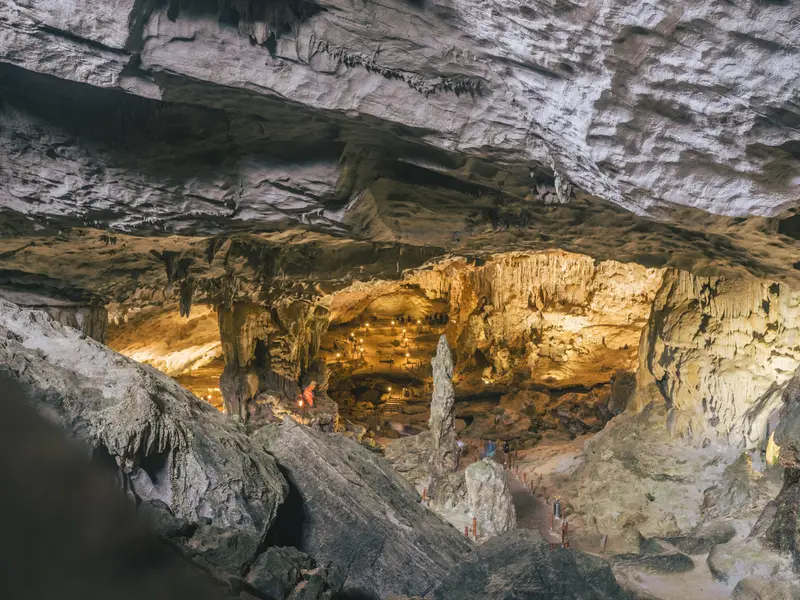
For decades, archaeologists assumed that high mountain environments were largely avoided by prehistoric communities except for seasonal travel or hunting expeditions. A discovery in Spain is forcing researchers to rethink high-altitude mining activities.
Archaeologists have uncovered evidence that ancient humans repeatedly occupied a cave more than 7,300 feet above sea level for nearly 5,000 years, using the site as what appears to have been an organized mineral-processing center.
The findings suggest that prehistoric communities were far more capable of exploiting difficult mountain environments than previously believed. Rather than serving as a temporary shelter, the cave appears to have been part of a long-term strategy for extracting and processing valuable minerals, including copper-bearing materials.
The research, published in Frontiers in Environmental Archaeology, provides some of the earliest evidence of systematic high-altitude mining activities in Western Europe.
What did archaeologists discover in the Spanish mountains?
The site, known as Cova, sits approximately 7,333 feet (2,235 meters) above sea level in northeastern Spain.
Researchers from the Universitat Autònoma de Barcelona and IPHES-CERCA conducted excavations between 2021 and 2023.
What they found painted a picture of repeated human activity spanning thousands of years.
Among the discoveries were:
- Animal bones
- Ceramic fragments
- Evidence of controlled fire use
- A pendant made from marine shell
- A pendant crafted from a brown bear tooth
- Green mineral fragments associated with copper extraction
The artifacts indicate that the cave was not merely a temporary refuge. Instead, it appears to have served as a specialized location where people returned repeatedly for particular economic activities.
Why is this discovery important?
The significance lies not only in what was found but where it was found.
For years, many archaeologists believed prehistoric populations rarely settled or worked extensively in mountain environments above 6,500 feet.
Harsh weather conditions, limited food resources, and difficult access made these locations seem impractical for long-term use.
The Cova discovery challenges that view.
Lead researcher Carlos Tornero noted that the site demonstrates recurring occupation involving complex activities and deliberate exploitation of natural resources.
Rather than treating high-altitude landscapes as marginal territories, prehistoric communities appear to have incorporated them into broader economic networks.
Evidence points to early mineral processing
Perhaps the most important discovery at the site is the presence of green minerals believed to be malachite.
What is malachite?
Malachite is a copper carbonate mineral known for its distinctive green color.
Historically, it has been used for:
- Copper extraction
- Pigments and dyes
- Decorative objects
- Jewelry
In prehistoric societies, access to copper represented a significant technological advantage.
Researchers believe ancient occupants of the cave were collecting and processing malachite as part of an organized resource extraction system.
If confirmed, the findings would represent some of the earliest evidence of copper-related activities in Western Europe.
A prehistoric mining operation
Unlike isolated discoveries of mineral fragments, the archaeological evidence suggests systematic activity.
Researchers believe people repeatedly traveled to the site during specific periods to:
- Extract minerals
- Process raw materials
- Prepare resources for transport
- Return to lower-elevation settlements
The repeated use of the cave over thousands of years indicates long-term planning rather than opportunistic resource gathering.
How long was the cave used?
Evidence suggests that human groups returned to the site from approximately the fifth millennium BC through the first millennium BC.
That represents nearly 5,000 years of intermittent occupation.
Importantly, archaeologists emphasize that the cave was not continuously inhabited.
Instead, communities appear to have visited during specific periods before abandoning the site and later returning.
This cyclical pattern suggests the cave played a specialized role within larger settlement networks.
The behavior resembles seasonal resource extraction practices seen in later historical mining communities.
Ancient mountain living may have been more common than scientists thought
The Spanish discovery is part of a growing body of evidence showing that ancient humans occupied extreme environments far earlier and more frequently than once believed.
The Tibetan Plateau example
One of the most remarkable examples comes from Baishiya Karst Cave on the Tibetan Plateau.
Located roughly 10,760 feet (3,280 meters) above sea level, the cave has yielded evidence that ancient Denisovans occupied the region for more than 100,000 years.
The discovery dramatically changed scientific understanding of when hominins adapted to high-altitude environments.
Similarities with Catalonia’s ancient mines
Researchers have also compared the new findings with the prehistoric mining complex at Can Tintorer Mines in Catalonia.
The site is famous for the ancient extraction of variscite, a green mineral used to create jewelry and ornaments.
Later communities also exploited copper resources in the area.
The similarities suggest that prehistoric societies in the region may have developed sophisticated mineral economies much earlier than previously understood.
What does this tell us about prehistoric societies?
The discovery offers valuable insight into the organizational abilities of ancient communities.
To repeatedly exploit a high-altitude resource site, groups would have needed:
- Knowledge of mineral deposits
- Planned travel routes
- Resource transportation systems
- Specialized skills for processing materials
- Social coordination across generations
These activities point to a level of planning and economic organization often underestimated in prehistoric populations.
Rather than simply surviving from season to season, many ancient societies actively managed landscapes and resources over centuries.
Why copper mattered in prehistoric Europe
Copper played a transformative role in human history.
Before the widespread use of bronze and iron, copper was among the first metals that humans learned to work and manipulate.
The ability to identify, collect, and process copper-bearing minerals marked a major technological milestone.
Access to copper contributed to:
- Improved tools
- New forms of trade
- Social specialization
- Technological innovation
- Expanding economic networks
Discoveries such as Cova help researchers understand how these developments began and spread across Europe.
The bigger picture
The mountain cave in Spain is more than an isolated archaeological site.
It represents growing evidence that prehistoric humans were far more adaptable and resourceful than once believed.
The discovery challenges assumptions about where ancient communities could live and work, revealing that mountain environments were not barriers but opportunities.
As archaeologists continue to investigate high-altitude sites around the world, they are uncovering a more complex picture of humanity’s past, one in which ancient people repeatedly ventured into some of Earth’s most challenging landscapes in search of valuable resources.
TL;DR
Archaeologists have discovered evidence that ancient humans repeatedly occupied a mountain cave in Spain more than 7,300 feet above sea level for nearly 5,000 years. The site appears to have been used for organized mineral processing, including copper-bearing malachite, challenging long-held assumptions that prehistoric mountain regions were only temporary stopovers. The findings add to growing evidence that ancient humans adapted to and exploited high-altitude environments far earlier than once believed.