• About BreezyScroll
  • Privacy & Policy
  • Contact Us
Wednesday, July 22, 2026
BreezyScroll
  • Home
  • Breezy Stories
  • Technology
  • Gaming
  • Entertainment
  • Lifestyle
  • World
  • Money
  • Sports
  • Breezy Explainer
No Result
View All Result
  • Home
  • Breezy Stories
  • Technology
  • Gaming
  • Entertainment
  • Lifestyle
  • World
  • Money
  • Sports
  • Breezy Explainer
No Result
View All Result
BreezyScroll
No Result
View All Result

Home  /  Science  /  Asteroid Belt Slowly Losing Material, Study Reveals

Asteroid Belt Slowly Losing Material, Study Reveals

by Shriya Kataria
October 2, 2025
in Science
Reading Time: 3 mins read
Asteroid

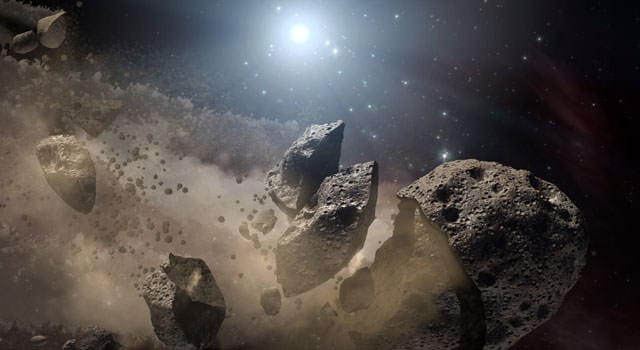
A new study has revealed that the asteroid belt between Mars and Jupiter is gradually losing material over time, highlighting the dynamic nature of our Solar System. Once expected to form a planet during the Solar System’s birth 4.6 billion years ago, the belt never coalesced due to the gravitational influence of Jupiter. Instead of allowing rocky material to merge, Jupiter’s strong pull caused frequent collisions, breaking objects apart before they could grow into a planet.

How Much Material Is Left in the Asteroid Belt?

Today, the asteroid belt contains only about 3% of the Moon’s mass, spread across a vast region of space. While Jupiter’s gravity dominates, Saturn and Mars also play a role, influencing asteroid orbits. Some space rocks are pulled into the inner Solar System, where they can occasionally collide with Earth, while others are ejected toward Jupiter or disintegrate into dust through repeated collisions.

According to NDTV, scientists now understand that the belt is not a static feature—it is slowly shrinking over time.

The Science Behind the Loss

A research team led by Julio Fernandez from the Universidad de la Republica in Uruguay studied the rate at which the asteroid belt loses material. Their findings indicate that the belt’s colliding asteroids are shrinking by approximately 0.0088% per year. While the annual decrease may appear minimal, it accumulates significantly over billions of years.

Of the material lost:

  • About 20% escapes as larger fragments, some of which can enter Earth’s orbit and become meteors.
  • The remaining 80% turns into fine dust, contributing to the zodiacal light—a faint glow visible in the night sky after sunset or before sunrise.

The study excluded the largest and most stable asteroids, including Ceres, Vesta, and Pallas, as these bodies are largely unaffected by the ongoing depletion process.

Implications for Earth’s History

Understanding the asteroid belt’s gradual loss provides insights into Earth’s early environment. Around 3.5 billion years ago, the belt may have been 50% more massive, resulting in a higher frequency of impacts on both Earth and the Moon. This aligns with geological evidence: ancient rock layers show clear signs of past meteor strikes, supporting models of a more collision-prone early Solar System.

“This research allows us to understand better not only the asteroid belt but also the impact history of our planet,” Fernandez said, according to Universe Today.

A Slowly Disappearing Feature of the Solar System

Although the asteroid belt may seem permanent, the study highlights its ongoing evolution. Gravitational interactions and collisions continue to reduce its mass, slowly shaping the environment of our planetary neighborhood. The belt’s history and future are intimately connected with the evolution—and safety—of Earth, as meteors and space dust continue to enter our atmosphere.

ADVERTISEMENT

As astronomers continue to monitor the belt, these findings will help improve our understanding of both Solar System dynamics and long-term planetary risk from asteroid impacts.


Tags: Asteroid
ShareTweetShareSend

Recent Articles

Pan Am Plane Wreckage Missing for 74 Years Finally Discovered

Pan Am Plane Wreckage Missing for 74 Years Finally Discovered

July 22, 2026
Pakistan Seeks $10 Billion U.S. Support After Iran Mediation. Here’s What The Request Means

Pakistan Seeks $10 Billion U.S. Support After Iran Mediation. Here’s What The Request Means

July 22, 2026
Who is Amit Bhatia? Indian-origin businessman leading bid for a stake in Liverpool FC

Who is Amit Bhatia? Indian-origin businessman leading bid for a stake in Liverpool FC

July 22, 2026
Houthis Announce Maritime Embargo on Saudi Arabia: Why the Bab el-Mandeb Strait Matters to Global Trade

Houthis Announce Maritime Embargo on Saudi Arabia: Why the Bab el-Mandeb Strait Matters to Global Trade

July 22, 2026
BreezyScroll Logo

BreezyScroll is a global content platform that provides a unique experience of enhancing the knowledge quotient for its audience by providing the latest news and updates from various categories such as politics, sports, entertainment, technology, and more.
The platform aims to provide a concise and easy-to-read format for its users. BreezyScroll covers news stories from around the world, majorly the United States. The platform was launched in 2021 and has become one of the fastest-growing content companies in the US.

Follow Us

Browse by Category

  • Africa
  • Alaska
  • Animals
  • Asia
  • Athletics
  • Australia
  • Auto
  • Basketball
  • Bollywood
  • Brand
  • Breezy Explainer
  • Breezy Feature
  • Breezy Soul
  • Business
  • Canada
  • Chess
  • China
  • Coronavirus
  • Cricket
  • DIY
  • Education
  • Entertainment
  • Environment
  • EPL
  • Europe
  • Exclusive Interview
  • Exclusive Review
  • Football
  • Gaming
  • Health
  • Hollywood
  • India
  • International
  • K Pop
  • Law
  • Lifestyle
  • Middle East
  • Money
  • NFL
  • North America
  • OTT
  • Paris Olympics
  • Pets
  • Press Releases
  • Russia
  • Science
  • South America
  • Space
  • Sports
  • Startup
  • Technology
  • Tennis
  • Tennis
  • The Achievers
  • The US
  • Travel
  • UK
  • UK
  • Uncategorized
  • World
  • WWE

Trending Topics

AI Apple Australia Biden California Canada ChatGPT China Climate Change Coronavirus COVID-19 Donald Trump Elon Musk Featured Florida Google IPL Iran Japan Joe Biden Mars Meta Moon NASA NBA Netflix New York North Korea Ohio OpenAI Putin Russia Russia-Ukraine crisis South Korea Taliban Tesla Texas TikTok Trump Twitter UFO UK Ukraine USA Virat Kohli

No Result
View All Result
  • About BreezyScroll
  • Privacy & Policy
  • Contact Us

© 2024 · BreezyScroll.com

No Result
View All Result
  • Home
  • Breezy Stories
  • Technology
  • Gaming
  • Entertainment
  • Lifestyle
  • World
  • Money
  • Sports
  • Breezy Explainer

© 2024 · BreezyScroll.com

Go to mobile version