
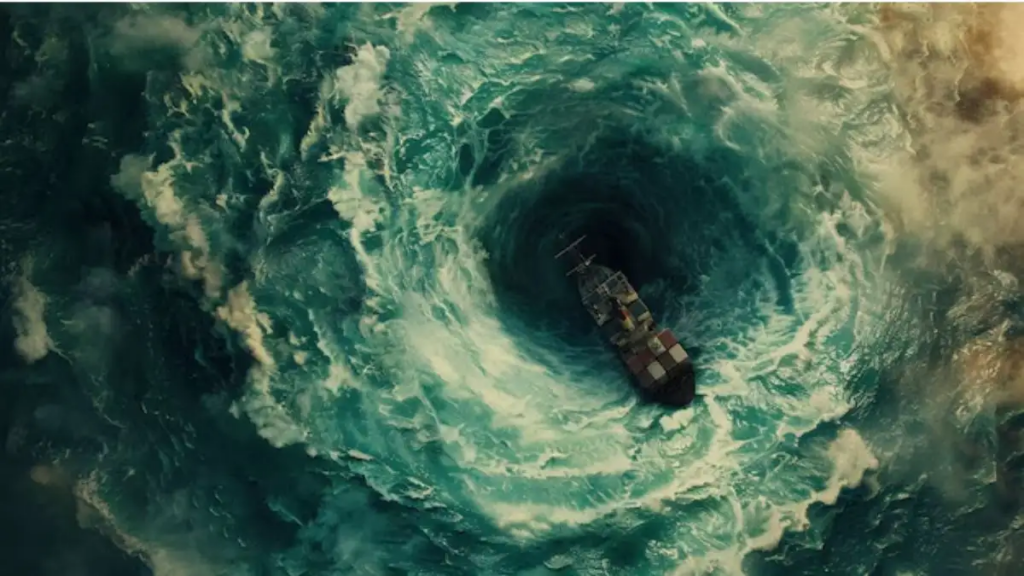
The Bermuda Triangle has inspired decades of myths involving vanished ships, disappearing aircraft, and unexplained phenomena. But a new scientific study is drawing attention to a very different mystery — one buried deep beneath the Atlantic Ocean floor.
Researchers from the Carnegie Institution for Science say they may have discovered why Bermuda remains unusually elevated above the surrounding seafloor even though its volcanic activity ended more than 30 million years ago.
Their answer involves a hidden geological structure unlike anything typically seen beneath volcanic islands.
The findings could reshape how scientists understand Earth’s mantle and the forces that shape islands in the middle of the ocean.
TL;DR
- Scientists studying Bermuda discovered a massive buoyant rock layer beneath the island.
- The structure may explain why Bermuda remains elevated above the Atlantic seafloor long after volcanic activity stopped.
- Researchers used seismic waves from earthquakes to map underground formations.
- The hidden layer appears to function like a geological “raft.”
- Scientists say the discovery challenges traditional mantle plume theories used to explain volcanic islands like Hawaii.
Why Bermuda’s Geology Has Puzzled Scientists for Decades
Most volcanic islands follow a predictable life cycle.
They form above mantle plumes — columns of hot material rising from deep within Earth’s mantle. As tectonic plates drift, volcanoes eventually become inactive. Over millions of years, the elevated seafloor gradually cools and sinks.
That pattern is visible across many island chains, including Hawaii.
But Bermuda does not behave the same way.
Despite its volcanoes going dormant tens of millions of years ago, the island still sits roughly 1,600 feet higher than the surrounding Atlantic Ocean floor, according to the new study.
That unusual elevation has long confused geologists.
Why this matters
Understanding why Bermuda remains elevated could help scientists answer broader questions about:
- How Earth’s mantle behaves
- How islands evolve over time
- Whether hidden geological structures exist elsewhere beneath the oceans
- How ancient tectonic processes continue influencing the planet today
What Scientists Found Beneath Bermuda
The research was led by seismologist William Frazer and researcher Jeffrey Park.
Using seismic waves generated by large earthquakes worldwide, the team created an underground image of the Earth beneath Bermuda down to depths of about 20 miles.
Seismic waves travel at different speeds depending on the material they pass through. By analysing those speed changes, scientists can map hidden underground structures.
What they found surprised them.
A giant underground “raft”
Beneath Bermuda’s oceanic crust, researchers identified a rock layer more than 12 miles thick.
Unlike the surrounding mantle rock, this layer appears:
- Less dense
- More buoyant
- Rich in lighter material
Instead of actively pushing upward like a mantle plume, the structure seems to support Bermuda from below — almost like a floating raft beneath the crust.
Scientists call this type of formation an “underplating.”
According to the study, carbon-rich molten rock may have intruded beneath the crust during Bermuda’s volcanic phase millions of years ago. That material later cooled and remained trapped beneath the island.
The result: a lighter foundation capable of keeping Bermuda elevated long after volcanic activity stopped.
How Ancient Supercontinents May Be Connected
One of the study’s most intriguing suggestions is that the material beneath Bermuda may be far older than the island itself.
Researchers believe parts of the underlying material could date back hundreds of millions of years to the formation of Pangaea, the ancient supercontinent that existed before Earth’s continents split apart.
That means Bermuda’s modern geological behaviour may be tied to tectonic events from Earth’s distant past.
Why is that significant
If confirmed, the findings suggest:
- Ancient mantle structures can survive for immense periods of time
- Deep-Earth processes may be more complex than current models predict
- Volcanic islands may form through multiple mechanisms, not just mantle plumes
The discovery could eventually force scientists to revise some assumptions about how Earth’s interior moves heat and material.
Why Bermuda Does Not Fit the Standard Model
Frazer said Bermuda differs from classic mantle plume systems in several ways.
Most plume-generated islands do not show the kind of thick underplating observed beneath Bermuda.
That makes the island geologically unusual.
The key scientific challenge
Researchers increasingly suspect Earth’s mantle may contain poorly understood convection processes beyond the textbook mantle plume model.
Frazer noted that Bermuda’s structure suggests “other convective processes” could be operating deep within the mantle.
In simple terms, scientists may still be missing major pieces of how Earth internally circulates heat and rock over geological timescales.
What Happens Next?
The findings, published in Geophysical Research Letters, open the door to further investigation.
Researchers are now looking for similar structures beneath other islands around the world.
If comparable underplating formations are discovered elsewhere, Bermuda may turn out to be part of a broader — and previously overlooked — geological phenomenon.
If not, the island could represent one of the most unusual volcanic remnants on Earth.
Either way, the study highlights how much scientists still do not fully understand about the planet beneath our feet.
Why the Bermuda Triangle Angle Captures Attention
The geological findings are unrelated to the supernatural myths surrounding the Bermuda Triangle.
There is no evidence linking the underground structure to disappearances, magnetic anomalies, or paranormal claims often associated with the region.
Still, the story naturally draws attention because the Bermuda Triangle has remained one of popular culture’s most enduring mysteries.
In reality, the latest research reveals something arguably more fascinating:
not aliens, monsters, or curses — but an ancient geological structure hidden beneath the Atlantic Ocean for millions of years.
And unlike mythological explanations, this mystery came with seismic evidence.