
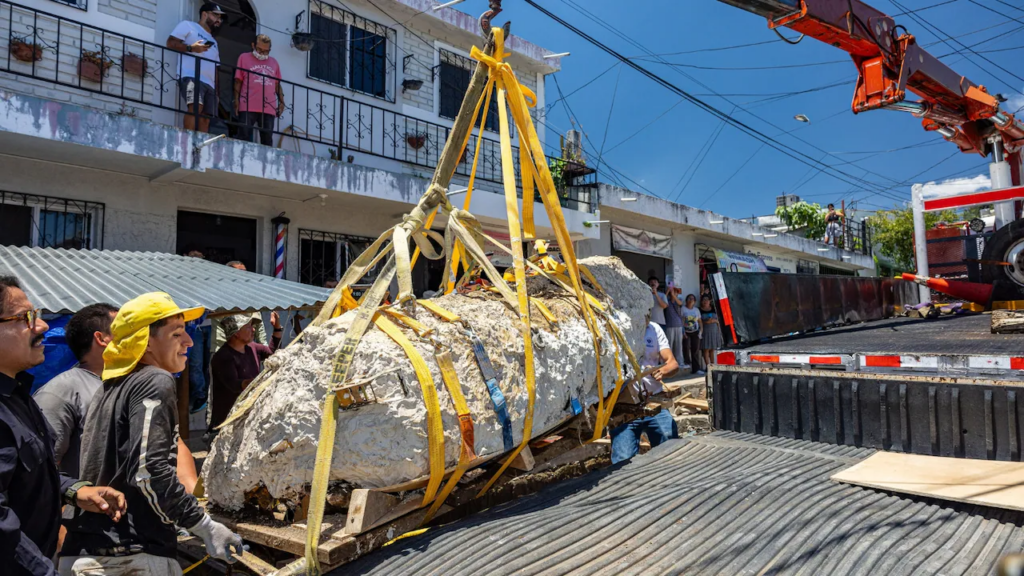
Archaeologists in El Salvador have uncovered nearly 3,000-year-old human remains buried beneath layers of volcanic ash, offering a rare glimpse into one of Central America’s earliest known societies. The discovery, announced by the country’s Ministry of Culture on July 21, includes a face-down skeleton, a sea turtle-shaped ceramic vessel, and preserved cassava remains—artefacts that could reshape historians’ understanding of ancient burial rituals in the region.
The excavation site, located in Antiguo Cuscatlán, just outside San Salvador, is now the focus of radiocarbon dating and DNA analysis. Researchers hope the findings will answer key questions about who these people were, how they lived, and whether their burial customs were linked to ritual practices previously documented elsewhere in Mesoamerica.
TL;DR
- Archaeologists discovered human remains dating to around 850 BC in Antiguo Cuscatlán, El Salvador.
- The skeleton was found buried face down beneath volcanic ash, alongside a sea turtle-shaped ceramic vessel.
- Preserved cassava branches were also uncovered, highlighting exceptional preservation conditions.
- Scientists will conduct radiocarbon dating and DNA testing to determine the remains’ exact age and biological profile.
- The discovery is being compared with the Chalchuapa archaeological site, where evidence of possible human sacrifice was found decades ago.
What Was Discovered at the El Salvador Archaeological Site?
The excavation in Antiguo Cuscatlán revealed human remains believed to date back to approximately 850 BC, making them nearly 3,000 years old.
The burial was preserved beneath multiple layers of volcanic ash deposited over centuries. Rather than destroying the site, these volcanic deposits acted like a protective seal, shielding fragile organic materials from weathering and human activity.
Among the most significant discoveries were:
- A human skeleton buried face down
- A small Usulután-style ceramic vessel shaped like a sea turtle
- Preserved traces of cassava branches
- Multiple volcanic ash layers that helped conserve the burial site
Each element provides valuable clues about the community that once inhabited the area.
Why Is the Sea Turtle Ceramic Vessel Significant?
A rare clue to ancient beliefs
One of the most intriguing finds is a ceramic vessel crafted in the Usulután style, a pottery tradition known across parts of ancient Central America.
The vessel is shaped like a sea turtle—a detail archaeologists believe may hold symbolic importance.
Sea turtles frequently appear in Indigenous cosmologies across the Americas, often representing themes such as:
- Creation and the Earth
- Longevity
- Fertility
- Connections between land and water
- Spiritual journeys
While researchers have not concluded exactly what the artifact meant to the people buried here, its presence suggests the burial may have carried ceremonial or symbolic significance beyond a simple interment.
Why Was the Skeleton Buried Face Down?
One of the biggest mysteries surrounding the discovery is the body’s position.
The remains were found lying face down, an uncommon burial posture that immediately drew archaeologists’ attention.
Several possibilities exist, although none have been confirmed:
- It may reflect a local burial tradition unique to the community.
- It could indicate a ritual practice.
- It may have been intended to distinguish the individual from others in society.
- Natural geological movement over centuries may have altered the body’s position.
Researchers caution against drawing conclusions until excavation, radiocarbon dating, and laboratory analysis are complete.
How Did Volcanic Ash Preserve the Burial?
Nature became an unexpected time capsule
Volcanic eruptions are often associated with destruction, but archaeology tells a more complicated story.
Just as volcanic ash preserved the Roman city of Pompeii, repeated ash deposits in El Salvador helped create a stable environment that protected the burial site.
The ash reduced exposure to:
- Oxygen
- Moisture
- Soil disturbance
- Plant root intrusion
- Human interference
This unusual preservation also allowed researchers to recover traces of cassava branches—organic material that would normally decompose long before modern archaeologists could study it.
Why Are Cassava Remains Important?
The preserved cassava remains may prove almost as valuable as the skeleton itself.
Cassava (also called yuca) has long been one of the staple crops of tropical America, but direct archaeological evidence of its early cultivation is relatively rare because plant material decays quickly.
Its discovery could help researchers understand:
- Ancient farming practices
- Local diets
- Funeral offerings
- Environmental conditions at the time of burial
If the cassava was intentionally placed with the deceased, it may offer new insight into funerary customs and beliefs surrounding death.
How Will Scientists Determine the Age and Identity of the Remains?
The excavation marks only the beginning of the investigation.
Researchers will now carry out several scientific analyses.
Radiocarbon dating
Carbon-14 testing will establish the burial’s approximate age and verify whether it truly dates to around 850 BC.
DNA analysis
Scientists also plan genetic testing to determine:
- Biological sex
- Possible ancestry
- Family relationships, if additional burials are discovered
- Population connections with other ancient communities
Combined, these methods can paint a much fuller picture than archaeology alone.
How Does This Compare With the Chalchuapa Discovery?
The newly discovered burial has revived comparisons with Chalchuapa, one of El Salvador’s most important archaeological sites.
Excavations there during the 1970s uncovered the remains of 33 individuals, including complete skeletons, partial skeletons, and isolated skulls.
Some showed evidence of:
- Bound limbs
- Mutilation
- Decapitation
These findings led some researchers to identify Chalchuapa as one of the earliest known examples of possible human sacrifice in Mesoamerica.
The Antiguo Cuscatlán excavation is now being examined to determine whether it reflects similar ritual practices or represents an entirely different cultural tradition.
Researchers emphasize that there is currently no evidence linking the newly discovered burial to sacrifice.
Why This Discovery Matters
Filling gaps in Central America’s early history
Compared with neighboring civilizations such as the Maya, relatively little is known about many early communities that lived in present-day El Salvador before written records.
Every carefully documented burial helps answer fundamental questions about:
- Population movements
- Religious beliefs
- Agriculture
- Social organization
- Daily life
The discovery also demonstrates that significant archaeological sites may still lie hidden beneath modern cities.
Antiguo Cuscatlán today is a growing suburb of San Salvador, underscoring how layers of history often exist beneath contemporary urban development.
What Happens Next?
Researchers will spend months analyzing the remains and associated artifacts before drawing broader conclusions.
The next phase includes:
- Radiocarbon dating
- DNA sequencing
- Ceramic analysis
- Soil and botanical studies
- Comparison with other regional archaeological sites
As laboratory results emerge, archaeologists hope the burial will provide a clearer understanding of life in Central America nearly three millennia ago.
For now, the excavation serves as a reminder that even a single grave can preserve an extraordinary record of a civilization long vanished from the landscape—but not from history.