
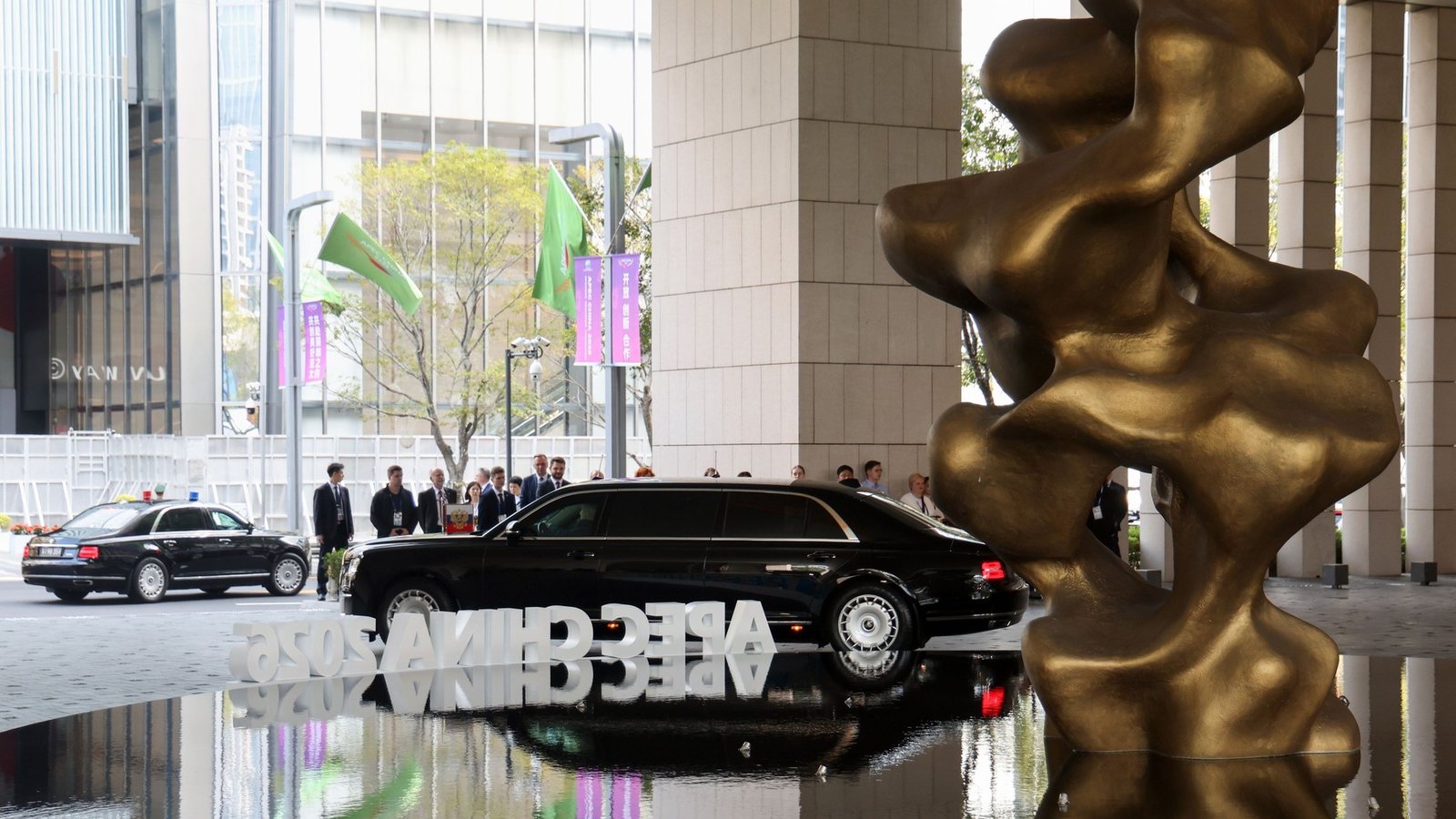

A man living next to the Shenzhen venues hosting this week’s APEC summit says officials offered his household 10,000 yuan, about $1,500, to move into a hotel. The offer covered Nov. 16 to 19. If the family stayed, he said, a police officer or security guard would sit inside the flat for the duration.
He told this to the South China Morning Post, which published his account on Nov. 14. That single account travelled the world this week as “China pays residents to leave their homes”. The gap between what one man said and what a city announced is the story here.
The city published notices for almost everything else
Shenzhen has been unusually open about the rest of the clampdown. Three named officials set out the plan at a press conference on Oct. 15. Chan Yaodong, deputy secretary general of the municipal government, said the city was balancing “high-standard support for foreign affairs activities” with the “smooth operation of the economy and society”, the Post reported.
Hao Shifei, deputy head of the city’s human resources authority, urged employers to let staff work from home during the week of Nov. 16 to 20. Staggered hours or paid leave would do as well, he said. Xu Wei, deputy director of the transport department, promised drivers who applied online to leave their cars at home a commemorative APEC sticker and a loaded transit card. The city told government agencies and state firms to take 90 per cent of their vehicles off the road.
Shenzhen then halved subway and bus fares. The metro operator ran the discount for five days from Monday, Nov. 16, and the city added more than 50 feeder bus routes.
Horns, drones and a four-day school break
Then came the harder rules. Local authorities banned drones, helicopters, hot-air balloons, gliders, kites and sky lanterns across the city from Nov. 11 to 21, the Post reported. Police also keep out-of-town cars out of most districts during the day, and primary and middle schools started a four-day autumn break on Tuesday.
A citywide ban on sounding a car horn took effect this month. Acoustic cameras enforce it, and fines start at 300 yuan, Reuters reported from Shenzhen. Reuters also found that more than 1.5 million local car owners had pledged to stay off the roads. In return they get the sticker and a transit card worth up to 100 yuan.
The payment is the one measure with no public notice
Set that list against the thing everyone is talking about. Shenzhen has published no notice offering money to residents near the venues. No official has given a number for the households approached, explained the window rule, or confirmed that officers would sit in anyone’s living room.
The Post’s source said authorities had ordered residents to seal and cover every window facing the sites. Everything in that paragraph rests on one man, speaking anonymously, about his own block. It may well be accurate. It is still one household rather than a city-wide scheme, and this week’s headlines quietly turned “a resident” into “residents”.
Two further claims spread with the story. One says Guangdong public security met on Nov. 1 and raised the alert to its highest level. The other dates the horn ban to Nov. 1. WION, which carried both, credits no source for the first and points to Taiwan’s United Daily News for the second. Neither appears in Shenzhen’s own announcements or in the Reuters and Post reporting we read.
Tencent, Lenovo and Insta360 sent staff home
Companies answered the call on the record. Camera maker Insta360, Lenovo and Tencent Holdings granted employees leave or allowed remote work, the Post reported. Meituan suspended drone deliveries for 10 days and waived late-delivery penalties for riders citywide.
So the city has moved schools, offices, delivery fleets and 1.5 million drivers around a two-day meeting. For 17 million people that is serious logistics, and officials announced most of it in advance under their own names. The hotel money is the exception.
Why Shenzhen is being scrubbed this hard
Xi Jinping chairs the 33rd APEC Economic Leaders’ Meeting on Nov. 18 and 19. The venue is the Shenzhen International Exchange Center, in the Xiangmihu area of Futian district. About 20 leaders attend, among them President Donald Trump and Vladimir Putin, who returns to APEC in person for the first time since 2017.
China’s foreign ministry said on Nov. 16 that Xi would hold a three-way meeting with Trump and Putin on Nov. 19. Spokesperson Mao Ning called it a meeting of “groundbreaking significance”. Trump has also said he may meet Kim Jong Un while in China, though nobody has arranged one.
Shenzhen is the third Chinese city to host APEC, after Shanghai in 2001 and Beijing in 2014. It has spent two years preparing and changed its leadership along the way. Jin Lei became party chief in March and vowed to “resolutely fulfil this major political mission”; Li Yun became mayor in September and told reporters on Nov. 14 that venue rehearsals were complete.
A US-China trade truce sits behind all of it. Washington keeps tightening the rules on advanced chip exports even as the talks continue, as the Commerce Department’s latest filing showed. A smooth summit is worth a great deal to Beijing.
Managed cities are not only a Chinese habit
Other governments reorganise a city around an event too, though rarely to this degree. South Korea grounds aircraft and buzzes every phone in the country on the day of its university entrance exam. What separates Shenzhen is that its measures reach past the street and up to the window line of private flats.
The airspace ban runs until Nov. 21. The trilateral meeting falls on Thursday. Nobody has yet put the hotel money to an official in Shenzhen in public.