

Neuralink’s ‘Blindsight’ chip stimulates vision in the brain
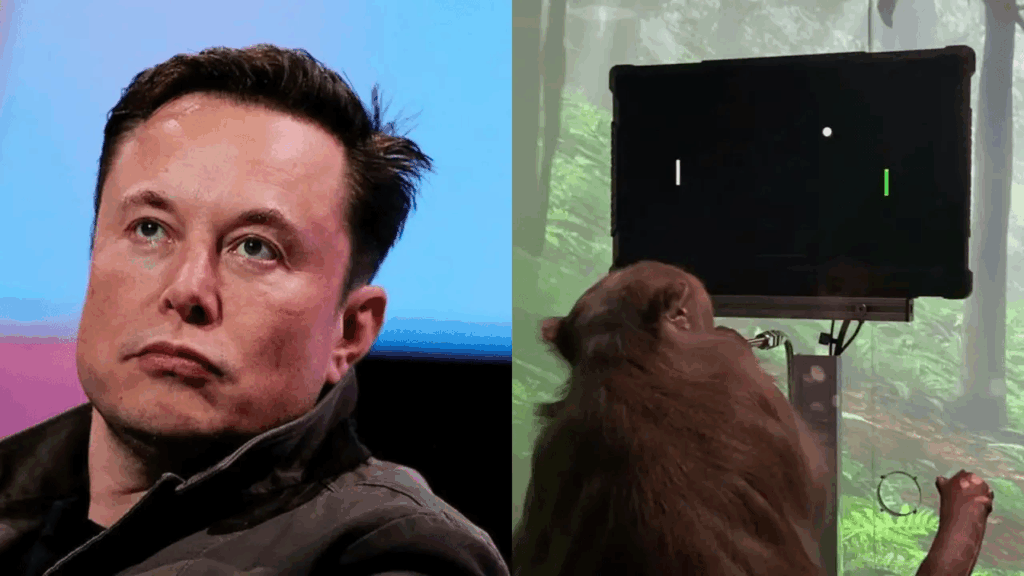
Elon Musk’s Neuralink Corp has taken a step closer toward restoring vision in blind individuals. The company used a brain implant in a monkey to simulate the experience of sight—even though the visual stimulus wasn’t physically present—according to a company engineer.
The experimental device, known as Blindsight, activates the visual centers of the brain. Joseph O’Doherty, a Neuralink engineer, said at a conference on Friday that in at least two-thirds of the trials, the monkey moved its eyes toward the direction researchers attempted to make it “see” using only brain stimulation.
Breakthrough in neurotechnology aims to mimic vision
This marks the first time Neuralink has shared results from testing the Blindsight implant, which is designed to replicate how an eye functions by directly stimulating the brain. The technology is a significant development in the race to use brain-computer interfaces to tackle complex medical challenges like blindness.
Although the device has not yet been approved for human use in the United States, Musk has positioned it as a critical piece of Neuralink’s broader ambition: to help the blind see, and eventually enable superhuman vision, such as in the infrared spectrum.
The company has been testing the technology in monkeys for several years and is hoping to begin human trials before the end of 2025, Musk stated in March. O’Doherty declined to provide further details about the experiment during the event.
Brain-computer interface targets paralysis, future movement
Neuralink’s work goes beyond vision restoration. The company is also developing brain implants that allow individuals with paralysis to communicate directly with computers. According to Musk, five people have received Neuralink implants to date—three in 2024 and two in 2025. Some patients now use their implants for up to 60 hours a week, O’Doherty said during his talk at the Neural Interfaces conference.
The ultimate goal, Musk has said, is for such brain-computer technologies to allow paralyzed individuals to regain movement—potentially even walk again. At the same conference, researchers presented a study co-authored by O’Doherty detailing an experiment in which the Neuralink implant was used to stimulate a monkey’s spinal cord, prompting muscle movement. This area of research—using spinal cord stimulation to restore mobility—has gained momentum among neuroscientists in recent years.
Long-term vision: AI-human integration
Musk views these medical advances as stepping stones toward a larger goal: enabling faster and more seamless communication between humans and machines. He has said this would reduce the potential risks posed by artificial superintelligence. Neuralink’s work in this area parallels developments at his AI company, xAI Corp.
Eventually, Neuralink envisions combining the Blindsight brain implant with smart glasses to enhance its functionality, O’Doherty said during the presentation.
One of the advantages of conducting these trials in monkeys, he noted, is that the visual cortex in monkeys lies closer to the surface of the brain than it does in humans, making it easier to access. For future human use, Neuralink intends to rely on its surgical robot to implant the device deeper within the brain.


