
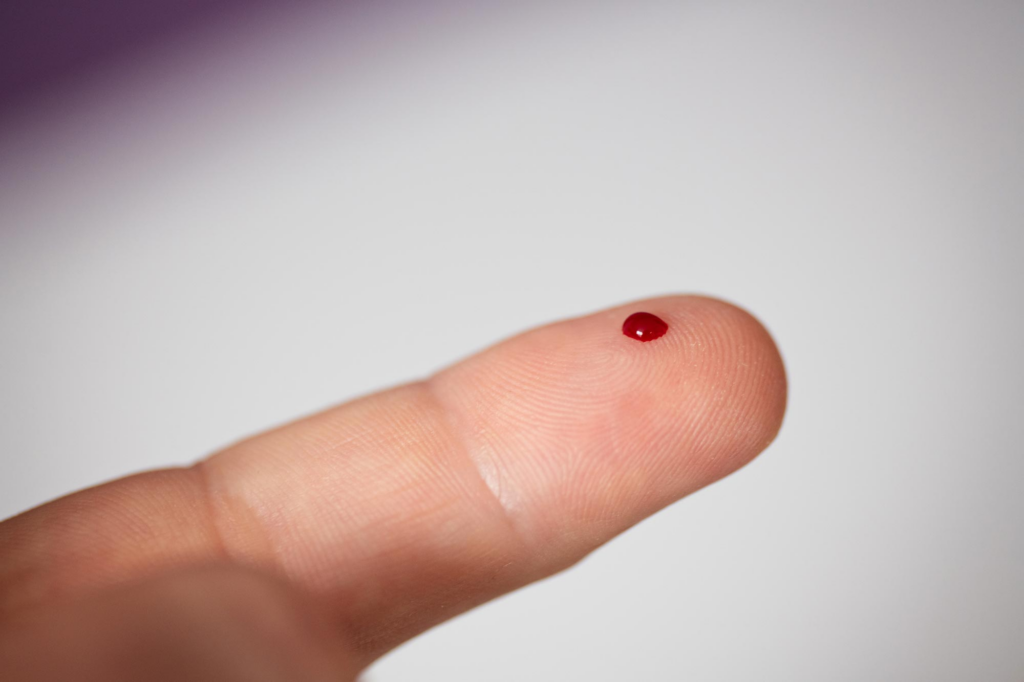
A team of researchers in China says it has developed a handheld cancer detection system capable of identifying extremely small biological changes from a single drop of blood — a breakthrough that could eventually make early cancer screening faster, cheaper, and far more accessible.
The research, led by Wen Liaoyong of Westlake University, was published in the journal Nature Photonics on May 13.
According to the study, the team transformed a cancer detection platform that once required equipment as large as a refrigerator into a compact device small enough to fit in a person’s hand, while dramatically improving sensitivity compared with conventional methods.
If the technology eventually proves reliable in large-scale clinical testing, it could help push cancer diagnostics beyond hospitals and into clinics, remote healthcare systems, and even homes.
TL;DR
- Researchers at Westlake University developed a handheld blood-testing system for early cancer detection.
- The device reportedly detects tiny biological changes with far greater sensitivity than traditional methods.
- Scientists replaced wavelength-based measurements with a 3D nanophotonic chip that measures light intensity.
- The technology may eventually support portable cancer screening in clinics, remote areas, and at-home settings.
- The research was published in Nature Photonics.
- Large-scale clinical validation and cost reduction remain major next steps.
What Makes This Cancer Detection Technology Different?
Most traditional cancer screening tools rely on large laboratory equipment and often require multiple testing stages to identify biomarkers linked to tumours or abnormal cell activity.
The new system developed by Wen’s team takes a different approach.
Instead of measuring changes in light wavelength — a common technique in biosensing — the researchers designed a special three-dimensional nanophotonic chip that measures changes in light intensity.
That shift may sound technical, but it is central to why the device is attracting attention.
By focusing on light intensity, the system can reportedly detect much smaller biological signals inside blood samples.
In practical terms, that means it may be capable of identifying cancer-related biomarkers at much earlier stages than conventional methods.
How the 3D Nanophotonic Chip Works
At the center of the technology is a miniaturised optical sensor chip engineered at the nanoscale.
Nanophotonics is a field that studies how light interacts with structures smaller than the wavelength of light itself. Researchers use these interactions to create highly sensitive sensors capable of detecting microscopic changes.
The chip developed by the team amplifies subtle optical changes that occur when biological molecules in the blood interact with the sensing surface.
According to the researchers, the system offers:
- Extremely high sensitivity
- Miniaturised hardware requirements
- Faster signal processing
- Potential portability
- Lower long-term operating costs
Wen used a simple analogy to explain the system’s precision.
He reportedly said that if the measurement range were represented by a one-meter ruler, the device could detect virtually all tiny changes occurring within that scale.
That level of sensitivity could become especially important for early-stage cancer detection, where biological warning signs are often difficult to identify.
Why Early Cancer Detection Matters So Much
One of the biggest challenges in oncology is timing.
Many cancers become significantly more treatable when discovered early, before they spread or become symptomatic.
But early detection remains difficult because:
- Biomarker levels may be extremely low
- Symptoms often appear late
- Current screening tools can be expensive or invasive
- Access to advanced diagnostics varies widely
A portable, highly sensitive blood test could potentially help address several of those barriers.
Potential future applications include:
- Routine cancer screening
- Remote healthcare diagnostics
- Home-based monitoring
- Low-resource medical settings
- Faster follow-up testing
This is part of a broader global push toward “liquid biopsy” technologies — blood-based diagnostic systems that attempt to identify diseases through biomarkers circulating in the bloodstream.
Could This Eventually Replace Traditional Cancer Screening?
Not anytime soon.
While the results are promising, researchers are still in the early stages of validating how reliable the technology is across different cancer types, patient populations, and clinical conditions.
Several major hurdles remain before such systems could become mainstream.
The technology still needs:
- Large-scale clinical trials
- Regulatory approval
- Independent verification
- Manufacturing scalability
- Cost reduction
- Real-world accuracy testing
Scientists also need to determine:
- Which cancers can be detected reliably
- How early can the system identify abnormalities
- False positive and false negative rates
- How results compare with existing gold-standard diagnostics
In medicine, sensitivity alone is not enough. A test must also be consistently accurate under real-world conditions.
Why Miniaturisation Is a Big Deal in Medical Technology
One of the most significant aspects of the research is not just sensitivity — it is size reduction.
Turning a refrigerator-sized detection system into a handheld device could dramatically expand where advanced diagnostics can happen.
That matters because many healthcare systems still struggle with:
- Limited laboratory access
- High testing costs
- Rural healthcare gaps
- Delayed diagnostics
- Equipment shortages
Portable diagnostic tools have become a major focus across healthcare technology since the COVID-19 pandemic accelerated demand for decentralised testing.
Industries pushing miniaturised diagnostics include:
- Cancer detection
- Infectious disease testing
- Cardiac monitoring
- Genetic screening
- Wearable health tech
The long-term goal across the industry is simple:
Move diagnostics closer to patients instead of requiring patients to travel to centralised labs.
The Manufacturing Challenge Could Decide Its Future
One issue researchers openly acknowledged is cost.
Advanced nanophotonic chips can be expensive and difficult to manufacture at scale.
Wen’s team says it is now working on ways to dramatically reduce production costs, which could determine whether the technology remains a laboratory breakthrough or becomes commercially viable.
This is a common challenge in next-generation medical technology:
A system may work exceptionally well in controlled research environments but struggle to achieve affordable mass production.
Why manufacturing matters
For widespread adoption, hospitals and healthcare systems will need:
- Affordable devices
- Reliable supply chains
- Durable hardware
- Standardized production quality
Without scalable manufacturing, even promising diagnostic technologies often remain niche tools.
China’s Growing Role in Advanced Medical Technology
The research also reflects China’s expanding investment in high-end biomedical and photonics research.
Hangzhou, where Westlake University is based, has increasingly emerged as a major technology and research hub.
Meanwhile, Chinese universities and laboratories are investing heavily in:
- AI-assisted medicine
- Nanotechnology
- Biosensors
- Advanced materials science
- Precision diagnostics
Wen himself previously worked at the University of Connecticut before joining Westlake University in 2019.
His research focuses on multifunctional nanostructured materials and advanced sensing technologies.
The Bigger Picture: Healthcare Is Moving Toward Continuous Detection
The long-term significance of technologies like this goes beyond cancer.
Medicine is gradually shifting from:
“Diagnosing disease after symptoms appear”
to:
“Continuously monitoring for early biological warning signs.”
Highly sensitive blood-based diagnostics could eventually become part of that transformation.
Future systems may one day combine:
- Portable biosensors
- AI-assisted analysis
- Real-time monitoring
- Personalized risk tracking
But for now, the handheld cancer detection device remains a promising research development — not a ready-for-market consumer product.
That distinction is important.
Scientific breakthroughs often generate excitement early, but real-world healthcare adoption usually takes years of validation, regulation, and refinement.