
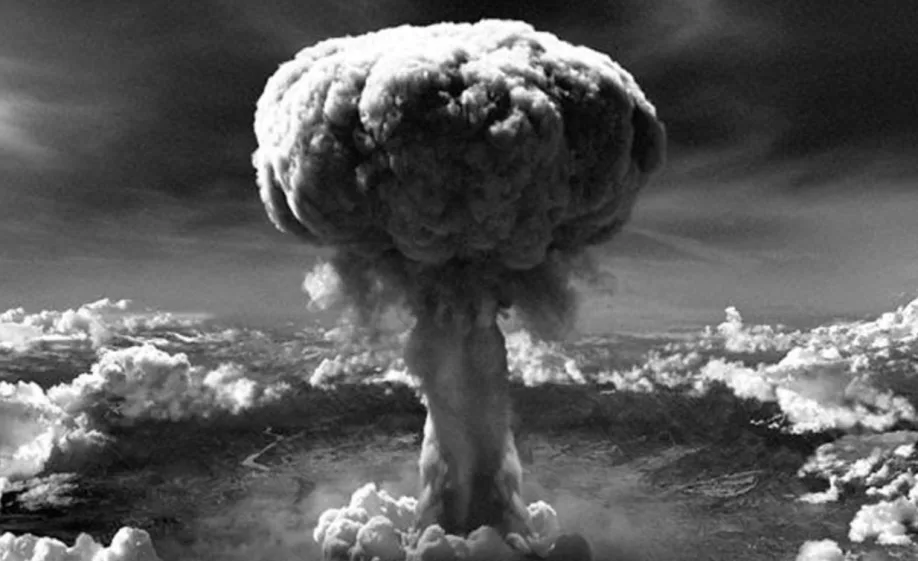
More than 80 years after the atomic bombing of Hiroshima, scientists have identified a previously unknown material created during the explosion, offering fresh insight into how matter behaves under some of the most extreme conditions ever produced on Earth.
The newly discovered material, found inside microscopic glass particles collected from the sands of Hiroshima Bay, has been named “Hiroshimaite.” Researchers say it formed in the split seconds after the August 6, 1945, atomic blast, when temperatures soared to an estimated 7,000 degrees Celsius (12,632 degrees Fahrenheit)—hotter than the surface of the Sun.
The discovery, published in the journal Science Advances, reveals that the unprecedented conditions generated by the explosion produced an alloy that scientists had never observed before.
TL;DR
- Scientists have discovered a previously unknown alloy formed during the 1945 Hiroshima atomic bombing.
- The material was found inside microscopic glass spheres in Hiroshima Bay beach sand.
- Researchers named the new class of material Hiroshimaite.
- The alloy likely formed within seconds as temperatures reached about 7,000°C following the explosion.
- The discovery offers new insights into how materials behave under extreme heat and pressure, with implications for materials science and planetary research.
What Is Hiroshimaite?
Hiroshimaite is the name researchers have given to a newly identified material preserved inside tiny spherical particles created by the atomic explosion.
The microscopic spheres formed when the bomb’s immense heat vaporized buildings, soil, metal, glass, and water almost instantly. As this superheated cloud cooled, droplets of molten material solidified into tiny glass-like particles that eventually settled across the surrounding landscape.
While scientists have studied these particles for years, the latest analysis revealed something unexpected: a previously unknown silicon-rich multicomponent alloy trapped within one of the spheres.
According to the researchers, this alloy has not been observed forming under normal geological or industrial conditions.
How Did the Hiroshima Bomb Create This Material?
The atomic detonation produced an intense fireball within fractions of a second.
Researchers estimate temperatures briefly reached around 7,000°C, creating conditions rarely seen on Earth outside of extraordinary natural events.
The blast instantly vaporized:
- Building materials
- Steel and other construction metals
- Soil and rock
- Glass
- Water
As the fireball expanded and cooled, the vapor condensed into microscopic molten droplets that solidified before falling back to the ground.
Many of these particles ultimately accumulated in beach sands around Hiroshima Bay, where scientists continue to study them today.
What Makes the Newly Discovered Alloy Unique?
Most previously identified Hiroshimaite particles consist largely of calcium-aluminium-silicon glass that formed at temperatures around 1,800°C (3,272°F).
The newly identified alloy appears to have formed under even more extreme conditions.
Researchers found tiny droplets composed primarily of:
- Iron
- Chromium
- Nickel
- Manganese
- Molybdenum
However, one microscopic grain stood out because of its unusually high silicon content.
Its composition included approximately:
- 63% iron
- 15% chromium
- 9% nickel
- 7% silicon
According to the researchers, this particular combination would not ordinarily crystallize under conventional manufacturing or natural geological processes.
Its existence suggests that the atomic explosion created a unique environment capable of producing materials previously unknown to science.
Why Is This Discovery Important?
The finding extends beyond the historical significance of the Hiroshima bombing.
Scientists say it demonstrates how matter behaves when exposed to extraordinarily high temperatures, pressures, and rapid cooling.
Understanding these processes could improve research in several fields.
Materials science
Studying these unusual alloys may help researchers better understand how metals behave under extreme conditions and inspire the development of new high-performance materials.
Planetary science
The researchers note that the conditions generated by the Hiroshima explosion resemble those found during:
- Meteorite impacts
- Hypervelocity planetary collisions
- Lightning strikes
By studying Hiroshimaite, scientists may gain insights into materials formed during ancient impacts on Earth and other planets.
Nuclear forensics
The discovery may also contribute to research into the long-term physical signatures left behind by nuclear detonations, helping scientists better understand the materials created during such events.
Why Was the Material Discovered Only Now?
Although Hiroshima has been extensively studied for decades, advances in microscopy and materials analysis have dramatically improved scientists’ ability to examine particles measured in micrometers—about the width of a human hair or smaller.
Modern analytical techniques can identify tiny inclusions and chemical compositions that would have been impossible to detect using older instruments.
In this case, researchers were able to examine the interior of a microscopic glass sphere in enough detail to identify the previously unknown alloy.
The discovery highlights how historical sites can continue to yield new scientific insights as technology advances.
What Did the Researchers Say?
In their Science Advances paper, the researchers wrote:
“We report the discovery of a previously unknown alloy preserved within a Hiroshimaite spherule recovered from beach sands of Hiroshima Bay, formed during the 6 August 1945 atomic airburst.”
The team also noted that the atomic explosions over Hiroshima and Nagasaki created physical conditions comparable to some of nature’s most energetic events.
These include hypervelocity meteor impacts and lightning strikes, both of which can generate similarly extreme temperatures and pressures capable of producing unusual materials.
Does the Discovery Change What We Know About the Hiroshima Bombing?
The discovery does not alter the historical understanding of the bombing itself.
Instead, it adds a new scientific dimension to an event that has already been studied extensively.
The bombing of Hiroshima on August 6, 1945, resulted in the deaths of approximately 70,000 to 80,000 people immediately, with many more dying in the months and years that followed due to injuries and radiation exposure.
The newly identified material serves as a microscopic record of the extraordinary physical forces unleashed during the explosion, preserving evidence of conditions that lasted only fractions of a second.
The Bottom Line
The identification of Hiroshimaite more than eight decades after the Hiroshima bombing demonstrates that even well-documented historical events can continue to reveal new scientific discoveries.
By uncovering a previously unknown silicon-rich alloy formed under the extreme conditions of the atomic blast, researchers have gained a rare window into how matter behaves when subjected to temperatures and pressures rarely encountered on Earth.
Beyond its historical significance, the discovery may help scientists better understand extreme material formation, from meteorite impacts to future advances in materials engineering.