
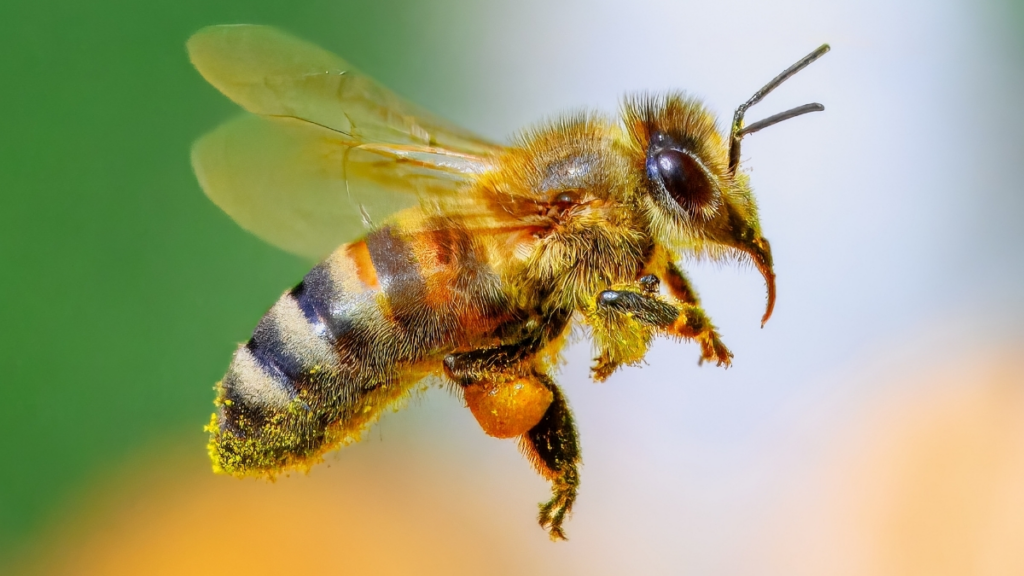
For decades, scientists searching for extraterrestrial intelligence have faced a basic problem: even if we find aliens, how would we talk to them? Spoken language depends on shared biology and culture. Gestures depend on bodies that may not look anything like ours. That is why a growing number of researchers are revisiting an old idea with fresh evidence from an unexpected source: honeybees.
Recent scientific thinking suggests that mathematics, rather than words or images, may be the most reliable first language between humans and alien life. The reason is not science fiction or abstract theory. It is grounded in what bees can do with numbers, despite having brains smaller than a grain of rice.
This is where the hive mind meets deep space.
Why scientists think mathematics could be a universal language
The search for a universal language has always centered on one assumption: whatever aliens are like, they still have to understand their universe in some systematic way.
What makes maths different from human language
Human languages are arbitrary. The word “three” means nothing on its own unless you grow up learning English. In another culture, it is “tres” or “drei.” But the concept of three objects remains the same everywhere.
Mathematics has several features that make it appealing for interspecies communication:
- It describes physical reality, not culture.
- It is consistent across time and space.
- It appears wherever intelligence interacts with quantities, patterns, or cause and effect.
If an alien species builds tools, navigates space, or understands physics, it almost certainly engages with numbers in some form. That makes maths a candidate for a shared starting point.
Why Honeybees matter in this argument
Honeybees are evolutionarily distant from humans. Our last common ancestor lived more than 600 million years ago. Yet bees can still grasp numerical concepts that many assumed required large brains or human-like intelligence.
This shared ability forces scientists to rethink a long-held bias: that math is uniquely human, or at least uniquely mammalian.
What the honeybee maths experiments actually showed
Between 2016 and 2024, researchers conducted a series of controlled experiments to test whether bees could understand numbers. These were not one-off stunts. They were long-term behavioral studies that rewarded bees with sugar water for correct choices.
How Honeybees were tested
Bees voluntarily entered outdoor testing areas where they encountered visual tasks. These tasks included:
- Choosing between different quantities of shapes.
- Adding or subtracting one item from a group.
- Distinguishing odd numbers from even ones.
- Identifying zero as a meaningful quantity.
- Matching symbols to numerical values.
Importantly, the bees were not trained using language or abstract instruction. They learned purely through pattern recognition and reward.
What surprised researchers the most
The most striking result was not that bees could count, but how flexible their numerical understanding appeared to be.
Researchers observed that bees could:
- Perform basic addition and subtraction.
- Order quantities from smaller to larger.
- Understand that zero represents “nothing,” not just another number.
This level of abstraction was once thought impossible for insects.
What this means for alien communication
If bees and humans can both grasp mathematics despite radically different brains, the implication is hard to ignore.
The core idea behind the thought experiment
In a paper published in the journal Leonardo and discussed in The Conversation, researchers proposed a philosophical thought experiment. The idea is simple but powerful:
If two species that evolved separately for hundreds of millions of years can both develop numerical understanding, then mathematics may emerge wherever intelligence does.
That does not mean aliens will use base-10 numbers or write equations like humans. It means they may still recognize patterns, quantities, ratios, and logical relationships.
Why maths could be the “first words” of aliens
When two species meet without shared context, communication usually begins with the simplest, most universal signals. For humans, that might be numbers.
Possible first-contact mathematical signals could include:
- Repeating prime numbers.
- Simple ratios like 1:2 or 2:3.
- Binary sequences.
- Geometric patterns.
These signals are not cultural. They are structural. They say, “We understand order, pattern, and logic.”
How this idea connects to real space missions
This is not just theoretical speculation. Humanity has already acted on this assumption.
The Voyager Golden Records and math in space
Voyager 1 and Voyager 2, launched in 1977, each carry a Golden Record intended for extraterrestrial discoverers. These records include:
- Mathematical instructions etched onto the cover.
- Diagrams explaining time, distance, and physical constants.
- Binary-based representations of numbers.
The designers assumed that mathematics would be more understandable than spoken greetings.
The Arecibo message as a numerical introduction
In 1974, scientists sent the Arecibo message toward a star cluster about 25,000 light-years away. The message consisted of 1,679 binary digits.
That number was chosen deliberately because it is the product of two prime numbers. The idea was that any intelligent receiver might recognize this structure and rearrange the signal into a meaningful image.
The message encoded:
- Numbers from one to ten.
- Atomic numbers of key elements in DNA.
- A basic outline of human form and Earth’s position.
This was mathematics used as an introduction, not a conversation.
Why Honeybees strengthen the case for maths beyond Earth
Critics of mathematical universalism often argue that math is a human invention, shaped by our brains and environment. Bees complicate that argument.
Honeybees challenge the “human-only” view of intelligence
Bees do not write equations or build telescopes. Yet they navigate space, optimize foraging routes, and communicate location and distance through the waggle dance.
Their ability to process numbers suggests that math is not a cultural artifact. It may be an adaptive tool that appears whenever organisms need to compare quantities or make efficient decisions.
This strengthens the argument that alien intelligence, if it exists, might arrive at similar solutions.
What bees cannot tell us
It is important not to overstate the findings. Bees do not prove aliens exist. They do not prove aliens think like humans.
What they do show is this:
- Complex cognition does not require a large brain.
- Numerical understanding can evolve independently.
- Intelligence may converge on similar principles even in very different forms of life.
That makes mathematics a safer bet than language when imagining first contact.
What scientists are still debating
The idea of math as a universal language is compelling, but it is not settled science.
Open questions researchers are asking
Scientists continue to debate:
- Whether all intelligent species must develop mathematics.
- Whether alien math would resemble ours at all.
- How much shared context is still needed to interpret numerical signals?
Some argue that even math depends on sensory experience. An aquatic species or a non-visual intelligence might conceptualize numbers differently.
This is where future research, both on Earth and in space, becomes crucial.
Why this matters beyond aliens
Even if humanity never meets extraterrestrials, this research reshapes how we think about intelligence on Earth.
Rethinking animal cognition
Studies of bees suggest that intelligence exists on a spectrum, not a ladder with humans at the top. This has implications for:
- Animal welfare.
- AI research inspired by biological systems.
- Understanding how cognition evolves under different constraints.
Implications for artificial intelligence
If small-brained insects can perform abstract numerical tasks, it raises questions about how much complexity is truly needed for reasoning. This insight is already influencing minimalist approaches to AI and robotics.
TL;DR
Honeybees can add, subtract, understand zero, and distinguish odd from even numbers. Because bees and humans evolved separately yet share numerical abilities, scientists argue that mathematics may be a universal language. This strengthens the idea that maths could form the basis of first contact with extraterrestrial intelligence, an assumption already reflected in messages sent into space like Voyager’s Golden Records and the Arecibo signal.