
TL;DR
Indian scientists have uncovered a 37,000-year-old thorny bamboo stem in Manipur, Asia’s earliest known fossil of its kind. The discovery suggests that Northeast India acted as a warm refuge during the Ice Age, allowing bamboo species to survive while those in colder regions died out. The fossil could reshape what we know about how bamboo evolved and spread across the continent.
What Did Scientists Find in Manipur?
Researchers from the Birbal Sahni Institute of Palaeosciences (BSIP) discovered a remarkably preserved bamboo stem embedded in the bed of the Chirang River in Manipur’s Imphal Valley.
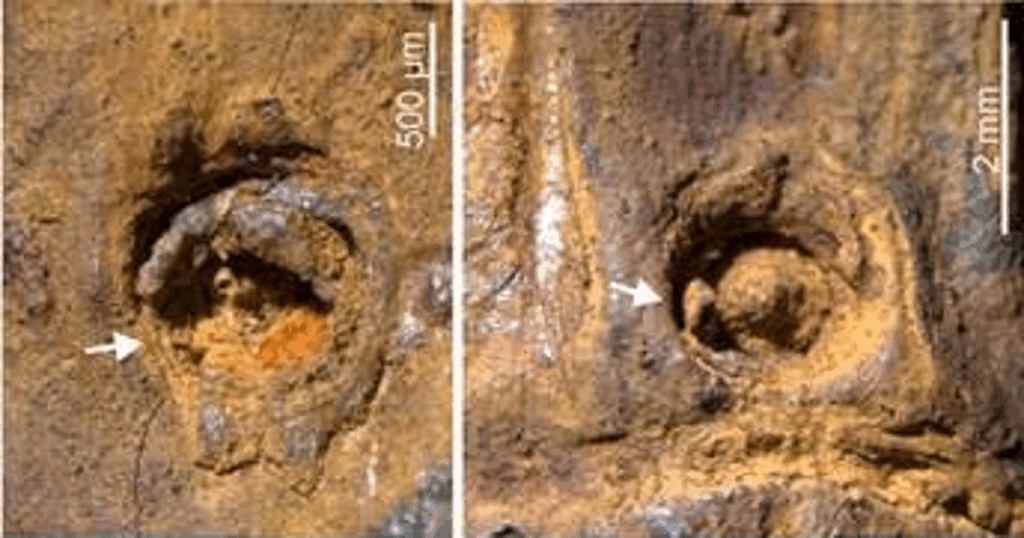
The surprise wasn’t just that the stem survived for 37,000 years—a rare feat for bamboo, which usually decays quickly because of its hollow, fibrous structure. It was the scar-like impressions covering its surface, which scientists later identified as fossilized thorn marks.
This makes the specimen the earliest thorny bamboo fossil ever found in Asia.
Why Is This Ice Age Bamboo Discovery So Rare?
Finding bamboo fossils is like trying to find a paper straw in a bonfire long after it’s burned out. Bamboo’s natural structure offers little resistance to decay, making intact fossils exceptionally uncommon.
Why bamboo fossils rarely survive
- Hollow stems collapse easily.
- Fibrous tissues degrade quickly.
- Moist environments, where bamboo thrives, accelerate decomposition.
Because of this, scientists typically rely on comparing modern bamboo species and their habitats rather than studying ancient remains directly.
This makes the Manipur fossil a scientific jackpot.
What Do the Thorn Marks Reveal About Ancient Bamboo?
When the BSIP team first noticed the strange markings on the stem, they weren’t sure whether they were natural scars or something else entirely. After a detailed analysis, they concluded that the patterns matched the placement of thorns on modern bamboo species.
Key findings
- The fossil belongs to the genus Chimonobambusa, a group known today for its tough, thorny stems.
- The marks confirm that thorniness—a natural defense against herbivores—had already evolved in Asian bamboo during the Late Pleistocene, or the Ice Age.
- This indicates that bamboo’s defensive traits developed much earlier than previously documented.
Researchers compared the fossil with living thorny species such as Bambusa bambos and Chimonobambusa callosa to understand its defense mechanisms and ecological role.
How Did Bamboo Survive the Ice Age in Northeast India?
This discovery raises a crucial scientific question:
Why did bamboo survive in India when it vanished from colder parts of Asia and Europe?
The climate advantage
During the Ice Age, much of Europe and northern Asia experienced temperatures too harsh for bamboo to survive. But Northeast India remained relatively warm and humid, creating a natural refuge—a botanical “safe zone.”
What this suggests
- The region supported thriving bamboo populations while others died out.
- Some modern bamboo lineages may trace their survival back to this climatic pocket.
- Northeast India may have played a central role in the evolution and dispersal of Asian bamboo species.
Why This Discovery Matters for Science
This fossil does more than push back the timeline of thorny bamboo. It could reshape how researchers understand Asia’s prehistoric plant life.
Potential scientific impacts
- Updates to botanical timelines: The evolution of bamboo’s defense traits may have begun earlier than previously thought.
- New clues about ancient ecosystems: The presence of thorny bamboo suggests herbivores in the region may have been abundant enough to drive defensive adaptations.
- Improved climate models: Data from fossilized plant material helps reconstruct past temperatures and environments.
- Insights into species migration: The fossil may help explain how bamboo moved across Asia after the Ice Age.
The research, published in Review of Palaeobotany and Palynology, was led by Harshita Bhatia, Pushpa Kumari, N.H. Singh, and Gaurav Srivastava.
What Happens Next?
The discovery opens the door for fresh field surveys across the Northeast. If one fossil survived, more may be waiting in riverbeds, cliffs, or sediment layers.
Future research may help answer bigger questions:
- Did other tropical plants survive the Ice Age in Northeast India?
- How did bamboo species migrate after global temperatures rose?
- Could this region hold clues to broader plant evolution in Asia?
For now, scientists are calling the Manipur specimen a breakthrough—a piece of the botanical puzzle that’s been missing for tens of thousands of years.