
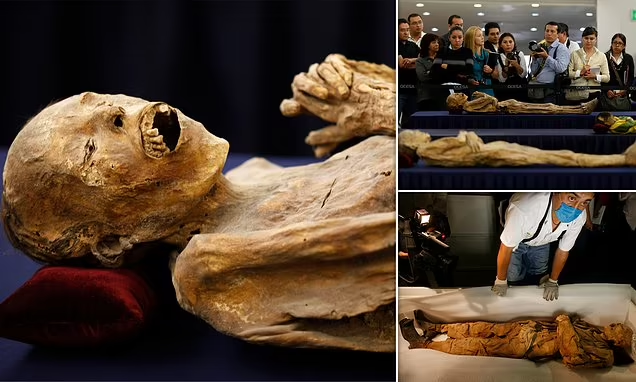
The ancient dead may not be entirely silent. Researchers are warning that mummified human and animal remains being sold online could carry fungi and other microbes capable of posing health risks to people who handle, package or transport them.
A study by researchers at the University of Staffordshire examined 128 online posts and auction listings offering mummified remains. The researchers found that only a small number of listings provided instructions for safe handling, raising concerns about exposure to potentially hazardous biological material.
Mummified remains can still harbor microbes
Preservation does not necessarily mean that a mummy is biologically inert.
Researchers warned that microorganisms can colonize preserved remains even when fungal growth or deterioration is not visible to the naked eye. Poor storage conditions can accelerate biodeterioration and encourage fungal growth, potentially allowing spores to become airborne.
That creates a possible exposure route for people handling the remains, as well as postal workers, customs officials and others involved in transporting them.
The study also highlights another concern: chemicals used during embalming. Depending on the preservation method, substances such as arsenic, mercury and lead may be present and could create additional hazards.
Online sales raise biosecurity concerns
The researchers reviewed listings involving different types of preserved human and animal remains, including hands, feet and heads at varying stages of preservation.
Some photographs showed people handling human remains without protective gloves. The researchers also found that listings frequently failed to provide clear safety information.
The problem extends beyond the buyer and seller. When remains are shipped internationally without appropriate packaging or handling procedures, people who never knowingly agreed to come into contact with them could potentially be exposed.
Lead author Kirsty Squires, a professor of human bioarchaeology at the University of Staffordshire, said the growth of social media and online marketplaces has increased international demand for unusual cultural artifacts, including mummified remains.
Could mummy fungi really be deadly?
Historical accounts have helped fuel the idea of a deadly “mummy curse,” but the scientific picture is considerably less dramatic.
Aspergillus fungi are capable of causing serious infections, particularly in people with weakened immune systems. Fungal spores can also become airborne under certain conditions.
The researchers point to historical cases involving tomb excavations. Aspergillus has been suggested as a possible cause of illness and death among scientists who opened the tomb of King Casimir IV Jagiellon in Kraków during the 1970s.
Lord Carnarvon, who helped fund the excavation of Tutankhamun’s tomb, also died shortly after the tomb was opened in 1923. Aspergillosis has been proposed as one possible explanation, although claims linking his death directly to a “mummy curse” remain unproven.
In other words, the scientific concern is about microbial exposure, not an ancient supernatural curse making a comeback.
The biggest danger may be invisible
One of the study’s key warnings is that a preserved specimen does not need to look moldy or visibly decayed to carry microorganisms.
Microbial colonization can occur beneath or within preserved material, meaning visual inspection alone may not reliably establish whether a specimen is safe to handle.
The researchers said inadequate storage can further increase the risk by creating conditions favorable to microbial growth.
Scientists want stronger rules for mummy sales
The researchers argue that existing rules governing the transportation and sale of human and animal remains may not adequately address the risks associated with online marketplaces.
Squires said mummified remains are being shipped across borders without sufficient consideration of health and safety consequences.
The study therefore calls for clearer handling and shipping guidance, along with stronger awareness among sellers and buyers.
The concern is ultimately less about ancient history coming back to life and more about modern commerce giving ancient biological material a new route around the world.