
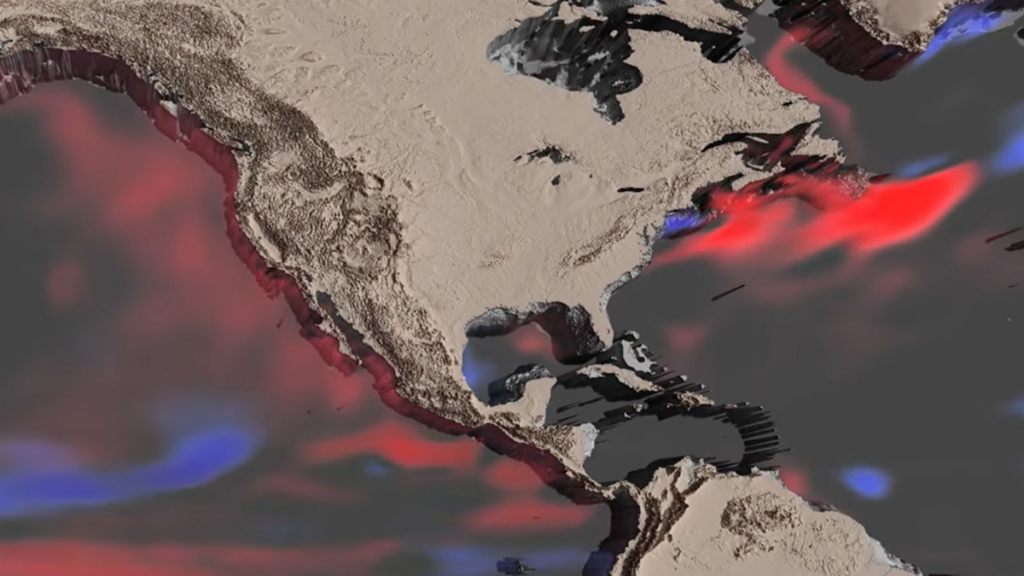
NASA has confirmed that a powerful El Niño event is underway, with satellite observations revealing unusually high sea levels across parts of the equatorial Pacific Ocean—a key indicator of warming ocean temperatures.
The confirmation comes after the U.S. National Oceanic and Atmospheric Administration (NOAA) officially declared El Niño on June 11. New data from the Sentinel-6 Michael Freilich satellite now provides additional evidence that the climate phenomenon is strengthening, raising concerns about extreme weather, record-breaking heat, droughts, and disruptions to rainfall patterns across the globe.
Scientists are paying close attention because some of the ocean conditions resemble those observed before the historic 1997-98 El Niño, one of the strongest on record.
What Has NASA Discovered?
NASA says recent satellite measurements show elevated sea surface heights across large sections of the equatorial Pacific.
The finding is significant because warmer water expands, causing sea levels to rise. As a result, sea surface height has become a reliable indicator of ocean warming and the development of El Niño conditions.
NASA’s Jet Propulsion Laboratory processed data collected by the Sentinel-6 Michael Freilich satellite to create a detailed map of ocean surface heights.
What the Satellite Map Shows
The June 8 map highlights:
- Red areas: Higher-than-average sea levels
- White areas: Near-normal sea levels
- Blue areas: Lower-than-average sea levels
The extensive red zones stretching across the Pacific indicate large amounts of unusually warm water near the ocean surface—a hallmark of El Niño.
NASA described the observations as a “complementary sign” confirming the climate event already identified by NOAA.
What Is El Niño?
El Niño is a naturally occurring climate pattern that develops when sea surface temperatures in the central and eastern Pacific Ocean become warmer than average.
Although it begins in the Pacific, its impacts extend worldwide by altering atmospheric circulation and weather systems.
How El Niño Changes Global Weather
A strong El Niño can influence:
- Rainfall patterns
- Tropical cyclone activity
- Drought conditions
- Heat waves
- Agricultural productivity
- Water availability
Its effects can be felt thousands of miles from where it originates.
A useful infographic here could illustrate how warm Pacific waters influence weather patterns across Asia, Australia, North America, and Europe.
Why Scientists Are Concerned About a ‘Super El Niño’
Not every El Niño is equally powerful.
Meteorologists use the term “Super El Niño” to describe exceptionally strong events capable of producing widespread climate disruptions.
One reason for concern is the presence of powerful Kelvin waves detected earlier by the same satellite.
What Are Kelvin Waves?
Kelvin waves are massive pools of warm water that travel eastward across the Pacific Ocean.
These waves:
- Can span hundreds of miles
- Carry enormous amounts of heat
- Push warm surface waters toward the eastern Pacific
- Often signal the strengthening of El Niño conditions
Scientists consider them one of the earliest indicators that a major El Niño event may be developing.
Echoes of 1997
Dr. Severine Fournier, deputy project scientist for the Sentinel-6 Michael Freilich mission, noted that conditions observed in the western Pacific on June 8 resembled those seen in 1997.
The 1997-98 El Niño triggered:
- Severe flooding in some regions
- Intense droughts in others
- Billions of dollars in economic losses
- Significant agricultural disruptions worldwide
While scientists caution against making direct comparisons too early, the similarities have drawn considerable attention within the climate community.
What Could Super El Niño Mean for India?
India is among the countries most vulnerable to changes in Pacific Ocean temperatures despite being thousands of miles away from the source of the phenomenon.
The country’s economy, agriculture sector, and water resources remain heavily dependent on the southwest monsoon.
Impact on the Monsoon
Historically, many El Niño years have been associated with:
- Below-normal monsoon rainfall
- Delayed monsoon progression
- Uneven distribution of rainfall
- Increased risk of drought in some regions
This year’s monsoon has already experienced interruptions after its initial onset, raising concerns about how weather patterns may evolve in the coming months.
Impact on Agriculture
A weaker or erratic monsoon can affect:
- Rice production
- Pulses and oilseeds
- Sugarcane cultivation
- Reservoir levels
- Rural incomes
Given the importance of agriculture to millions of livelihoods, weather developments linked to El Niño will be closely monitored throughout the season.
Heat Wave Risks
India has already experienced intense summer temperatures, with some regions crossing 45°C (113°F).
A stronger El Niño typically contributes to warmer global temperatures, increasing the likelihood of prolonged heat waves and elevated energy demand.
Global Impacts: Who Could Be Hit the Hardest?
The consequences of a strong El Niño vary by region.
Australia and Indonesia
Both countries often face:
- Reduced rainfall
- Severe drought conditions
- Higher wildfire risks
- Water shortages
United States
Parts of the southern United States may experience:
- Above-average rainfall
- Increased flooding risks
- Stronger winter storm systems
The Southwest, in particular, can see dramatic shifts in precipitation patterns.
Europe and the United Kingdom
While El Niño does not directly control European weather, it can influence broader atmospheric conditions.
The UK is already facing extreme heat concerns, with forecasts suggesting temperatures could approach 40°C (104°F) in some locations.
Meteorologists have linked the immediate heat threat to a persistent high-pressure system, often referred to as a “heat dome,” that is trapping hot air over parts of Europe.
Global Temperatures
The World Meteorological Organization has warned that above-normal temperatures are likely across much of the world.
Combined with ongoing long-term climate warming trends, El Niño could push global temperatures to record or near-record levels.
Why Satellite Monitoring Matters
Modern satellites have transformed scientists’ ability to track climate events in real time.
The Sentinel-6 Michael Freilich mission provides highly accurate measurements of:
- Sea surface height
- Ocean circulation
- Climate variability
- Long-term sea level rise
These observations help scientists anticipate developing weather patterns months before their full impacts are felt on land.
As El Niño strengthens, satellite data will play a critical role in forecasting droughts, floods, heat waves, and other climate-related risks.
What Happens Next?
Climate agencies worldwide will continue monitoring Pacific Ocean temperatures throughout the year.
The strength and duration of the current El Niño remain uncertain, but early indicators suggest it could become one of the most significant climate events in recent years.
For governments, businesses, farmers, and emergency planners, the coming months will be crucial in preparing for potential weather extremes.
Whether through drought in Australia, intense rainfall in parts of the Americas, or monsoon disruptions in India, the effects of El Niño are rarely confined to one region.
As ocean temperatures continue to rise, the world is entering a period that climate experts will be watching very closely.
TL;DR
- NASA has confirmed that El Niño is underway using satellite observations of elevated sea levels in the Pacific.
- Warm ocean waters expand, causing sea surface heights to rise—one of the strongest indicators of El Niño.
- Scientists have detected Kelvin waves, a key precursor to major El Niño events.
- Conditions bear similarities to those observed before the powerful 1997-98 El Niño.
- India could face monsoon disruptions, agricultural challenges, and increased heat wave risks.
- Australia and Indonesia may experience drought, while parts of the U.S. could see heavier rainfall.
- Global temperatures are expected to remain above average as the climate event strengthens.