
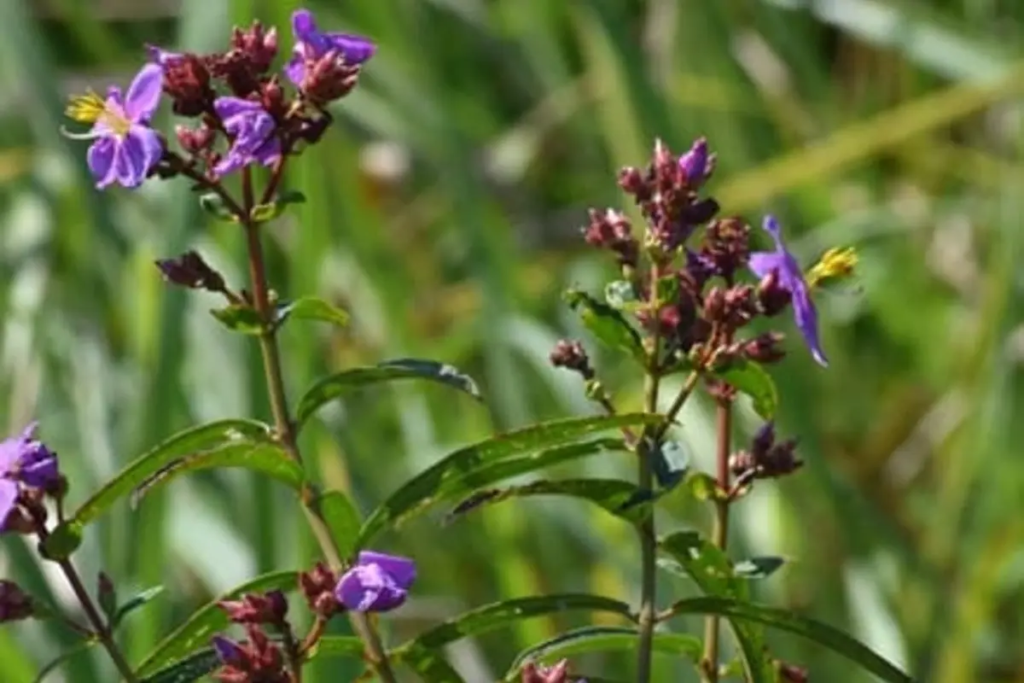
A small herb growing in a shaded patch along Satargaon Road in Assam has turned into an important botanical discovery. Scientists have formally identified it as a species new to science, adding another plant to India’s remarkable—and still incompletely documented—biodiversity.
The newly described species, Ophiorrhiza assamensis, was discovered in Kamrup Metropolitan district by botanists Birina Bhuyan, an assistant professor in the Department of Botany at Girijananda Chowdhury University’s Azara campus, and Guwahati-based botanist Selim Mehmud.
Their findings have been published in the international taxonomy journal Phytotaxa in a paper titled “Ophiorrhiza assamensis (Rubiaceae), a new species from Assam, India.”
The discovery is significant not only because the plant had never been formally catalogued, but also because it belongs to a genus known for producing camptothecin, a natural compound that has played an important role in the development of several cancer medicines.
What is Ophiorrhiza assamensis?
Ophiorrhiza assamensis is a perennial herb found in a moist, shaded habitat in Assam.
Researchers describe it as having:
- Large, ribbed leaves
- Small white flowers arranged in clusters
- A perennial growth habit
- A preference for damp, shaded surroundings
The plant belongs to the Ophiorrhiza genus within the Rubiaceae family—the same large plant family that includes coffee.
Its discovery illustrates why apparently ordinary vegetation can be scientifically important. A plant can grow unnoticed for years in a relatively small habitat while remaining absent from the formal scientific record.
In this case, careful examination showed that the Assam plant did not match any previously described species.
How did scientists determine it was a new species?
Identifying a new plant species involves considerably more than finding an unfamiliar-looking plant.
Botanists compare the specimen’s physical characteristics with existing descriptions and related species. They examine features such as leaves, stems, flowers, fruits and other structures, looking for consistent differences that distinguish the plant from its closest relatives.
Ophiorrhiza assamensis closely resembles O. mussaendiformis and O. nepalensis, making careful taxonomic comparison particularly important.
The researchers provided a formal taxonomic description of the new species, along with illustrations and a dichotomous identification key covering the known Ophiorrhiza species in Assam.
A dichotomous key essentially gives researchers a sequence of either-or choices based on observable characteristics. Following those choices allows a botanist to narrow down which species a particular specimen belongs to.
Why is Assam important for discovering new plant species?
Assam and the wider Northeast Indian region are recognized for their exceptionally rich biodiversity and varied habitats.
The Ophiorrhiza genus is a good example. Several species in the group have been described from Northeast India in recent years, demonstrating that botanical exploration can still reveal previously undocumented diversity.
Bhuyan’s earlier 2024 research on the taxonomy and distribution of Ophiorrhiza in Assam provided additional groundwork for understanding the genus across the state.
That research is important because discovering a new species does not happen in isolation. Scientists need to understand what species already exist, where they occur and how closely they are related before they can confidently establish that another plant represents something previously unknown.
The new species therefore adds another piece to Assam’s botanical record.
Why does this plant matter beyond botany?
The discovery has an unusual connection to medicine.
Species belonging to the Ophiorrhiza genus are known to produce camptothecin, a naturally occurring compound that has attracted significant pharmaceutical interest.
Camptothecin itself is not simply used as a conventional cancer drug. Instead, its chemistry has been used to develop important anticancer medicines, including derivatives such as irinotecan and topotecan.
These drugs are used in cancer treatment, including for certain colorectal cancers.
That does not mean Ophiorrhiza assamensis is a new cancer cure—or that the newly discovered plant necessarily contains useful quantities of camptothecin.
Those questions require separate chemical and pharmacological research.
But its membership in a genus associated with a medically important compound gives scientists a reason to investigate the species further.
The plant has one known home
Perhaps the most concerning aspect of the discovery is how restricted the species appears to be.
Researchers currently know Ophiorrhiza assamensis from a single localized population near Satargaon Road.
If future surveys do not find additional populations, that could mean the species has an extremely small known distribution.
For a newly described plant, this creates an immediate conservation concern.
A species restricted to one small habitat can be particularly vulnerable to changes that might appear relatively minor on a regional scale.
Potential threats could include:
- Road expansion
- Changes in land use
- Habitat clearance
- Deforestation
- Changes to local moisture conditions
- Other disturbances to its shaded habitat
If the only known population disappears, researchers could lose not only a plant species but also the opportunity to understand its biology, chemistry and ecological role.
Why is the species classified as Data Deficient?
The researchers have recommended that Ophiorrhiza assamensis be provisionally treated as Data Deficient under IUCN guidelines.
That classification should not be confused with saying the species is safe.
“Data Deficient” means there is insufficient information to make a reliable assessment of the species’ risk of extinction.
For a newly described plant known from only one population, scientists may not yet know enough about its:
- Total population size
- Geographic distribution
- Population trends
- Reproductive biology
- Habitat requirements
- Potential threats
- Existence of undiscovered populations
More field surveys could change the picture.
Researchers may discover additional populations elsewhere in Assam, which could show that the plant has a wider distribution than currently known. Alternatively, further surveys could confirm that its range is genuinely tiny, potentially supporting a more specific threatened category.
What happens after a new species is discovered?
Formal publication is only the beginning.
Once a species has been described, researchers can begin building a much clearer picture of its biology and conservation needs.
For Ophiorrhiza assamensis, important next steps could include surveying nearby habitats, documenting population numbers and studying the plant’s ecological requirements.
Scientists could also investigate its chemistry, including whether it produces camptothecin or other compounds of biological interest.
However, medicinal potential should be approached cautiously.
The fact that a plant belongs to a genus containing a valuable compound does not automatically mean the new species will produce that compound in useful amounts, nor that it will lead to a new medicine.
Any pharmaceutical application would require extensive laboratory research, toxicology testing, clinical development and regulatory approval.
A discovery hiding in plain sight
The story of Ophiorrhiza assamensis is a reminder that discovering new species does not always require travelling to unexplored wilderness.
This plant was found in a relatively localized patch of habitat along a road in a region that has already been extensively studied by botanists.
Its discovery also highlights a larger challenge facing biodiversity research: we cannot protect species we do not know exist.
A plant may have a tiny population, a highly specialized habitat or potentially useful biological properties, yet remain invisible to conservation planning until someone documents it scientifically.
For now, Ophiorrhiza assamensis has only one confirmed address on the scientific map. Whether that represents its entire natural range or simply the first place researchers have found it remains an open question.
The next stage will be finding out how much more there is to learn about Assam’s newest botanical species.
What we know about Ophiorrhiza assamensis
| Feature | Details |
|---|---|
| Scientific name | Ophiorrhiza assamensis |
| Type | Perennial herb |
| Family | Rubiaceae |
| Genus | Ophiorrhiza |
| Known location | Satargaon Road area, Kamrup Metropolitan, Assam |
| Habitat | Moist, shaded environment |
| Closest reported relatives | O. mussaendiformis and O. nepalensis |
| Current known population | One localized population |
| Provisional conservation assessment | Data Deficient |
| Potential scientific interest | Members of the genus are known for producing camptothecin |
TL;DR
Scientists have formally described Ophiorrhiza assamensis, a new plant species discovered in a shaded habitat near Satargaon Road in Assam’s Kamrup Metropolitan district.
The perennial herb belongs to the Rubiaceae family and resembles two previously known Ophiorrhiza species, but detailed taxonomic analysis established it as distinct.
The discovery is particularly interesting because some Ophiorrhiza species produce camptothecin, a compound that has been used in developing important cancer medicines. However, there is currently no evidence that O. assamensis itself has medicinal applications.
Only one localized population is currently known, prompting the researchers to recommend a provisional Data Deficient assessment. Further fieldwork will be needed to determine the plant’s full distribution, population size and conservation status.