
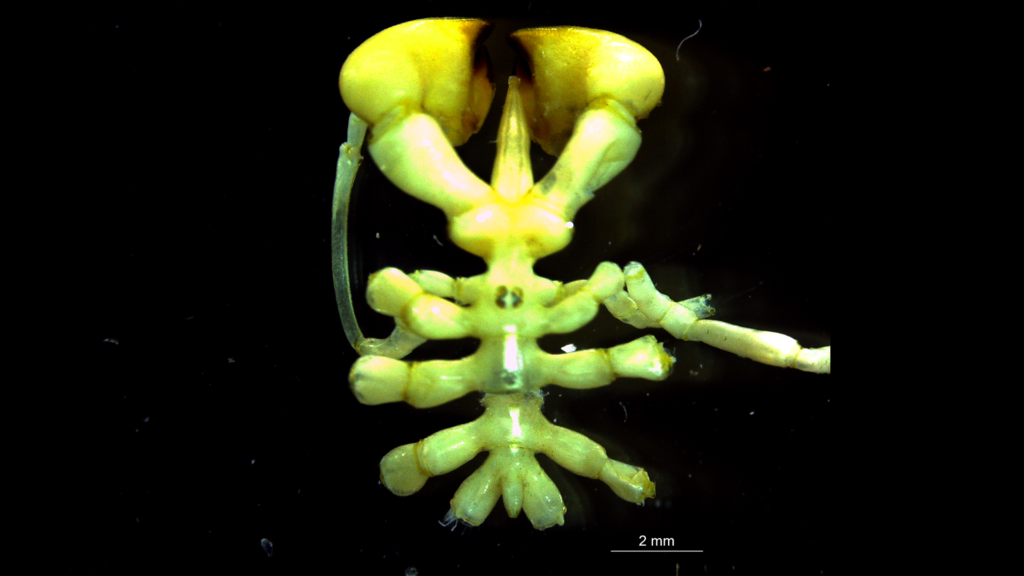

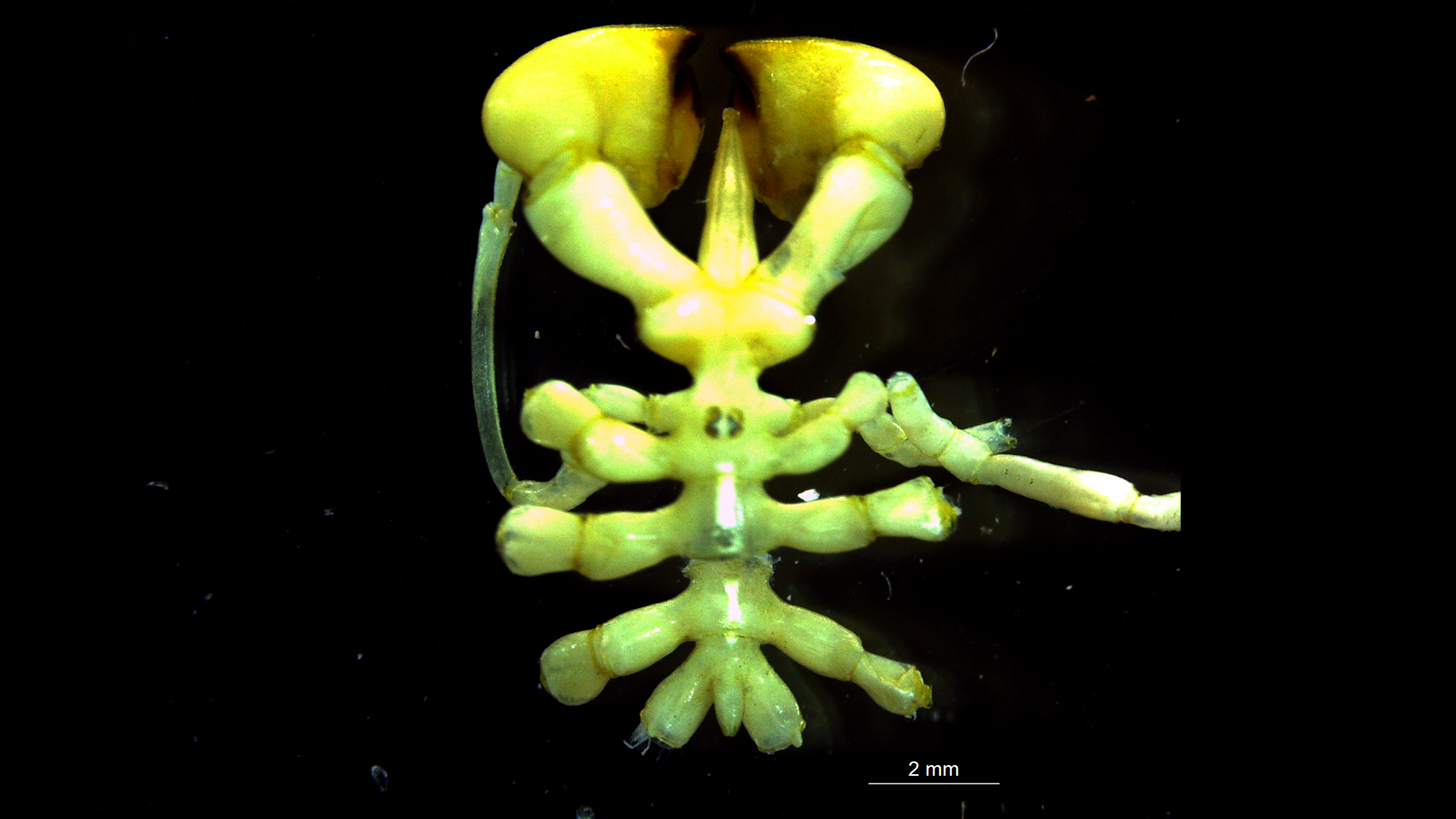
A new species of sea spider with boxing glove-like claws has been discovered by scientists. The spider, which has a strange yellow body color, and four near-black eyes, and large bulbous claws, was discovered off the coast of Antarctica. Scientists have discovered over 1,000 different species of sea spiders around the world.
Austropallene halanychi, a distant relative of horseshoe crabs and arachnids, is the name of this unusual and never-before-seen sea spider. The sea spider also has an unusual eating method in which it consumes food with a straw-like proboscis rather than its mouth. Another peculiar feature discovered in the species was its mode of respiration – it breathes through its legs.
Strange sea spider species discovered recently
Austropallene halanychi was discovered on the ocean floor of the Ross Sea, about 1,870 feet (570 meters) below the surface.
The new species has large claws that look like “boxing gloves,” which it likely uses to grab hold of soft foods like anemones and worms, according to study co-author Andrew Mahon, a biologist at Central Michigan University, who told Live Science. The findings were published in the journal ZooKeys on November 28.
The body of A. halanychi is about 0.4 inch (1 centimeter) long, but its legs are nearly 1.2 inch (3 cm) long. This gives the species the spindly appearance that many sea spiders have.
What’s fascinating about this newly discovered sea spider species is that it’s just the tip of the iceberg in terms of undiscovered wildlife at the bottom of the Southern Ocean.
“The benthic environment in Antarctica is an area of science that we need to keep exploring,” Mahon said. “There’s so much down there that every time we go, we find new things.”
The Nathaniel B. Palmer, a US research vessel, discovered A. halanychi in 2013. Mahon and his colleague Jessica Zehnpfennig recently took it out of storage and used body shape and genetics to identify it as a new species to science.