
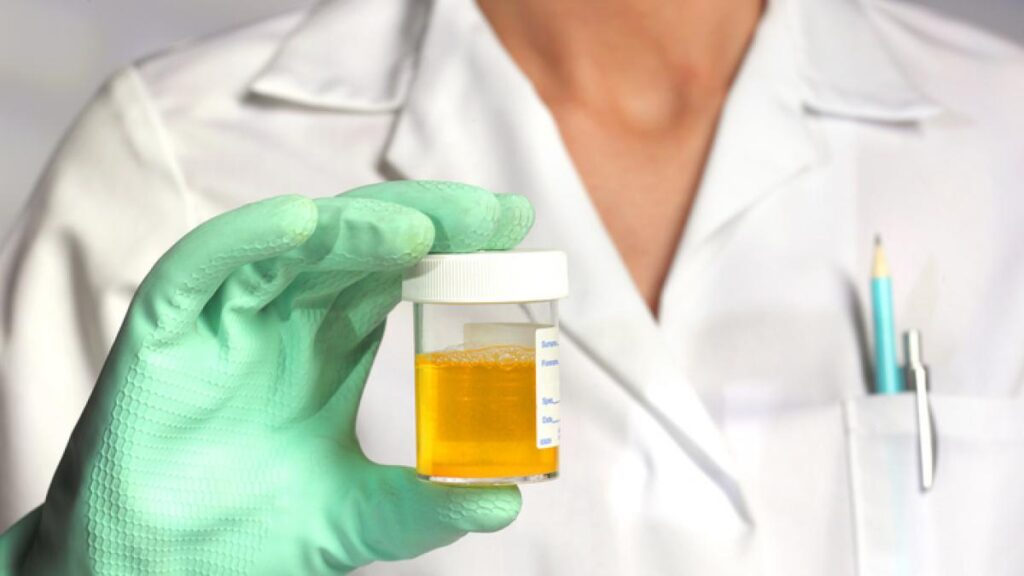


Scientists have some insights to share with individuals who have questioned what gives urine its distinctive hue. For more than 150 years, it has been a mystery why human urine turns yellow. However, a new study published Wednesday in the journal Nature Microbiology has cracked the yellow code. According to researchers from the University of Maryland and the National Institute of Health, bilirubin (BilR) is responsible for the colour of liquid gold. Urine is a mixture of water, electrolytes, and waste filtered out by the kidney.
Urobilinogen spontaneously degrades into a molecule called urobilin, which is responsible for the yellow colour
In 1868, scientists recognized urobilin as the origin of yellow coloration in urine, but the exact explanation remained unknown until recently. “Remarkably, an everyday biological phenomenon went unexplained for so long, and our team is excited to be able to explain it,” Brantley Hall, an assistant professor in the Department of Cell Biology and Molecular Genetics at the University of Maryland, told Maryland Today. At the end of their six-month life cycle, red blood cells disintegrate into the vivid orange pigment bilirubin. Typically, the pigment begins to seep into the intestines, where it can be expelled or partially absorbed.
Upon reaching the gut, the study found that microorganisms in the intestines can transform bilirubin into various other molecules. “Gut microbes encode the enzyme bilirubin reductase that converts bilirubin into a colourless byproduct called urobilinogen,” Hall explained. “Urobilinogen then spontaneously degrades into a molecule called urobilin, which is responsible for the yellow colour we are all familiar with.” The discovery of what makes urine—which plays a crucial role for doctors in helping diagnose an extensive range of illnesses and disorders in the human body—the colour yellow is being hailed as a “remarkable” breakthrough that has solved a critical piece of the “puzzle” about understanding more about the human body.
“We’re standing on the shoulders of giants. If some of these older scientists had the technology we have today, they probably would’ve found it,” Hall said. The lead author of the study, Hall, explained that the bathroom business discovery could pave the way for other medical breakthroughs to help people combat conditions such as inflammatory bowel disease and jaundice, which causes a yellowish tinge to a patient’s skin, mucous membranes, and the whites of their eyes. “One of the major findings of our studies is that this gene was often absent in newborn babies,” she said. The objective is to move forward with human studies, specifically for premature infants with high jaundice rates.
“Now that we’ve identified this enzyme, we can start investigating how the bacteria in our gut impact circulating bilirubin levels and related health conditions like jaundice,” says study co-author and National Institutes of Health investigator Xiaofang Jiang. “This discovery lays the foundation for understanding the gut-liver axis.” In addition to jaundice and inflammatory bowel disease, the gut microbiome has been linked to various diseases and conditions, from allergies to arthritis. The scientific breakthrough brings researchers one step closer to understanding the role of gut microbiomes in human health.