
Quick Summary
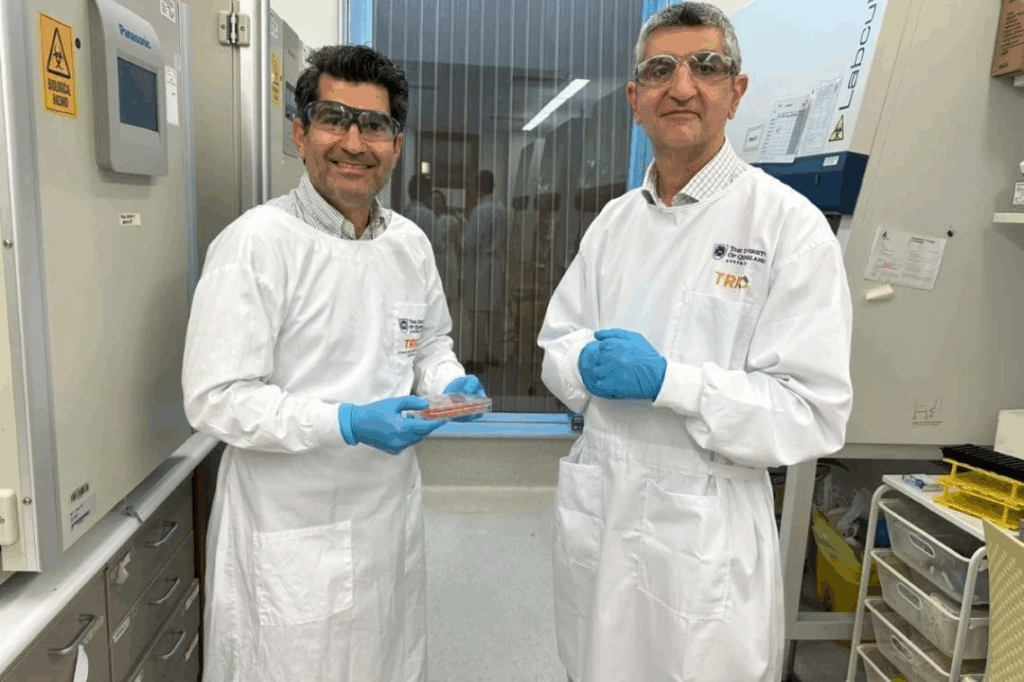
Australian researchers at the University of Queensland have grown the world’s first lab-made human skin with a working blood supply. Built from reprogrammed stem cells, the skin mimics real human tissue more closely than any previous model. The breakthrough could revolutionize treatment for burns and chronic skin diseases, while also providing a better testing platform for new drugs.
What did researchers achieve?
For the first time, scientists in Australia have successfully grown fully functioning human skin in the lab—complete with blood vessels, nerves, hair follicles, pigmentation, and immune cells.
The breakthrough, led by researchers at the University of Queensland’s Frazer Institute, could transform how doctors treat burns, genetic skin disorders, and chronic conditions like psoriasis and atopic dermatitis. Unlike previous models, this lab-grown skin has its own blood supply, making it far more realistic and viable for medical use.
“This is the most life-like skin model that’s been developed anywhere in the world,” said Dr. Abbas Shafiee, a tissue engineering expert who co-led the study. “It will allow us to study diseases and test treatments more accurately.”
How does lab-grown human skin work?
The team used a regenerative medicine approach that started with ordinary human skin cells.
From skin cells to stem cells
- Researchers reprogrammed skin cells into stem cells—cells that can turn into any other cell type.
- These stem cells were nurtured into skin organoids, miniature versions of skin tissue grown in petri dishes.
Building a blood supply
One of the biggest limitations in skin research has been the lack of blood circulation. To solve this, the Queensland team engineered tiny blood vessels using the same stem cells. Once added, these vessels connected within the growing skin, allowing it to develop layers similar to natural human skin.
The result: a three-dimensional tissue that grows like normal skin, complete with appendages such as hair follicles and pigmentation patterns.
Why does this matter for patients?
Skin is the body’s largest organ, and yet medical science has struggled to replicate it. Patients with severe burns or chronic conditions often face limited treatment options. Artificial grafts exist, but they lack the complexity of real skin.
This new model changes that equation. It could help in:
- Skin grafts for burns – Lab-grown skin could provide graft material that integrates better with the body.
- Researching skin diseases – Conditions like eczema, scleroderma, and psoriasis could be studied in more detail without relying solely on animal models.
- Testing drugs safely – Pharmaceutical companies could test new topical treatments on lab-grown skin before moving to clinical trials.
“Skin disorders can be difficult to treat, and it’s a real breakthrough to be able to provide hope for people living with chronic conditions,” said Professor Kiarash Khosrotehrani, a co-author of the study.
How does this compare to past breakthroughs?
Previous lab-grown skin models existed, but they were often flat sheets without vascular networks. This limited their use for grafting and long-term studies.
The Queensland model stands out because:
- It contains multiple tissue layers.
- It integrates blood vessels for better survival and function.
- It includes appendages such as follicles and pigmentation, which older models lacked.
In regenerative medicine, this represents a leap similar to when scientists first grew organoids of the brain, gut, or kidneys. Each milestone brings research closer to developing transplant-ready organs.
What’s next for this research?
The project, which took six years to complete, is still in the experimental stage. Researchers will need to test how the skin behaves when grafted onto living organisms. Clinical use is likely years away, but the roadmap is clear:
- Refining the model – Ensuring consistency in blood vessel development.
- Safety testing – Proving that the tissue does not trigger immune rejection.
- Pilot trials – Applying lab-grown skin to small-scale burn grafts or disease testing.
If successful, the technology could eventually scale up to industrial biomanufacturing of human skin for hospitals worldwide.
Visuals that could add value
- Infographic idea: A step-by-step diagram showing the process from skin cell → stem cell → organoid → vascularized skin.
- Comparison chart: Lab-grown skin vs. traditional artificial grafts (highlighting blood vessels, layers, and follicles).
- Patient impact flow: Timeline from lab development to potential clinical applications.