
Scientists have identified the first true sugar ever detected in interstellar space, a discovery that could reshape our understanding of how the building blocks of life reached Earth billions of years ago. The molecule, called erythrulose, was found in a giant molecular cloud near the center of the Milky Way, suggesting that complex organic compounds capable of supporting life may be more common across the universe than previously believed.
The finding lends fresh support to the idea that some of life’s essential ingredients were delivered to the young Earth aboard asteroids, meteorites, and interstellar dust during the solar system’s violent infancy. While the discovery does not mean scientists have found evidence of extraterrestrial life, it strengthens the hypothesis that the chemistry necessary for life can develop naturally in deep space.
TL;DR
- Scientists have detected erythrulose, the first true sugar identified in interstellar space.
- The molecule was found in the molecular cloud G+0.693 near the center of the Milky Way.
- Researchers estimate that between 0.5 and 50 million metric tons of similar sugar may have reached Earth during the Late Heavy Bombardment, roughly 4 billion years ago.
- The discovery supports the idea that essential ingredients for life may have formed in space before being delivered to young planets.
- Researchers now hope to detect even more biologically significant sugars, including ribose, a key component of RNA.
What Did Scientists Discover?
An international team of researchers has detected erythrulose, a four-carbon sugar, in a dense cloud of gas and dust near the center of the Milky Way.
The discovery is significant because erythrulose is considered the first true sugar identified in interstellar space. Earlier studies had detected simpler sugar-related molecules, known as sugar precursors, but not an authentic sugar containing three or more carbon atoms.
The research was led by Izaskun Jiménez-Serra, a cosmochemist at the Spanish Astrobiology Center, who says the finding adds to growing evidence that space contains many of the molecular ingredients needed for life.
According to the research team, interstellar erythrulose may have contributed to the inventory of organic molecules available on the early Earth, potentially supporting the first metabolic and genetic processes.
Why Is This Discovery Important?
Sugars are fundamental to life as we know it.
They serve multiple biological functions, including:
- Providing energy to living cells.
- Acting as building blocks for larger biological molecules.
- Forming part of the structural backbone of DNA and RNA.
- Supporting metabolic reactions essential for life.
Scientists have long suspected that some of these molecules may have formed in space before Earth itself became habitable.
Finding a true sugar in an interstellar cloud strengthens that possibility.
It suggests that the chemistry required to produce life’s essential compounds is not unique to Earth and may occur naturally throughout the galaxy.
Where Was the Sugar Found?
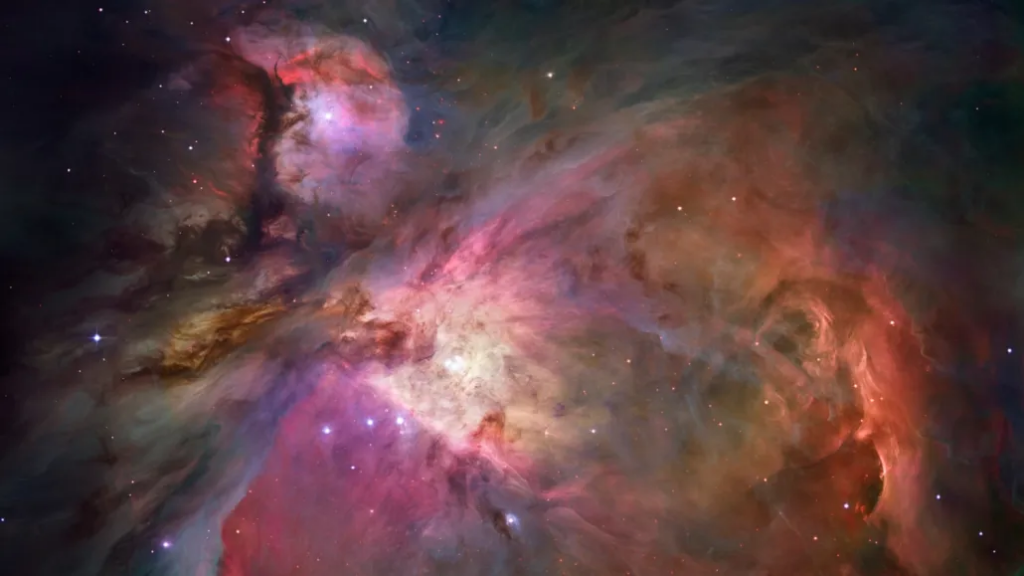
The molecule was detected inside G+0.693, a massive molecular cloud located near the center of the Milky Way.
This region is rich in:
- Dense gas
- Interstellar dust
- Complex organic molecules
- Conditions favourable for chemical reactions driven by radiation
Molecular clouds like G+0.693 are often described as chemical laboratories in space because they host a wide variety of carbon-based compounds.
Researchers used two radio telescopes in Spain to analyze the cloud’s chemical composition.
Initially, they expected to find relatively simple three-carbon sugars.
Instead, they detected the more complex four-carbon sugar erythrulose.
Even more surprising, erythrulose appeared to be eight to seventeen times more abundant than the simpler sugars scientists had anticipated.
How Could Sugar Have Reached Earth?
The discovery connects directly to one of the most dramatic periods in our planet’s history.
The Late Heavy Bombardment
Roughly four billion years ago, the early solar system experienced a prolonged era of intense asteroid and meteorite impacts known as the Late Heavy Bombardment.
For hundreds of millions of years, Earth and the other planets were repeatedly struck by rocky debris left over from the formation of the solar system.
Scientists believe these impacts delivered enormous quantities of water and organic compounds to Earth.
Based on the abundance of erythrulose measured inside G+0.693, researchers estimate that between 0.5 million and 50 million metric tons of this sugar could have been delivered to Earth’s surface during this period.
Although these estimates involve significant uncertainty, they suggest that complex sugars may have been relatively abundant on the young planet.
How Does Sugar Form in Deep Space?
One of the study’s most intriguing findings concerns how such complex molecules are created.
Rather than forming in empty space, erythrulose appears to develop on the icy surfaces of microscopic dust grains drifting through molecular clouds.
Researchers believe the process works like this:
- Tiny dust particles accumulate simple molecules such as glycolaldehyde and ethylene glycol.
- These particles become coated with frozen layers of ice.
- Ultraviolet radiation and cosmic rays trigger chemical reactions on the ice.
- The reactions combine smaller carbon-containing molecules into larger compounds, including erythrulose.
- Later, shock waves or warming events release these molecules back into interstellar space.
The findings demonstrate that surprisingly sophisticated chemistry can occur even under the extremely cold conditions of deep space.
Could This Mean Life Exists Elsewhere?
The discovery does not provide evidence that life exists beyond Earth.
However, it does strengthen one of astrobiology’s central ideas: that the ingredients needed for life may be widespread throughout the universe.
If molecular clouds routinely produce complex sugars, then newly forming planetary systems across the galaxy could receive similar deliveries of organic material.
This would increase the likelihood that prebiotic chemistry—the chemical processes that precede life—could occur on other worlds under favorable conditions.
Scientists emphasise that organic molecules alone do not create living organisms.
Life also requires suitable environmental conditions, including:
- Liquid water
- Stable temperatures
- Energy sources
- Long periods of chemical evolution
Still, discovering one more key ingredient in space narrows the gap between simple chemistry and the emergence of life.
The Search for Ribose Is Now Even More Exciting
Perhaps the most important implication of the discovery is what scientists may find next.
Co-author Carlos Briones says the detection of erythrulose increases the possibility of identifying even more biologically important sugars in space.
One of the primary targets is ribose, the five-carbon sugar that forms part of RNA.
RNA is considered one of the earliest molecules involved in life’s evolution because it can both store genetic information and catalyse chemical reactions.
Finding ribose in interstellar space would represent another major milestone in understanding how life’s building blocks may have formed long before planets themselves existed.
What This Means for the Origins of Life
The discovery adds another piece to a puzzle scientists have been assembling for decades.
Previous observations had already revealed amino acids, alcohols, aldehydes, and other organic molecules in space.
Now, the detection of a genuine sugar suggests that molecular clouds are capable of producing increasingly complex compounds before planets even form.
Rather than Earth creating every ingredient for life independently, our planet may have inherited part of its chemical toolkit from the galaxy itself.
That possibility has profound implications not only for understanding our own origins but also for assessing the likelihood of life elsewhere in the cosmos.
The Bottom Line
The identification of erythrulose at the center of the Milky Way marks an important advance in astrobiology and astrochemistry. While it does not prove that life originated in space—or that extraterrestrial life exists—it provides compelling evidence that complex organic molecules can form naturally in interstellar environments.
If similar sugars were delivered to Earth during the Late Heavy Bombardment, they may have enriched the young planet with some of the molecular ingredients necessary for life’s earliest chemical processes.
As astronomers continue searching for even more biologically significant molecules, including ribose, discoveries like this are helping scientists trace the remarkable journey from cosmic dust to living cells.