
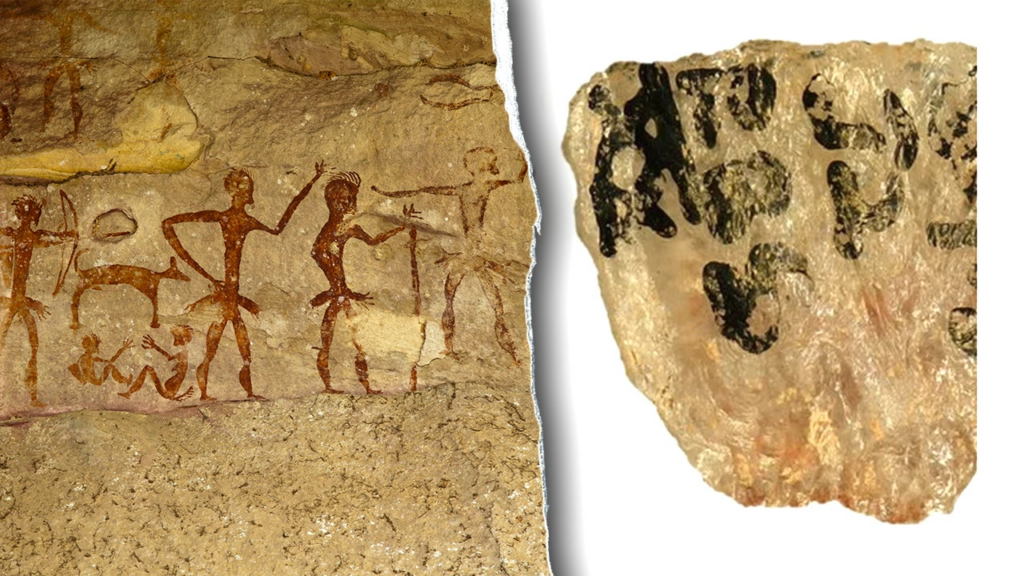
Archaeologists have identified the world’s oldest-known poisoned arrowheads, pushing back the timeline of complex human hunting strategies to nearly 60,000 years ago.
The discovery comes from Umhlatuzana Rock Shelter in KwaZulu-Natal, South Africa, where researchers detected traces of plant-based toxins on tiny quartz arrowheads. Published recently in the peer-reviewed journal Science Advances, the findings offer the clearest evidence yet that Stone Age humans deliberately used poison to improve their hunting success.
This isn’t just a story about ancient weapons. It’s a window into early chemistry, planning, and problem-solving—long before written language or formal science existed.
What are the world’s oldest poisoned arrowheads?
The arrowheads were excavated from layers dated to around 60,000 years ago, during the Middle Stone Age. While archaeologists have long suspected early humans used poison, direct chemical proof has been elusive—until now.
What researchers found on the arrowheads
Using advanced chemical analysis, the research team identified residues from gifbol, a highly toxic South African plant also known as the poisonous onion. Specifically, they detected:
- Buphanidrine
- Epibuphanisine
Both compounds are potent alkaloids found in the bulb of the gifbol plant and can disrupt the nervous system. Their presence on the quartz points strongly suggests intentional application rather than environmental contamination.
How did scientists confirm the arrow poison?
Identifying ancient poison is far more complicated than spotting a sharp stone. Organic compounds degrade over time, especially across tens of thousands of years.
A cross-continental research effort
The study was led by researchers from Stockholm University, Linnaeus University, and the University of Johannesburg, combining archaeology with analytical chemistry.
Stockholm University professor Sven Isaksson described the work as the result of “a long and close collaboration between researchers in South Africa and Sweden,” emphasizing the technical difficulty of isolating ancient toxins.
The team used:
- High-resolution chemical analysis
- Comparative studies with modern gifbol samples
- Contextual archaeological evidence from the site
Together, these methods ruled out accidental exposure and confirmed deliberate poison use.
Why poison mattered to Stone Age hunters
At first glance, poison might seem like overkill. In reality, it solved several problems faced by early hunters.
Making small weapons deadly
The arrowheads from Umhlatuzana are small, too small to reliably kill large animals through trauma alone. Poison changed the equation.
By coating arrows with toxins, hunters could:
- Fatally weaken prey over time
- Reduce the need for close-range combat
- Hunt larger or faster animals more safely
Linnaeus University professor Anders Högberg called the arrows “a clear sign of advanced thinking in early humans,” noting that poison use requires foresight and precision.
What this discovery says about early human intelligence
The world’s oldest poisoned arrowheads are not just tools; they’re evidence of complex cognitive skills.
Planning, patience, and cause-and-effect
Using poison isn’t intuitive. It requires:
- Knowledge of toxic plants
- Careful preparation and dosage
- Understanding delayed outcomes (the animal doesn’t drop immediately)
According to Marlize Lombard, a professor at the University of Johannesburg, the findings show that “our ancestors in Southern Africa invented the bow and arrow much earlier than previously thought.”
That claim carries major implications for how researchers understand the evolution of human technology and cooperation.
How does this change the timeline of human technology
Before this discovery, the widespread use of poisoned arrows was often dated to much later periods. The new evidence forces a reassessment.
Earlier innovation than expected
The findings suggest that by 60,000 years ago, humans had already mastered:
- Composite technologies (combining stone, plant toxins, and delivery systems)
- Knowledge transmission across generations
- Strategic hunting methods beyond brute force
This aligns with other recent discoveries, including evidence of deliberate fire-making dating back 400,000 years, which points to a long tradition of experimentation and control over natural forces.
Why this discovery matters today
Ancient poison arrows may feel far removed from modern life, but they help answer a fundamental question: When did humans start thinking like scientists?
Lessons from the past
The arrowheads show that early humans:
- Observed nature closely
- Tested hypotheses (which plants kill?)
- Refined techniques through trial and error
In other words, they practised a form of empirical science—without laboratories or textbooks.
Understanding this cognitive leap helps researchers trace the roots of modern problem-solving, medicine, and even pharmacology.
What comes next for archaeologists?
The Umhlatuzana findings are unlikely to be the final word on ancient poisons.
Future research directions
Researchers are now looking to:
- Re-examine older collections for overlooked residues
- Test additional plant toxins used in prehistoric Africa
- Explore how poison knowledge spread between groups
With improved technology, similar discoveries may soon emerge from other parts of the world.
TL;DR
- Age: Around 60,000 years old
- Location: Umhlatuzana Rock Shelter, South Africa
- Poison source: Gifbol plant (poisonous onion)
- Significance: Oldest direct evidence of arrow poison
- Big takeaway: Early humans planned, experimented, and engineered solutions far earlier than once believed